







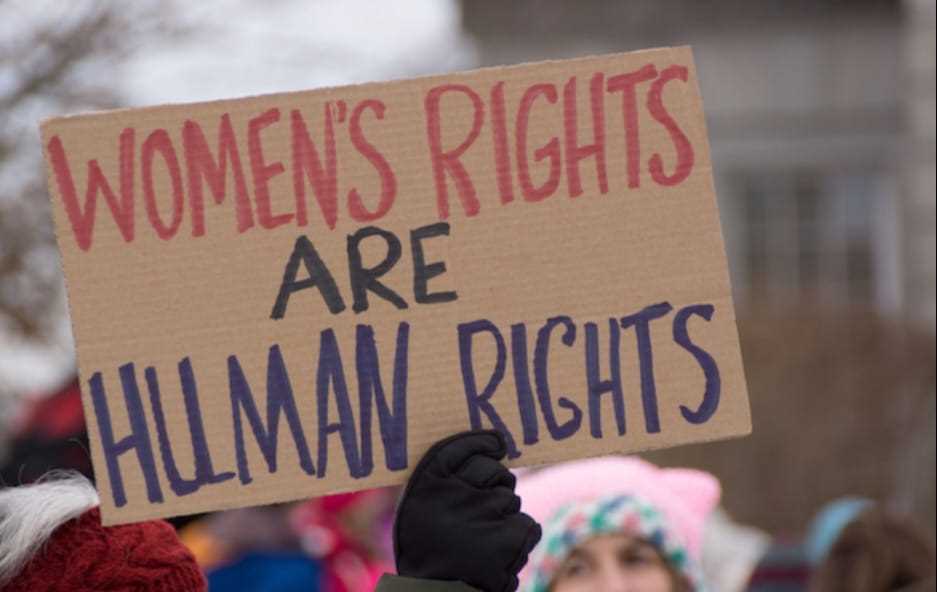
Zimbabwean young women are demanding more than symbolic inclusion in leadership and policy processes, calling for access to the resources, information and authority required to influence decisions as the country marks International Youth Day amid persistent inequalities in employment, digital access, economic opportunity and political participation.
The Institute for Young Women’s Development says young women, particularly those from rural and marginalised communities, continue to face “limited access to education and decent work, economic inequality, digital exclusion, climate vulnerability, gender-based violence and limited opportunities to meaningfully participate in decision-making.”
The organisation argues that the issue is not simply whether young women are represented in decision-making spaces, but whether they have the power to shape what happens inside them.
“For us, meaningful youth participation means more than having young people present,” IYWD said. “Young women must have the information, resources, platforms and power to influence decisions and shape the policies that affect their lives.”
The economic figures illustrate why that distinction matters. Zimbabwe’s 2022 Population and Housing Census found that only 21.5% of young women aged 15–34 were economically active, compared with 35.6% of young men. Among economically active young women, 23.7% were unemployed, compared with 14.5% of young men.
These disparities limit the ability of young women to participate on equal terms, particularly where economic dependence, unpaid care responsibilities and limited access to decent work restrict their capacity to organise, enter politics or influence public policy.
The United Nations has similarly warned that young people continue to be concentrated in “informal, low-productivity and low-protection employment”, while women shoulder a disproportionate burden of unpaid care work. The UN has also reported that nearly one in three young women in Zimbabwe was married before the age of 18.
Political representation presents another contradiction. UN Women reported in 2024 that “young women and adolescents in Zimbabwe have limited participation in governance processes”, limiting their ability to influence decisions affecting issues including gender-based violence, education and healthcare.
Related Stories
At the national level, women held 28.9% of parliamentary seats as of February 2024, according to UN Women, while only 12% of elected local government positions were held by women. The figures indicate progress in formal representation but also expose a deeper weakness: women remain substantially less represented closer to communities where many decisions affecting young women are implemented.
There has nevertheless been movement towards greater inclusion. In 2025, Information and Communication Technology Minister Tatenda Mavetera said the political quota system had helped young women gain access to decision-making, saying they had “found a place at the table where decisions are made.”
That distinction is particularly important as Zimbabwe expands its digital economy. UNICEF has previously warned that girls in low-income countries were 35% less likely than boys to possess basic digital skills. “Closing the digital divide between girls and boys is about more than just having access to the internet and technology,” UNICEF’s Robert Jenkins said.
Zimbabwe has begun responding through digital education programmes. In January 2026, UNICEF handed over 815 laptops, 708 projectors and 2,112 tablets to 113 disadvantaged schools. Its 2025 programme also reached 16,487 adolescents with digital, green and entrepreneurial skills, while 26,747 young people participated through civic and digital platforms.
Yet access to devices alone does not resolve the wider power imbalance. A young woman may have a smartphone and digital skills but still lack access to finance, decent employment, political networks or institutions capable of translating her participation into policy influence.
The same concern extends to climate change. At the launch of Zimbabwe’s National Gender and Climate Change Task Force in 2024, Women Affairs Minister Monica Mutsvangwa said, “climate change affects different genders unequally and extends beyond environmental concerns to encompass social justice and human rights.”
UNDP has also supported women’s political participation through parliamentary and electoral institutions, including work towards a National Strategy on Women and Decision-Making.
These interventions demonstrate that institutions increasingly recognise the barriers facing women and girls. The unresolved question is whether programmes and representation will produce measurable changes in who controls resources and policy decisions.
IYWD’s message therefore shifts the debate from presence to power. Its call for investment in young women’s leadership, digital inclusion, climate resilience, entrepreneurship and advocacy challenges government, civil society and development organisations to measure participation not by the number of young women attending meetings, but by whether their voices alter decisions.





Leave Comments