





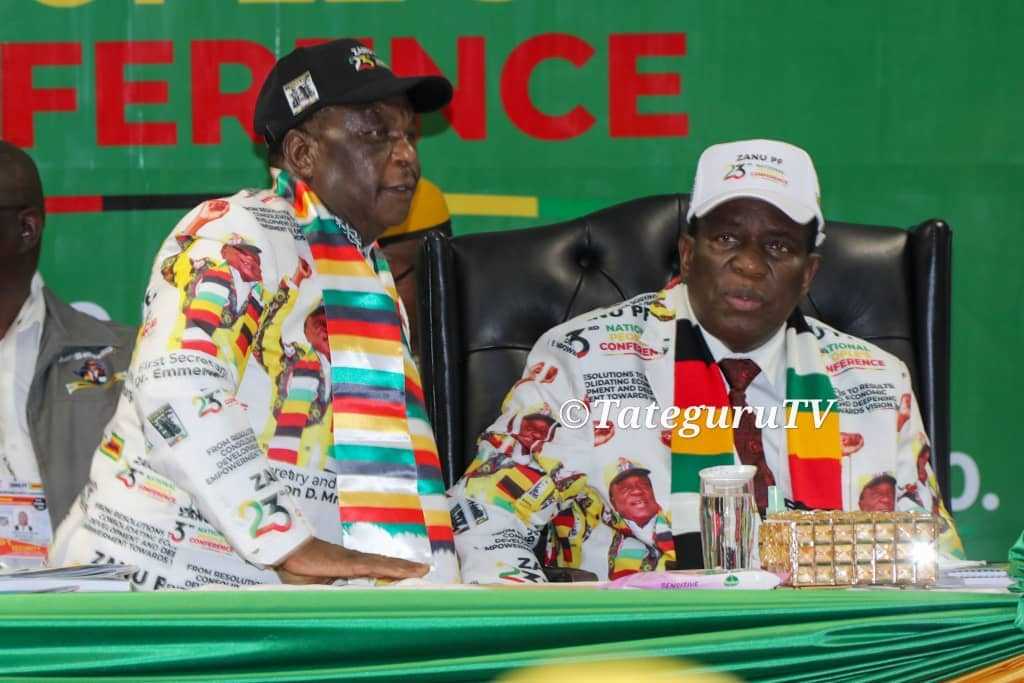
Vice-President Constantino Chiwenga has challenged ZANU-PF to confront its past mistakes and ensure party decisions reflect grassroots voices, as tensions over proposed constitutional changes expose divisions within the ruling party’s leadership.
Addressing the party’s 23rd National People’s Conference in Chinhoyi, Chiwenga questioned whether ZANU-PF was living up to the principles it said had guided the formation of the Second Republic in 2017.
“What made the Second Republic to be there? The Second Republic came about to correct the mistakes of the past. Are we not repeating the same mistakes?” he asked.
He called for “a brutal and honest self-appraisal”, urging the party to examine whether its resolutions genuinely represented members’ views and whether its leadership understood the aspirations of ordinary Zimbabweans
“Are our resolutions truly coming from the people? Do our conferences authentically capture the voices of the grassroots? Do we truly understand the aspirations of our people? More importantly, how should we walk our talk this time around to serve our people better?” he said.
“The strength of ZANU-PF has always emanated from the people. Our party is a people’s party forged through the sweat, toil, and blood of the masses.”
The remarks come amid a dispute over proposed changes to the ZANU-PF constitution, an abandoned Politburo meeting scheduled to discuss the amendments and questions about how the party will manage competing interests over its future leadership.
Related Stories
The proposals reportedly sought to align the party constitution with Constitutional Amendment Act No. 3 of 2026, which extends President Emmerson Mnangagwa’s tenure to 2030 and changes the method of electing the president from a direct popular vote to election by Parliament. The constitutional amendment itself has faced legal challenges.
An extraordinary Politburo meeting scheduled for October 9 to consider the proposed party amendments was abandoned, with the party publicly attributing the postponement to a clash of programs.
However, media reports described disagreements among senior officials over the proposed changes, including reported resistance from Chiwenga’s camp and concerns about the process through which the amendments were being advanced.
The dispute has raised questions about consultation, the authority of party structures, and the extent to which proposed changes to the constitution could reshape the distribution of power within ZANU-PF.
Chiwenga did not explicitly refer to the amendments in the quoted conference address. But his questions about whether resolutions truly come from the people resonate with the controversy over how the proposed changes were developed and presented to the party’s leadership.
The distinction is important: his remarks do not, by themselves, establish that he was directly addressing the constitutional dispute. They nevertheless place consultation and accountability at the centre of a conference taking place against the backdrop of internal disagreements.
The constitutional dispute has placed the party’s succession question back in focus, with the proposed changes potentially affecting how ZANU-PF distributes leadership authority and chooses its candidate for the next presidential election.
Mnangagwa and Chiwenga emerged as key partners during the 2017 military-assisted transition that removed Robert Mugabe. Their political relationship now sits within a party facing questions about Mnangagwa’s extended tenure, Chiwenga’s future and the rules that will govern leadership beyond the current term.



Leave Comments