




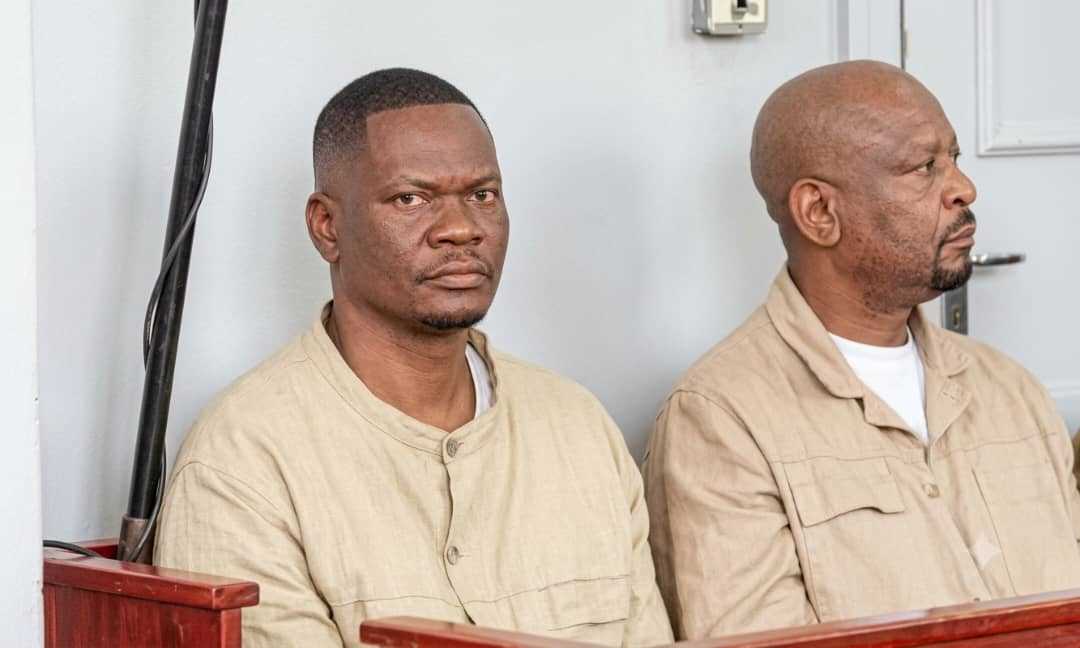
Businessmen Moses Mpofu and Mike Chimombe have had another Supreme Court application for leave to appeal against their convictions and prison sentences dismissed, with the court ruling that the grounds they raised on factual issues had no merit.
The two separately approached the Supreme Court seeking leave to appeal under Section 44(2) of the High Court Act, read together with Rule 27 of the Supreme Court Rules, 2025, following their convictions on fraud charges linked to the Presidential Goat Scheme.
In a judgment delivered by Justice George Chiweshe, the Supreme Court held that the applications failed to establish grounds warranting leave to appeal where the complaints related to findings of fact or mixed questions of law and fact made by the High Court.
“In both applications, the grounds attacking the findings of the court a quo on questions of fact or of mixed law and fact have no merit,” Justice Chiweshe ruled.
The court, however, clarified that some of the issues raised by Mpofu and Chimombe involved pure questions of law, which may proceed to appeal without first obtaining leave from the Supreme Court.
Related Stories
“By operation of law, no leave is required to appeal on the basis of such grounds of appeal,” the judgment states.
The ruling means that while the businessmen cannot pursue appeals based on the factual findings challenged in their applications for leave, they remain entitled to appeal on any grounds that raise pure questions of law, as provided for under Zimbabwean law.
Mpofu and Chimombe were convicted after a full trial of fraud, as defined in Section 136 of the Criminal Law (Codification and Reform) Act. The High Court found that they had fraudulently abused the Presidential Goat Scheme.
Mpofu was sentenced to 22 years' imprisonment. Three years of the sentence were suspended for five years on condition that he does not commit another offence involving dishonesty during that period. A further four years were suspended on condition that he pays restitution of US$2,060,250.60 to the State through the Registrar of the High Court by February 28, 2026, leaving him with an effective prison sentence of 15 years.
Chimombe received a 17-year prison sentence, with three years suspended for five years on the same condition of good behaviour. A further two years were suspended on condition that he pays US$964,064.64 in restitution to the State by February 28, 2026, resulting in an effective prison term of 12 years.
The Supreme Court's latest ruling narrows the scope of any further appeal by the two businessmen, limiting them to legal questions that do not require leave while leaving the High Court's factual findings undisturbed.





Leave Comments