




By Isaac Jonas: Founder & Principal Consultant, Streetwise Economics
There’s a number in my new report that I keep coming back to. In 2025, Zimbabwe earned a record US$8.5 billion from selling minerals to the world — up from US$5.9 billion just one year earlier. In 2024-to-2025, that figure didn’t creep up. It leapt.
And 2026 looks even bigger.
I’ve just published a full deep-dive on how this is happening, why it might not last, and what it means for anyone watching Zimbabwe, gold, or Africa’s mining story. This post is the plain-English version — no jargon, no economics degree required.
The one-sentence version
Zimbabwe is having a gold moment, and gold is doing almost all the heavy lifting.
Here’s what I mean. The price of gold has climbed to around US$4,050 an ounce — far above where it sat last year. Zimbabwe didn’t suddenly dig up piles of extra metal. It’s mostly selling the same gold it always did, except now each ounce is worth a lot more. That single fact re-rates the entire economy.
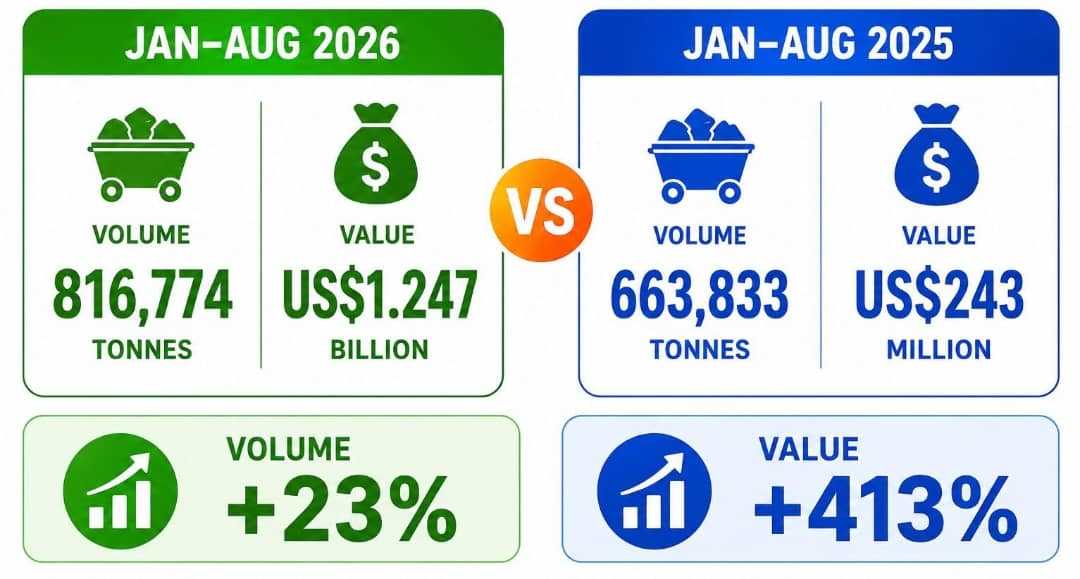
The proof is in the money coming in. In just the first five months of 2026, Zimbabwe’s gold export earnings rose 167% compared to a year earlier — to US$3.07 billion. When a number moves that fast, it’s worth stopping to ask what’s really going on
Why this matters more than it sounds
Mining isn’t just one industry among many for Zimbabwe. It’s the engine that earns the country its hard currency — the US dollars that keep banks working, keep imports flowing, and keep the local currency stable. When mining does well, the whole economy breathes easier. When it stumbles, everyone feels it.
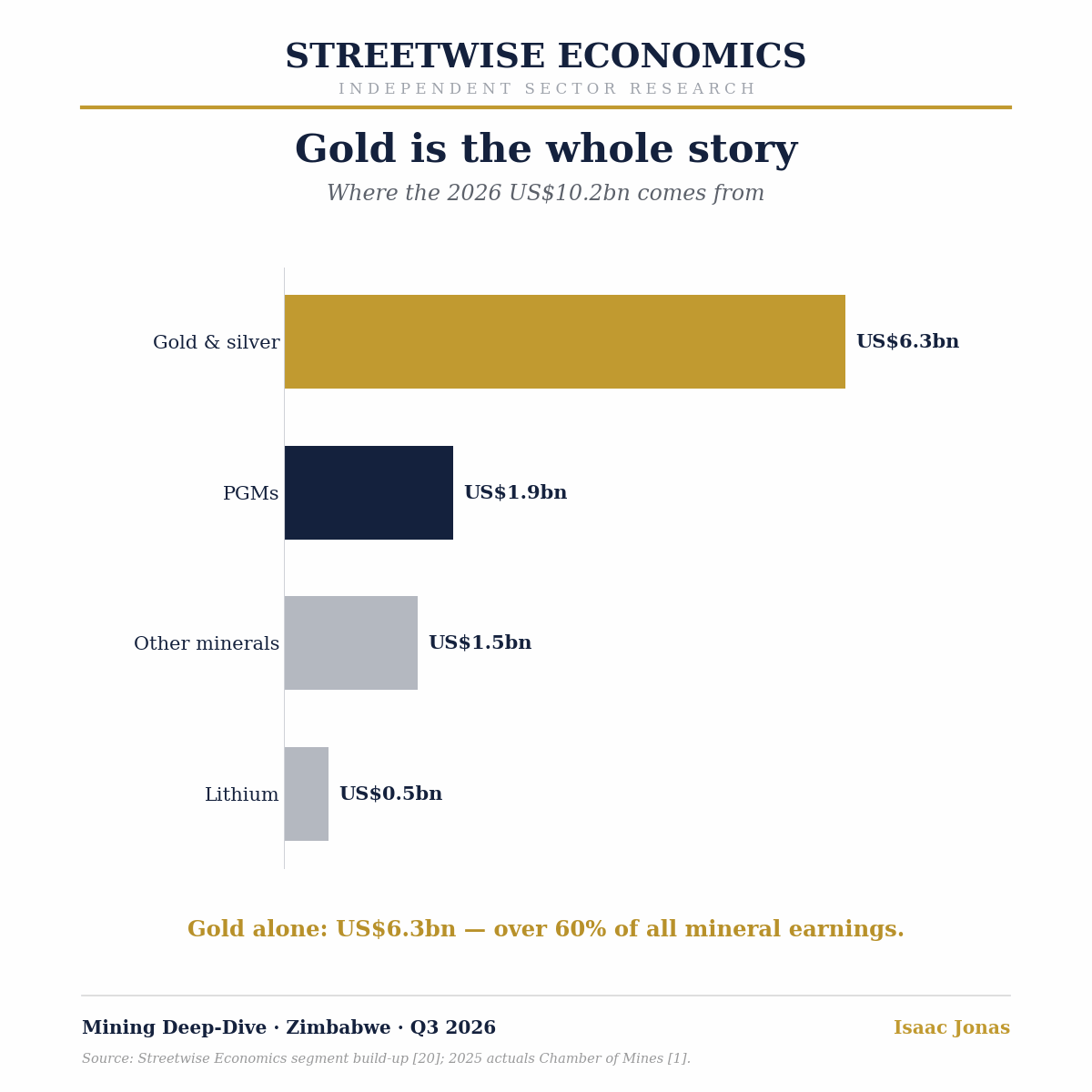
And right now it’s doing well. My base case for 2026 is US$10.2 billion in total mineral exports. Most of that increase isn’t from mining more — it’s the higher gold price flowing straight through to the country’s bank account.
The surprise: it’s not just big corporations
Related Stories
When most people picture mining, they imagine huge multinational companies with giant machines. In Zimbabwe, that’s only part of the picture. About 75% of the country’s gold now comes from artisanal and small-scale miners — ordinary people working small claims with basic equipment.
This is one of the most striking things in the whole report. A national economy’s biggest earner is being powered, in large part, from the ground up. It changes who benefits, and it changes what the country needs to build next.
Now the catch
I don’t write cheerleading reports, so here’s the honest part. This entire good-news story balances on a very narrow base. I describe it as three single points of failure:
One price — gold. If gold falls hard, the whole picture dims quickly.
One grid — electricity. Power shortages can throttle output no matter how high the gold price goes.
One policy — a looming ban on exporting raw lithium, due to start in January 2027. The government wants Zimbabwe to process lithium at home rather than ship it out cheap. It’s a reasonable long-term goal, but right now only one of seven major lithium producers is actually ready for it. That’s a real risk sitting on the horizon.
So the boom is real, but it isn’t bulletproof. It’s a bet on gold staying high, the lights staying on, and policy not tripping over itself.
The US$10 billion question
That’s the title of the report, and here’s why. The mining industry itself says it needs about US$10 billion of investment over the next five years just to keep this momentum going. That’s an enormous sum for a country this size. Where it comes from — foreign investors, local capital, or somewhere else entirely — is the question that will decide whether 2026’s boom becomes a decade of growth or a brief high point.
There’s a hopeful sign too: Zimbabwe is close to launching a digital system for mining titles (think of it as finally putting all the country’s mining “property deeds” into one trusted online database). If it works, it could unlock a wave of new exploration money. I’m watching that closely.
Why I made this
I do this research for a living, and I try to write it the way I’d explain it to a smart friend over coffee — clear, sourced, and honest about what I don’t know. Every figure in the report is cited, and it comes with the full financial model so you can open it up and check my numbers yourself. If you find a mistake, tell me and I’ll correct it publicly.





Leave Comments