








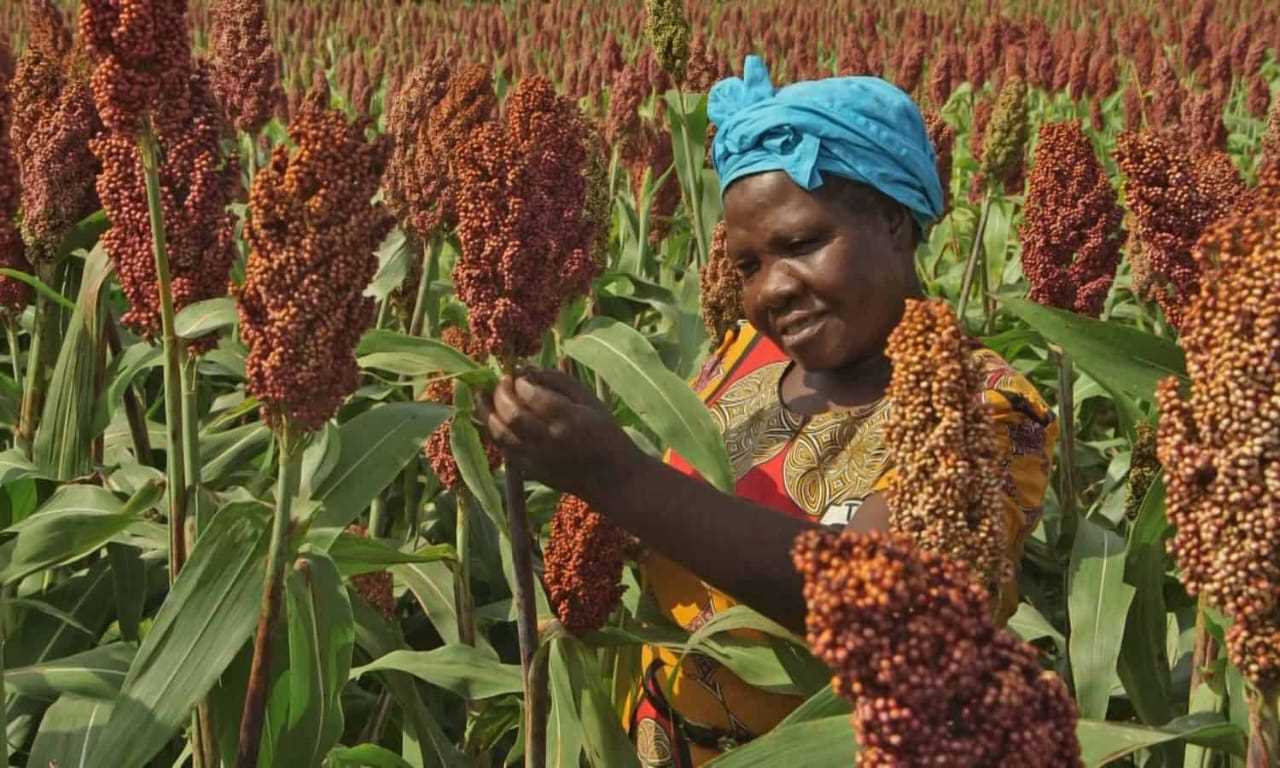
Sorghum production in Zimbabwe is projected to reach 123,306 metric tons during the 2026 agricultural season, indicating an "8% increase over 2025 production levels," according to a newly published report by an international agricultural research data group.
The findings, published in Brief No. 368 of AKADEMIYA2063’s Africa Agriculture Watch Crop Production Forecasts Brief Series, reveal that national output will expand by 8,709 MT over the 114,597 MT recorded in the previous season.
The data is generated through the Africa Crop Production model, described by the authors as "an Artificial Intelligence-based model applied to remotely sensed geo-biophysical data to produce estimates at pixel as well as administrative levels as early as the beginning of each growing season".
According to the brief, the objective of the monitoring series is "to provide more accurate and timely data on harvests and yields for 11 major crops across nearly 50 African countries".
Authors Mansour Dia and Khadim Dia noted that the "timeliness, wide availability, and ease of access to this type of data will enable stakeholders across the value chain to plan and execute policy and business actions more efficiently".
At the sub-national level, the data indicates that regional grain distribution will remain heavily concentrated in specific rural districts. The report notes that "the highest sorghum producers are expected to be Chiredzi (Masvingo), Gokwe South (Midlands), Mount Darwin (Mashonaland Central), Buhera (Manicaland), and Mudzi (Mashonaland East), with production levels estimated at 11,043 MT, 6,605 MT, 6,044 MT, 5,672 MT, and 5,200 MT, respectively".
Conversely, the lowest yields are expected in urban areas, where "lower production values are observed in Kadoma Urban (Mashonaland West), Harare (Harare), Gokwe South Urban (Midlands), Chinhoyi (Mashonaland West), and Zvishavane Urban (Midlands) with production of 101 MT, 61 MT, 58 MT, 55 MT, and 53 MT, respectively".
Related Stories
The AI model also highlighted significant year-on-year localized shifts across the country, showing that "compared to 2025, the most significant sorghum production increases in 2026 are expected in districts such as Chikomba (Mashonaland East), Chivi (Masvingo), Makoni (Manicaland), Gokwe South (Midlands), and Mwenezi (Masvingo)".
In terms of specific volume and percentage shifts, these top growth areas represent net gains of "456 MT, 379 MT, 375 MT, 368 MT, and 331 MT, respectively," which the report notes "correspond to changes of 193%, 31%, 26%, 6%, and 10%".
To complement these AI projections, the Grain Marketing Board recently announced updated pricing structures to support production growth, setting the producer price for maize and traditional grains, including sorghum, at US$364.75 per metric tonne for the current marketing season.
According to GMB Chief Executive Dr. Edson Badarai, the adjusted rates aim "to sustain production growth and strengthening national food security" amid rising input costs.
Concurrently, independent food security agencies have noted that the emphasis on small grains aligns with new, strict market regulations.
According to the provisions of Statutory Instrument 87 of 2025, which went into effect on April 1, 2026, grain millers, stockfeed manufacturers, and food processors are now legally required to "procure at least 40 percent of their grain requirements locally this marketing season". The Ministry of Lands, Agriculture, Fisheries, Water, and Rural Development stated that the policy measure is actively structured to "promote local production and reduce imports, with all local industrial grain needs expected to be met through local procurement by 2028".
Despite the macro-level production increases captured by AAgWa, humanitarian monitors have raised caution over mid-season climate anomalies. Independent assessments by the Famine Early Warning Systems Network (FEWS NET) observed that "below-average harvests in some areas affected by excessive rainfall and a prolonged dry spell during the 2025/26 agricultural season will likely result in affected households depleting their own-produced food stocks atypically early".
FEWS NET analysts concluded that while the 2026 main harvest has temporarily improved household food access nationwide, vulnerable families in southern and eastern deficit-producing pockets will likely face early stock exhaustion, deteriorating to "Crisis" (IPC Phase 3) food security levels by October 2026.








Leave Comments