






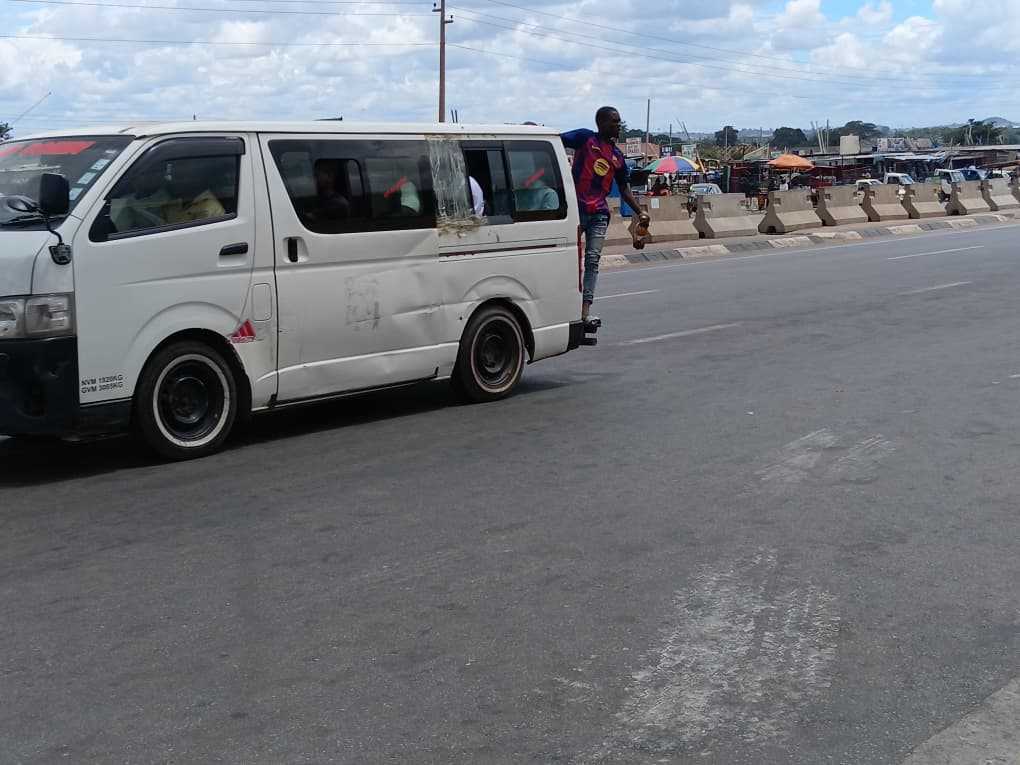
Every morning, thousands of commuters across Harare squeeze into overcrowded commuter omnibuses with little legroom, poor ventilation and limited regard for passenger comfort, as transport shortages continue to leave many with few alternatives.
What has become a routine part of urban life is increasingly raising concerns about passenger safety, public health and dignity, with commuters stating that they are forced to endure conditions they would otherwise reject simply to get to work, school or home.
For many passengers, boarding a kombi is no longer a matter of choice but necessity.
Munashe Munhande said commuters are
often forced to choose between protecting their health and protecting their livelihoods.
"Do I take this kombi and risk my health, or do I not go to work and lose my income? That's the choice we face every day," Munhande said.
The shortage of reliable public transport has created a situation where demand far exceeds supply, particularly during peak hours, allowing operators to maximise passenger numbers despite growing concerns over comfort and safety.
Harare resident Tasha Maradzike said overcrowding had become normalised.
"Cramped kombis, no ventilation, drivers overload, conductors force you in. We're treated like cargo," Maradzike said.
She said the consequences stretch beyond inconvenience.
"School children end up sitting on each other's laps to cut down on commuter omnibus fares. Many people get home as late as 10pm because of shortage. This affects children, mothers, people in unsafe areas," she said.
Another Harare resident said passengers increasingly feel dehumanised by the daily experience.
"It feels like we're being treated like goods, not people. No one cares if we're comfortable or safe. We're cargo to them," the resident said.
Long-distance commuting under such conditions is also taking a physical toll on workers.
"I work 12 hours a day. Then I spend two hours on this journey in pain. It's destroying my health. But if I don't go, I don't get paid," said Sean Kunaka.
Another daily kombi user said inadequate space had become part of everyday life.
"Tiny legroom makes the journey painful. By the time we arrive, our legs are aching and we're exhausted. This is daily life," the commuter said.
Another Harare resident said operators
appeared more concerned with numbers than people.
"We're just numbers to them. Drivers and conductors don't care about our comfort. We're lucky to get a seat at all," the commuter said.
Related Stories
Women, children, the elderly and people living with health conditions often bear the greatest burden.
"We're forced to squeeze in like sardines in these kombis. No legroom. Can't breathe properly. If there were safe alternatives, we'd definitely take them," said Thelma Matanhire.
For elderly passengers, the daily commute can become physically draining.
"My legs are weak as an elderly person. Getting into these cramped kombis is a struggle. By the time I arrive, I'm exhausted and in pain," said Sekuru Mugoshi.
Ventilation remains another major concern.
"The windows are so small and some are sealed. You can't breathe. After 30 minutes inside, I feel like I'm going to faint. It's suffocating," said Brenda Moyo.
Aaron Nhau said passengers were paying higher fares while travelling in worsening conditions.
"The fares are ridiculous today US$2 for a trip that normally costs US$1. And the vehicle is so small, no windows to open. We're stuck in hot air. It's dangerous," Nhau said.
Esther Moyo who is a nurse said the issue should not be dismissed as a simple comfort complaint.
"In sealed, overcrowded kombis, stagnant air can aggravate asthma, cause discomfort, and heighten the chance of spreading respiratory infections. This is a public health crisis, not just discomfort," Moyo said.
Patrick Gumbo said many passengers were already feeling the effects.
"I get headaches from the poor ventilation. The air is so bad I can't breathe. This is a health problem, not just discomfort," Gumbo said.
The Passengers Association of Zimbabwe (PAZ) said the continued operation of cramped commuter omnibuses points to broader weaknesses within the public transport system.
PAZ national coordinator Tafadzwa Goliati said poor vehicle standards continue to disadvantage commuters.
As the Passengers Association of Zimbabwe, we're concerned about the tiny legroom and poor ventilation in kombis. It seems Vehicle Inspection isn't doing its job properly," Goliati said.
He said passengers would choose better transport if it were available.
"As passengers, we're forced to squeeze in, but if there were other safe and user-friendly transport options, we'd take them," he said.
"We're advocating for better and inclusive transport for everyone," Goliati added.
Harare's transport challenges have persisted for years as commuter omnibuses increasingly filled gaps left by a shrinking conventional bus fleet.
While kombis remain the backbone of urban mobility, many commuters argue that overcrowding, poor ventilation and inadequate passenger space have gradually become accepted as normal.





Leave Comments