




The Democratic Republic of the Congo (DRC) is set to receive 70,000 Ebola vaccine doses as health authorities confront an outbreak caused by the Bundibugyo virus, with the World Health Organization (WHO) acknowledging that scientists still do not know how effectively the available vaccine can protect against the strain.
WHO said 50,000 doses will be used to protect frontline and healthcare workers, while another 20,000 will be administered as part of a Phase 3 clinical trial designed to establish whether the Ervebo vaccine can protect against the Bundibugyo virus.
“There’s an important twist,” WHO said in announcing the deployment, noting that “the current outbreak is caused by the Bundibugyo virus, and scientists do not yet know for sure how well the Ervebo vaccine protects people against it.”
The uncertainty is significant because vaccine deployment is taking place alongside efforts to establish whether the vaccine actually provides protection against the virus driving the current outbreak.
WHO said the evidence available so far is encouraging but not conclusive.
“Early laboratory and animal studies suggest it may offer some protection, but more evidence is needed,” the organisation said.
The 20,000-dose clinical trial will therefore provide an opportunity to generate evidence during the response itself, potentially informing how future outbreaks caused by the Bundibugyo virus are managed.
Related Stories
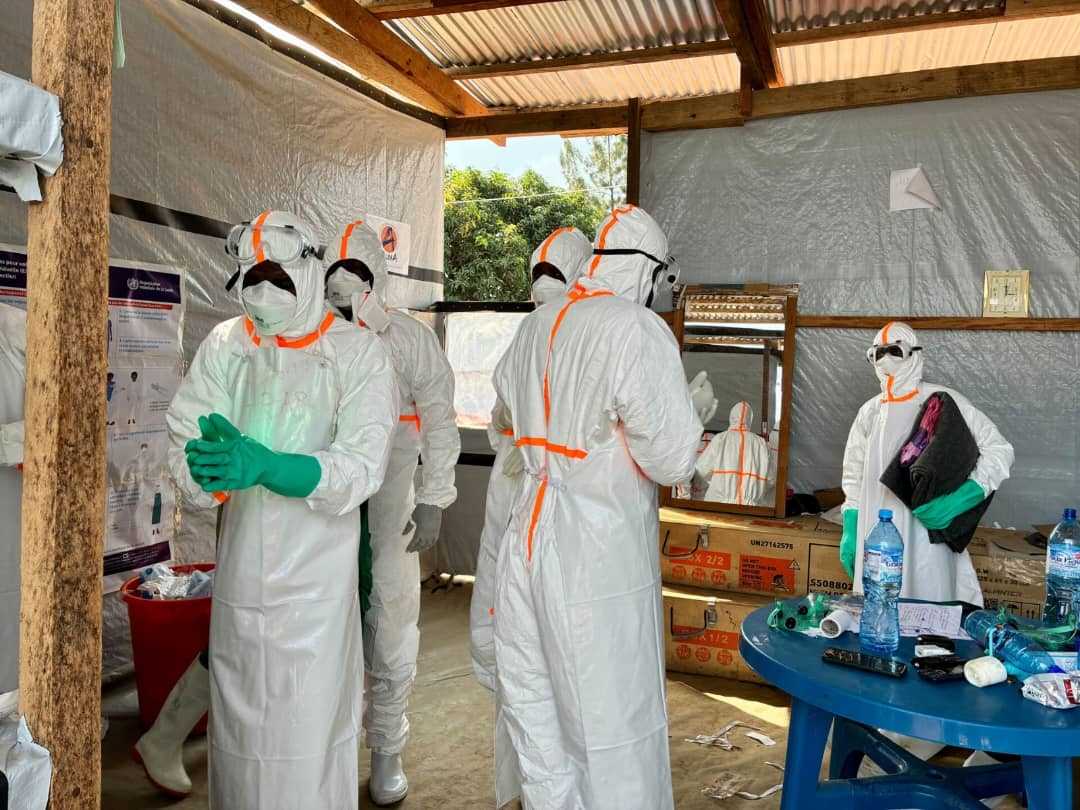
The larger allocation of 50,000 doses will focus on people facing some of the highest occupational risks.
“50,000 doses will help protect frontline and health workers,” WHO said.
The strategy reflects the central role of healthcare workers in controlling Ebola outbreaks. Health workers are among those most exposed to infected patients, while their protection is critical to keeping treatment and surveillance systems operating during an outbreak.
WHO and the Africa Centres for Disease Control and Prevention are supporting the DRC response, with communities positioned at the centre of the intervention.
“WHO and Africa CDC are supporting DRC’s response, with communities at the centre,” the organisation said.
The outbreak is therefore also being used to close a major scientific knowledge gap. Rather than assuming that an existing Ebola vaccine will work against a different virus species, the clinical trial will provide evidence on its actual performance against the Bundibugyo virus.
WHO said the immediate protection of health workers and the generation of new scientific evidence are closely linked.
“Protecting health workers helps protect everyone,” it said, adding that “learning more now can make future Ebola responses faster and stronger.”




Leave Comments