





By Simbarashe Namusi
"I am Lucifer Mandengu. I was born here against my will."
Few lines in Zimbabwean literature have endured quite like these.
Decades after Charles Mungoshi first introduced readers to the restless and conflicted Lucifer Mandengu, his voice continues to echo far beyond the pages of Waiting for the Rain.
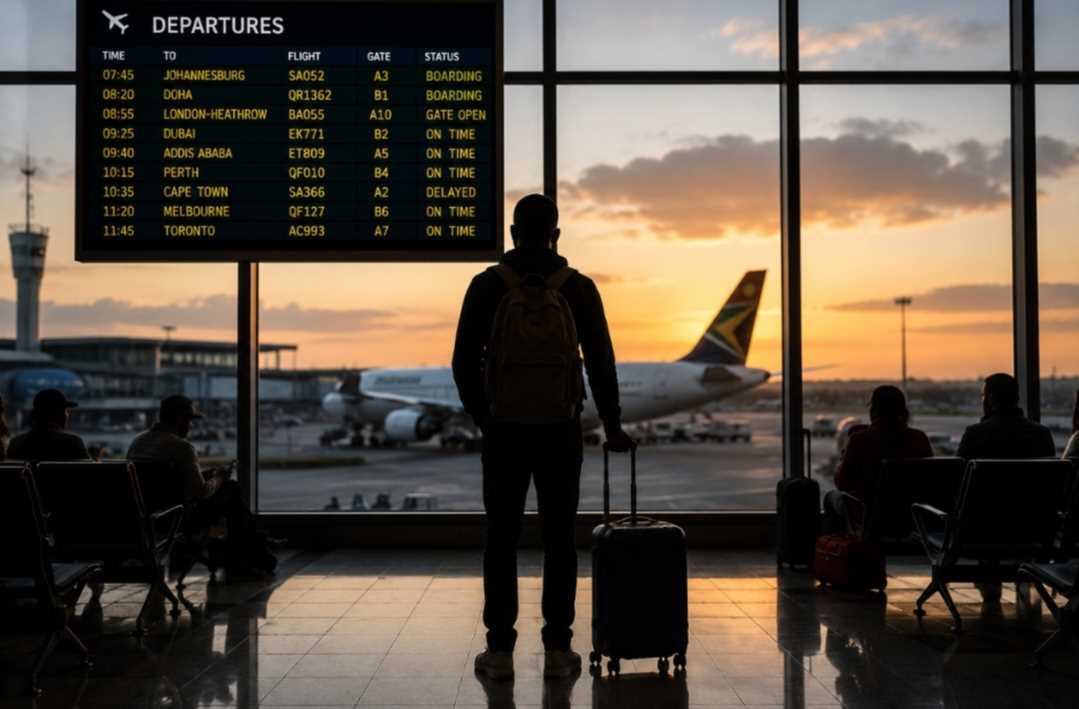
It surfaces in family conversations, in WhatsApp groups, in airport departure lounges, and in the quiet reflections of people wondering whether life might have turned out differently had they been born somewhere else.
The enduring power of Lucifer's declaration lies not in its defiance but in its familiarity.
Most of us have never uttered those exact words. Yet many of us have felt them.
Not because we hate where we come from.
Not because we all dream of leaving.
But because, at some point in our lives, we have looked at our circumstances and imagined that fulfilment, opportunity, or happiness might exist somewhere beyond the horizon.
In that sense, we are all Lucifer Mandengu.
Not because we are all trying to leave, but because we are all trying to arrive.
Zimbabwe is a nation on the move. Some people move from village to town. Others move from town to city. Many move from Zimbabwe to South Africa, the United Kingdom, Australia, Canada, or New Zealand. Others never leave at all, yet still spend hours imagining lives elsewhere.
The student dreams of graduation.
The graduate dreams of employment.
The employee dreams of entrepreneurship.
The entrepreneur dreams of expansion.
The migrant dreams of permanent residency.
The permanent resident dreams of home.
We are constantly reaching for the next thing, convinced that it will finally deliver the satisfaction that has so far eluded us.
Listen carefully to Zimbabweans, and you will hear Lucifer everywhere.
In the commuter omnibus passenger discussing opportunities in Canada.
In the university student dreaming of a scholarship abroad.
In the nurse filling in forms for the NHS.
In the businessman convinced things would be easier across the border.
In the retiree who left decades ago but still asks relatives to send pictures of the old homestead.
Different people. Different circumstances. Similar longing.
Perhaps the most Zimbabwean thing of all is that we never fully leave. We carry home with us in accents that refuse to disappear, in the excitement of finding sadza in a foreign city, in football arguments about Dynamos and Highlanders, and in WhatsApp groups that somehow know what happened in Mbare before the people who actually live there do.
Home has a stubborn way of travelling with us.
Many people remember Lucifer as the young man desperate to escape the limitations of his rural upbringing. Yet his story is less about migration than it is about belonging. He becomes so focused on where he wants to go that he loses sight of where he is. He becomes alienated not only from his family and community but also from himself.
That feeling is surprisingly modern.
Related Stories
We live in an age that constantly invites us to compare our lives with those of others. Every day, we are exposed to stories of success from every corner of the world. Someone is buying a house in Perth. Someone is graduating in London. Someone is launching a business in Johannesburg. Someone is posting photographs from a holiday in Dubai.
Without realising it, we begin measuring our lives against snapshots of other people's journeys.
We begin to feel left behind.
We begin to imagine that life is happening elsewhere.
And slowly, we start speaking Lucifer's language.
The irony is that many of the people we envy are wrestling with their own versions of the same dilemma. The Zimbabwean in Birmingham still follows local gossip from home more closely than events in his own neighbourhood. The Zimbabwean in Harare spends evenings scrolling through immigration websites. The Zimbabwean in Johannesburg is saving for a move to Australia. The Zimbabwean in Australia is teaching her children how to pronounce family totems because she fears they are losing something she cannot replace.
Different locations. Similar questions.
Where do I belong?
What am I chasing?
Will I recognise success when I finally arrive?
These are not questions of geography. They are questions of identity.
Perhaps that is why Zimbabweans can be so contradictory. We complain endlessly about the country, yet defend it passionately when outsiders criticise it. We swear we are leaving, then spend years building houses back home. We encourage our children to seek opportunities abroad while reminding them never to forget where they came from.
We are forever caught between departure and return, ambition and attachment, movement and memory.
That is where Lucifer lives.
Sometimes Lucifer is not even dreaming of greatness. Sometimes he is simply exhausted. Tired of struggling. Tired of waiting. Tired of feeling as though life is happening somewhere else. Sometimes the dream of another place is not about luxury or success. It is about the hope that things might be a little easier.
To acknowledge this is not to condemn ambition. Zimbabweans have every right to pursue opportunities wherever they find them. The diaspora has become one of the country's greatest assets, contributing skills, ideas, investments, and remittances that sustain countless families.
The lesson is not that we should stay.
The lesson is not that we should leave.
The lesson is that fulfilment cannot be outsourced to a location.
A new city may open doors.
A new country may provide opportunities.
A new job may improve circumstances.
But none of these automatically answers the deeper question of who we are and where we belong.
Perhaps that is why Lucifer Mandengu still refuses to leave us alone.
He is not sitting in the pages of a dusty novel studied for examinations. He is sitting in airport departure lounges. He is renewing passports. He is applying for visas. He is scrolling through job adverts at midnight. He is building a house he may never live in. He is sending money home while wondering where home actually is.
The truth is that most of us have felt what Lucifer felt.
We have all, at some point, looked at our lives and imagined that happiness was somewhere else.
Yet perhaps maturity is realising that no country, city, or postcode can answer every question we carry within us.
Lucifer Mandengu introduced himself by saying, "I was born here against my will."
Decades later, the challenge for Zimbabweans is not deciding where to live.
It is deciding how to belong.
Simbarashe Namusi is a peace, leadership, governance, and media scholar writing in his personal capacity.








Leave Comments