




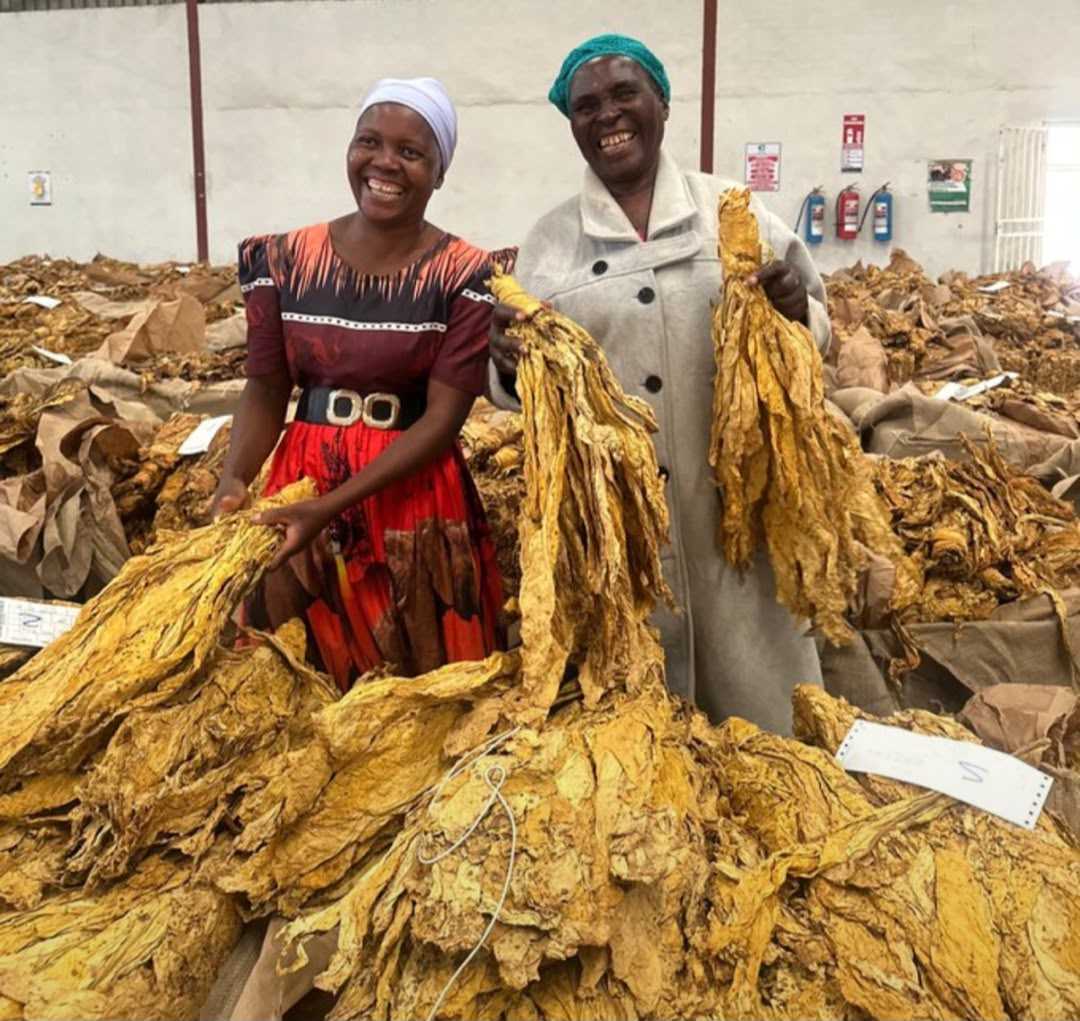
Zimbabwe's tobacco industry has reached another historic milestone after sales hit 356,207,775 kg as of July 29, surpassing the 355 million kg produced in 2025 and setting a new production record.
The achievement marks the second consecutive year the country has recorded its highest-ever tobacco output. Auction floors are expected to close on July 31, with mop-up sales scheduled for August 5 and 6, while contract floors continue buying tobacco.
While the record crop has been hailed as another milestone for the industry, many farmers say the historic production has failed to translate into better earnings, with low prices leaving them struggling to pay workers, transport costs and outstanding debts.
The Tobacco Industry and Marketing Board (TIMB) said the record reflected the resilience, hard work and dedication of Zimbabwean tobacco growers and industry stakeholders.
The board said it remained committed to creating an enabling environment that enhances grower viability, strengthens market competitiveness and secures an even brighter future for Zimbabwe's tobacco industry.
For many growers, however, the season has been defined more by low prices than record production.
Forget Kasamu, a small-scale farmer, said selling his tobacco for less than US$5 per kg had left him facing serious financial challenges.
"I don't know how I'm going to get through this. I still have transport costs of US$18 per bale, and I have six workers who need to be paid," he said.
Richard Chimbada, another farmer, said that despite producing good-quality tobacco, the low prices meant he finished the season with nothing after settling his debts.
"All the money went to pay debts, leaving me with nothing. Prices were very low and this affected us as farmers," he said.
Bornface Mupezi, a farmer, said many growers were anxious after hearing complaints about poor prices.
"My hope is that it can sell for around US$4 so that we can support our families. However, we heard many people complaining about the low prices and we are concerned about that," he said.
Charles Mutikwa said prices offered by Northern Tobacco were better than those at auction floors but were still disappointing.
"The prices this season are not appetising, but contracting companies like Northern Tobacco are paying better than the auction floors," he said.
Linda Chibwe, a contracted farmer, said obtaining a contract had eased previous marketing challenges, although prices had fallen compared to last season.
"The prices this year are not as good as they were last season," she said.
Chamunorwa Ben Gurira said he was struggling to sell his remaining bales after his contractor completed purchases.
Related Stories
"I come from a rural area with very little money, and I need food and other necessities. This season has been difficult," he said.
George Seremwe described the opening prices as disappointing, saying growers could not continue producing tobacco only to receive poor returns.
"It's disappointing, and we can't convince our farmers to give away their crop for a song," he said.
Rodney Ambrose described the season as the weakest tobacco marketing season in at least the past 10 years, warning that increased production amid weakening demand was pushing growers towards poverty.
"We are witnessing overproduction versus reduced demand. If not corrected, farmers will be reduced to poverty levels," he said.
Tobacco buyer Cyprian Foya attributed the low prices to global oversupply.
"The pricing dynamics this year will hinge heavily on global conditions rather than local expectations. Like any commodity, prices fluctuate and will eventually return to equilibrium," he said.
Tapiwa Masedza said Zimbabwe's three major green leaf threshing factories were under capacity pressure and called for a fourth processing plant to improve value addition and protect farmer returns.
Agricultural economist Willard Munangi said growers needed timely market information and production forecasts to help align production with demand.
"The prices are not appealing because the crop flooded the market. Farmers should be provided with timely market information and production forecasts to help them align output with demand," he said.
Minister Anxious Masuka acknowledged the difficult marketing season, saying he had also been affected as a tobacco farmer.
"This year prices were unpleasant. I was also affected. Tobacco pays our bills and we must see that improvement is made," he said.
TIMB Chief Executive Emmanuel Matsvaire said the 2026 tobacco marketing season had generally been successful despite challenges experienced during its early stages.
TIMB said Zimbabwe was not alone, with other tobacco-producing countries experiencing similar market conditions.
"Our assessment is that the current low prices are a result of prevailing supply and demand dynamics. This challenge is not unique to Zimbabwe. Brazil, Malawi, Tanzania and Zambia are experiencing similar market conditions."
Zimbabwe's tobacco production has rebounded dramatically over the years, rising from about 48 million kg in 2008 to 166 million kg in 2015, 258 million kg in 2018, 184 million kg in 2021, 213 million kg in 2022, and 296 million kg in 2023, before declining to 232 million kg in 2024 following an El Niño-induced drought.
Production recovered to 355 million kg in 2025 and has now exceeded that record in 2026.








Leave Comments