








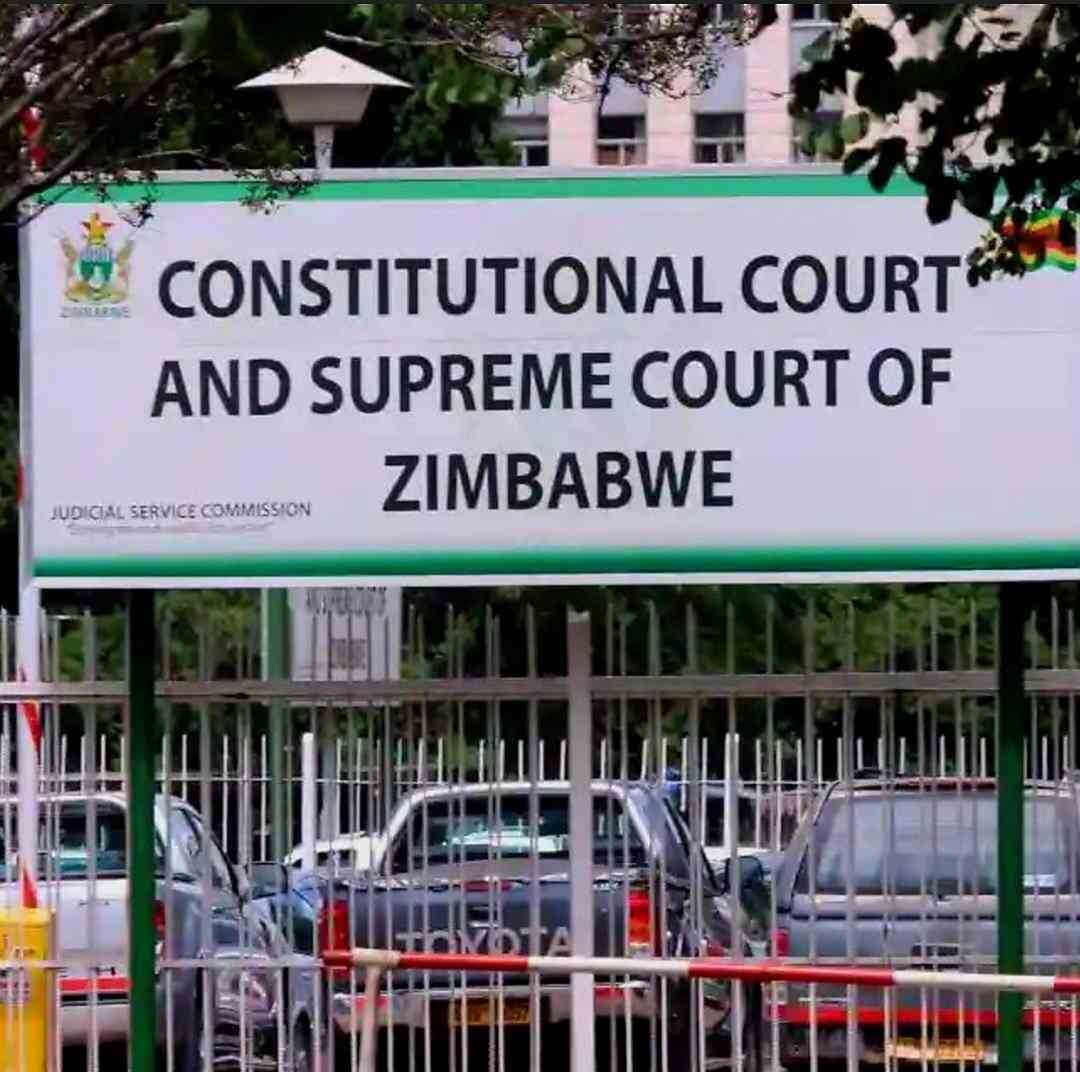
The Constitutional Court has dismissed an application by former City of Harare Estates and Valuation Manager Emmanuel Mutambirwa seeking direct access to challenge a Supreme Court decision that denied him leave to appeal against his conviction and ten year sentence for criminal abuse of office.
In a judgement delivered by Justice of the Constitutional Court Bharat Patel, with Justices Paddington Garwe and Rita Makarau concurring, the court ruled that Mutambirwa had failed to establish a constitutional violation warranting the intervention of the country's highest court.
Mutambirwa was convicted by the High Court in 2024 on charges of criminal abuse of office arising from the sale of municipal land in Harare. Prosecutors alleged that between September 2018 and August 2020, he and other council officials facilitated the unlawful sale of commercial stands carved out of land leased to Old Hararians Sports Club, without following statutory procedures.
The State argued that the transactions violated provisions of the Urban Councils Act and the Regional Town and Country Planning Act, including requirements for public notice, land-use changes and public tender processes.
Following his conviction, Mutambirwa was sentenced to 10 years' imprisonment, with one year suspended on condition of good behaviour.
His subsequent applications for leave to appeal to the Supreme Court against both conviction and sentence were unsuccessful.
In his ConCourt application, Mutambirwa argued that the Supreme Court had infringed his constitutional rights by failing to properly consider all six grounds of appeal he had proposed. He claimed this violated his right to appeal under section 70(5) of the Constitution, as well as his rights to personal liberty and equal protection of the law.
Represented by constitutional lawyer Lovemore Madhuku, Mutambirwa contended that the Supreme Court arbitrarily focused on the issue of criminal intent while ignoring other grounds of appeal and his challenge to the sentence imposed.
Related Stories
The National Prosecuting Authority opposed the application, arguing that the Supreme Court had properly performed its role of assessing whether the proposed appeal had reasonable prospects of success.
In dismissing the application, the ConCourt held that while section 70(5) of the Constitution guarantees convicted persons the right to appeal or seek review by a higher court, that right is not absolute and is subject to reasonable restrictions prescribed by law, including the requirement to obtain leave to appeal in certain circumstances.
Justice Patel said the Supreme Court had correctly performed its "gatekeeping function" by evaluating whether the intended appeal had realistic prospects of success.
"The court a quo acted in accordance with the applicable procedural and substantive law governing applications for leave to appeal in criminal matters," raed part of the judgement.
The court rejected Mutambirwa's argument that the Supreme Court was obliged to separately analyse each proposed ground of appeal, finding that once the court had determined that the essential elements of the offence had been established and that the conviction was sound, there was no necessity to address every ground individually.
The judgement also adopted principles from recent comparative constitutional jurisprudence concerning what constitutes a "failure of justice," holding that intervention would only be warranted where a court had fundamentally failed to perform its duty of proper consideration, resulting in an irrational or arbitrary decision.
The ConCourt found no such failure in the Supreme Court's handling of Mutambirwa's case.
Having concluded that there was no violation of Mutambirwa's right to appeal, the court further held that his claims regarding unlawful deprivation of liberty and unequal treatment could not stand independently.
"It would not be in the interests of justice to grant the relief sought in the present application," the court ruled.
The application for direct access was dismissed, with no order as to costs.










Leave Comments