





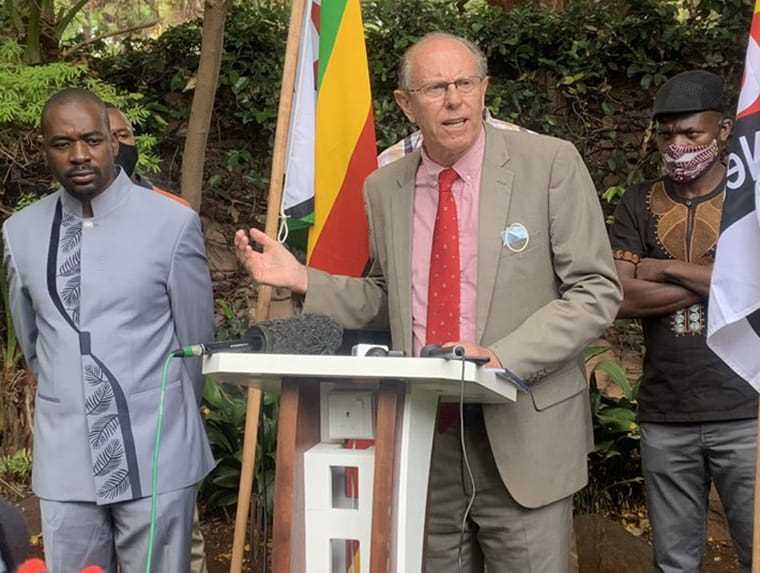
Bulawayo Mayor David Coltart says a public vote on the Constitution of Zimbabwe Amendment (No. 3) Bill will expose legislators who fail to defend the Constitution, arguing that the process will reveal where Members of Parliament truly stand on one of the country's most contentious constitutional reforms.
Coltart's remarks come after the first reading of the Constitution of Zimbabwe Amendment (No. 3) Bill in Parliament on June 2, setting the stage for what is expected to be a closely watched legislative process.
The debate over voting procedures intensified after ZANU PF Legal Secretary Ziyambi Ziyambi reiterated that voting on the Bill will be conducted through a show of hands rather than by secret ballot.
According to Ziyambi, the public voting method is intended to promote transparency and accountability among elected representatives.
Reacting to the development, Coltart argued that while he preferred a secret ballot because of what he described as an atmosphere of intimidation surrounding the issue, a public vote could have unintended consequences for legislators.
Related Stories
“Whilst I agree that voting on #CAB3 should be secret given the excessive intimidation prevailing in Zimbabwe around the issue, there is one silver lining in Ziyambi’s decree, and it is this, the public vote will let the public know exactly who are our truly brave and patriotic MPs, particularly the nominally opposition MPs.”
Coltart said the vote would provide voters with a clear indication of which legislators are prepared to defend the Constitution.
“The vote on #CAB3 will once and for all show the electorate who is truly committed to upholding the integrity of our Constitution, and who is not.”
The proposed constitutional amendment has generated significant public debate, with critics arguing that some of its provisions could weaken constitutional safeguards, while supporters maintain the changes are necessary to improve governance and address practical challenges in the administration of the State.
The issue has also exposed divisions within opposition ranks, with some political commentators and civil society groups expressing concern that a public vote could place pressure on legislators from both the ruling party and opposition benches.








Leave Comments