






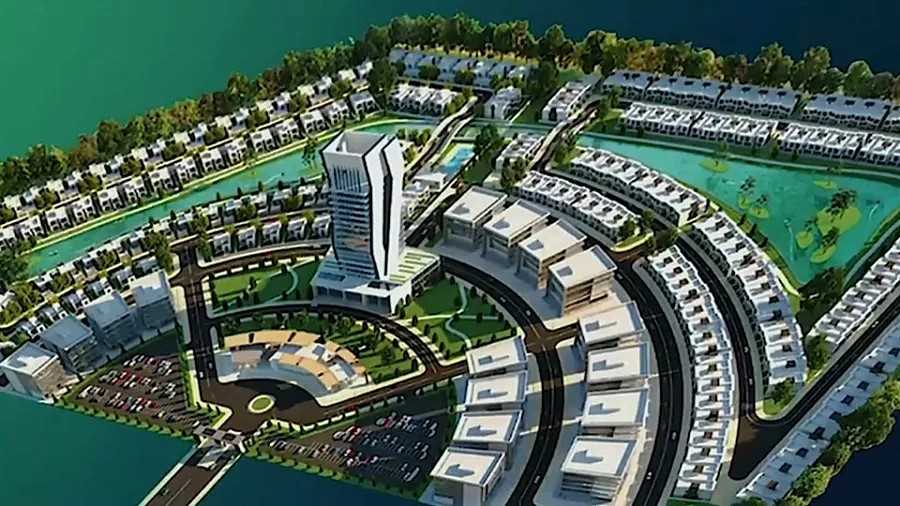
The Government has effectively acknowledged that the ambitious New City at Mt Hampden, including the much-publicised Zimbabwe Cyber City project, has missed its original timelines and is unlikely to be completed in the near term amid slow land acquisition, limited compensation progress, and uneven development on the ground.
In its latest update, Cabinet noted progress on the project but revealed that only six out of 254 affected properties have been compensated so far, from a preliminary compensation bill of US$75.6 million.
This represents just over two percent completion of a critical prerequisite for full-scale construction, highlighting significant delays in relocating affected landowners and beneficiaries.
The slow pace of compensation has effectively stalled broader development, as the relocation of affected farmers and land reform beneficiaries has yet to begin pending payment. Without this process, large sections of the planned city remain inaccessible for infrastructure rollout and private investment.
The New City, situated west of Harare, is a flagship government project anchored by the recently completed Parliament building and surrounding State infrastructure. However, beyond these public works, progress on the wider commercial and residential components, including the proposed Cyber City, remains limited.
Originally launched in July 2022, the Cyber City project was marketed as a US$500 million smart city development backed by a Dubai-based investor, with construction expected to begin the same year and key phases scheduled for delivery between 2024 and 2025. The broader vision for a new capital has been valued at up to US$60 billion.
Four years on, however, much of that vision remains on paper.
While Cabinet confirmed that access roads around the new Parliament have been completed and that Presidential Villas and conference facilities are expected by June 2026, it also indicated that critical administrative steps — including finalising board appointments, gazetting land, and determining full compensation values — are still ongoing.
Related Stories
The pace of land acquisition remains the clearest indicator of delays. At the current rate, it could take several years to complete compensation alone, even before factoring in actual construction timelines.
The update suggests a growing gap between initial projections and current realities. Large-scale urban developments of this nature typically require synchronised progress across land assembly, infrastructure financing, and private sector participation — elements that appear uneven in the Mt Hampden project.
The Government’s focus on completing State infrastructure first has resulted in visible progress around the Parliament precinct, but the commercially driven aspects of the project, which are central to its economic viability, have yet to take off in any meaningful way.
Cabinet has since directed authorities to expedite the gazetting of remaining land, finalise compensation frameworks, and operationalise the New City administration.
“Going forward, Cabinet directed that appointments to the New City Board be formally communicated to the members concerned, together with a budget intended to operationalise the New City Administration, including the Secretariat,” Cabinet noted.
“The Ministry of Lands and Rural Development should complete the gazetting of all farms earmarked for the New City development, establish the total compensation value, and facilitate the relocation of affected farmers.”
However, no revised completion timeline was provided.








Leave Comments