





In Zimbabwean politics, silence is rarely neutral. It is observed, interpreted and decoded — and in moments of national consequence, often weaponised.
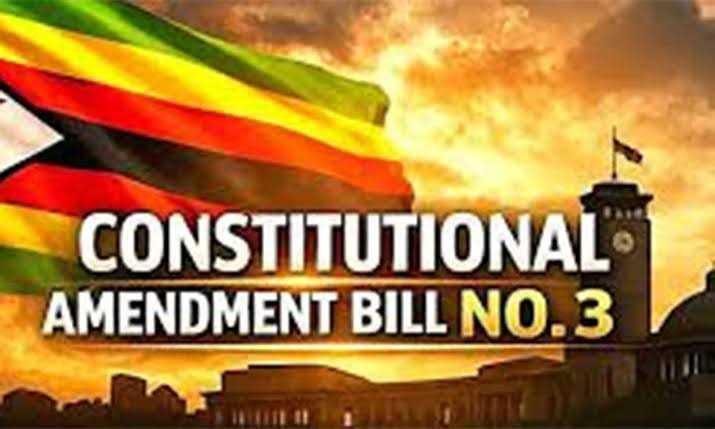
As debate intensifies around Constitutional Amendment Bill No. 3 (CAB3), the absence of sustained and visible resistance from Nelson Chamisa has sparked wider reflection on what political silence signifies in a system shaped as much by what remains unsaid as by what is openly declared.
Retired Lieutenant General Winston Sigauke Mapuranga interprets that silence through the prism of military intelligence. His argument is less partisan than analytical. Within intelligence doctrine, the absence of expected activity in a known operational zone is not dismissed as coincidence but classified as a “tactical withdrawal” — a deliberate repositioning requiring explanation.
Chamisa, long framed as the face of democratic resistance, has historically occupied the frontline of opposition politics. His relative quiet during what Mapuranga describes as the most consequential constitutional moment since 2013 disrupts that established political pattern.
Mapuranga’s commentary goes further, raising questions — without presenting substantiated evidence — about possible inducements or financial motivations influencing political behaviour.
While such claims remain contested, their circulation reflects a broader crisis of trust within Zimbabwe’s political ecosystem, where opacity frequently breeds speculation. In such an environment, silence becomes fertile ground for interpretation.
Chamisa himself rejects the notion that silence equals retreat. He has framed his posture as one of “strategic stillness,” distancing himself from street confrontation and arguing that engagement with what he characterises as a “broken system” risks legitimising it.
Drawing on biblical imagery and long-term political planning, he presents his approach as a shift from reaction to transformation — an attempt to redefine silence not as absence, but as recalibration.
Related Stories
Zimbabwe’s political history, however, complicates that defence. Silence has previously signalled both patience and impending rupture. In the final years of Robert Mugabe’s rule, the G40 faction — fronted by Grace Mugabe alongside figures such as Saviour Kasukuwere and Jonathan Moyo — dominated public discourse with visible political assertiveness.
During the same period, Emmerson Mnangagwa maintained a conspicuous public quietness as tensions escalated. With hindsight, that silence proved strategic rather than passive, preceding the decisive political shift that culminated in the 2017 military-assisted transition.
Contemporary observers now draw parallels with a new constellation of politically connected business elites — commonly referred to in public discourse as the “Zvigananda” group — associated with figures including Kudakwashe Tagwirei, Wicknell Chivayo and Scott Sakupwanya.
Their perceived proximity to state power and expanding economic influence has revived anxieties about elite consolidation, echoing earlier moments where economic accumulation and political ambition appeared increasingly intertwined.
Within this evolving landscape, the silence of Constantino Chiwenga has also attracted scrutiny. As a central figure in the 2017 transition, his relatively low public profile amid renewed political contestation invites comparisons to Mnangagwa’s pre-2017 posture. In both instances, silence functions as a strategic variable — suggesting calculation, restraint or preparation for intervention at a decisive political moment.
Yet silence carries risk. For opposition politics especially, visibility remains political currency. Other opposition actors have moved to fill the vacuum by openly mobilising against CAB3, earning public recognition for maintaining pressure on the constitutional process.
Their activism sharpens the contrast with Chamisa’s approach, raising questions about leadership visibility, political timing and the potential costs of strategic withdrawal. In a political system where legitimacy is contested continuously, absence from the arena can be interpreted as disengagement, complicity or loss of momentum.
This duality lies at the core of Zimbabwe’s political grammar. Silence can be strategic — masking negotiation, signalling restraint or concealing preparation. But it can also be politically damaging, eroding credibility and allowing rivals to define the narrative. Its meaning is never fixed; it is determined by context, timing and outcome.
As CAB3 continues to test Zimbabwe’s constitutional order, competing interpretations — Mapuranga’s suspicion, Chamisa’s reframing and historical precedent — reveal a deeper truth: in Zimbabwean politics, what is not said often carries as much weight as what is spoken. In that ambiguity, silence becomes both an instrument of power and a measure of it.







Leave Comments