







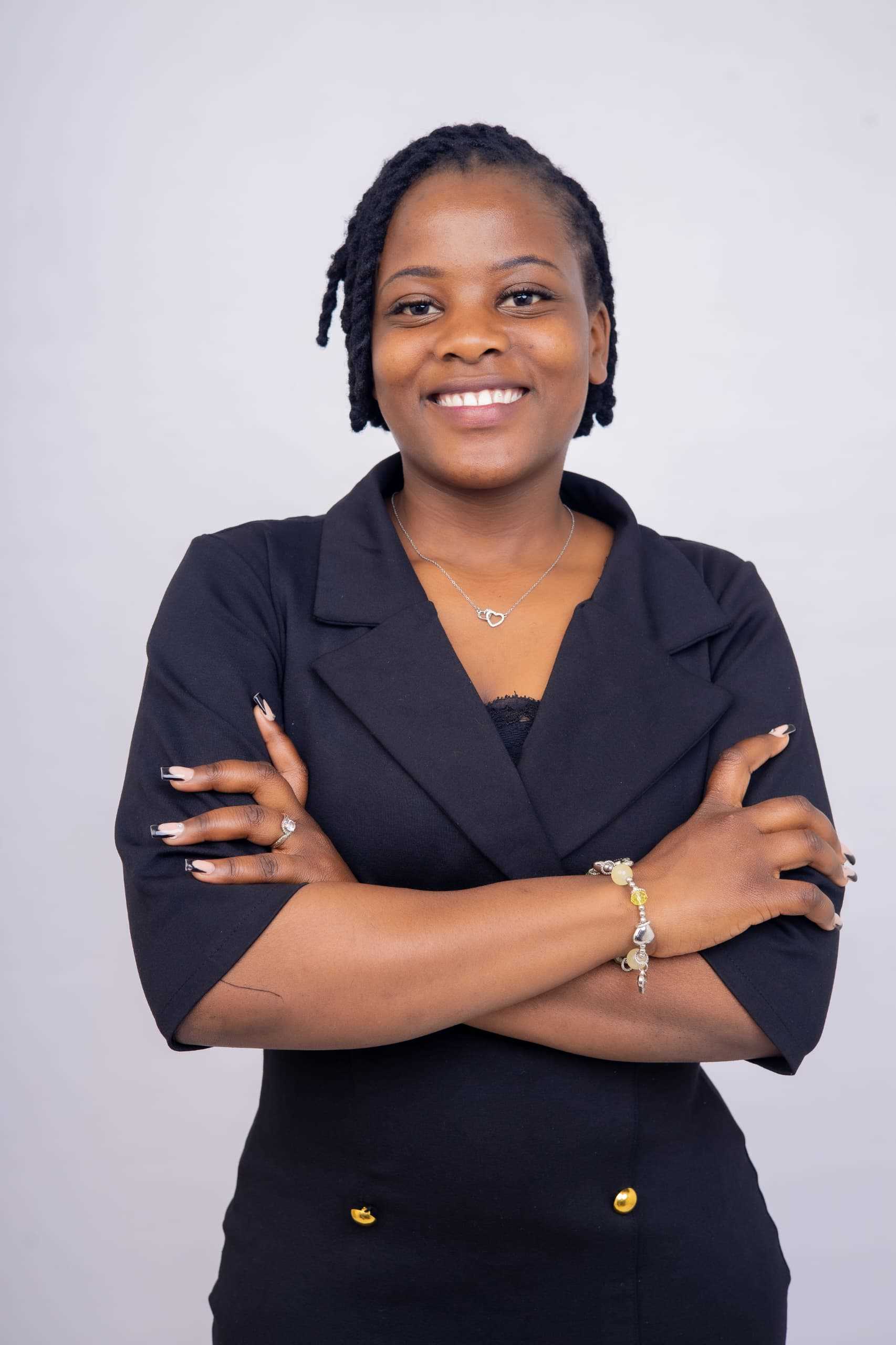
When Tanatsiwa Ntandoyami Chikove sits across from a traumatised child or a struggling family, she does not approach the moment as a distant professional observing pain from the outside. She understands the weight of trauma because she has carried it herself.
Her journey into social work and systemic family counselling did not begin in a lecture hall or office. It began in a childhood marked by trauma and inconsistent access to counselling support — experiences that shaped her determination to ensure other children do not endure the same silence.
“Growing up, I had a traumatic childhood which affected me greatly. Healing was a journey, and counselling was not consistent for me,” Chikove recalls. “I told myself that no child should have to live in trauma without getting help.”
Today, the Zimbabwean social worker is building a career dedicated to breaking cycles of abuse and emotional suffering within families. Armed with a social work degree from Midlands State University and specialised training in systemic family counselling, Chikove works as a digital advocacy and communications officer at Kumbekumbe Arts Trust while also serving as a school counsellor at Purple Patch Academy.
Beyond her formal roles, she represents a growing generation of young African professionals confronting a reality that remains deeply under-discussed across much of the continent — the long-term psychological scars of childhood trauma.
The hidden crisis behind “bad behaviour”
Across Zimbabwe, as in many parts of Africa, mental health services remain limited, particularly for children.
Psychological trauma is often hidden behind labels such as indiscipline, laziness or delinquency. For Chikove, this misinterpretation is one of the most damaging barriers facing vulnerable children.
“Acting out, aggression or withdrawal are often misunderstood by adults as bad behaviour rather than symptoms of distress,” she says.
Children who experience abuse or severe emotional neglect may develop anxiety, depression or post-traumatic stress disorder. Others struggle to regulate emotions or form healthy relationships. Yet without trauma-informed systems in schools and communities, these warning signs frequently go unnoticed.
Instead of receiving support, many children face punishment.
“Without understanding trauma, institutions can end up re-traumatising children rather than helping them heal,” Chikove explains.
Why families matter in healing
A defining aspect of Chikove’s work is her focus on systemic family counselling, an approach that challenges traditional views of therapy.
Rather than treating psychological distress as an individual problem, systemic counselling examines how relationships and family dynamics shape behaviour.
The approach became central to her professional identity during her internship at the Connect Zimbabwe Institute of Systemic Therapy, where she gained practical experience applying social work knowledge within a specialised therapeutic environment.
Instead of asking what is wrong with a child, systemic counselling asks what is happening around them.
“A child’s behaviour often reflects the emotional climate of the family,” Chikove says.
She recalls a case in which a child referred for severe behavioural problems was initially viewed as the source of the issue. Counselling sessions later revealed unresolved grief and ongoing parental conflict within the household.
As the family began addressing these deeper challenges, the child’s behaviour improved significantly.
“As the family system started to heal and support each other, the child’s behaviour changed dramatically,” she says.
Confronting stigma
Despite growing global awareness of mental health, stigma remains one of the biggest barriers preventing survivors of trauma from seeking help.
Related Stories
In many communities, discussing abuse or psychological distress is still considered taboo. Victims may be blamed, families fear public shame, and cultural norms discourage discussing private family struggles.
“There is often a tendency to stigmatise families or blame the victim,” Chikove says.
Women face particularly complex challenges. Economic dependence on abusive partners, fear of retaliation and limited access to support services can trap survivors in cycles of violence — leaving children as silent victims.
Advocacy beyond the counselling room
For Chikove, counselling alone cannot address these challenges.
She views her work as part of a broader struggle for social justice, arguing that mental health is inseparable from issues such as gender inequality, poverty and human rights violations.
A woman’s depression may stem from gender-based violence. A child’s trauma may reflect gaps in social protection systems.
“My counselling practice operates at the micro level,” she says. “But advocacy addresses the macro-level injustices that cause these problems.”
Through community engagement, storytelling and digital advocacy, she works to amplify conversations around trauma, gender-based violence and mental health awareness.
Schools as the frontline of resilience
Chikove believes schools could become one of the most powerful platforms for preventing long-term trauma.
Because children spend much of their time in classrooms, schools are uniquely positioned to enable early intervention. Trauma-informed education systems can help teachers recognise warning signs and respond with empathy rather than punishment.
However, resources remain uneven.
“Some schools are privileged to have counsellors or social workers,” she says. “Others still rely mainly on traditional disciplinary methods.”
Without greater investment in school-based mental health services, many children continue to fall through the cracks.
Carrying the emotional weight
Working with survivors of abuse inevitably carries emotional costs. Listening to stories of neglect, violence and trauma can be overwhelming, particularly when those experiences might have been prevented.
“The most emotionally challenging part is witnessing the suffering of children,” Chikove admits.
To manage emotional fatigue, she prioritises professional supervision, self-care and clear boundaries between work and personal life. Spending time in nature, connecting with loved ones and engaging in continuous learning help sustain her resilience.
Despite the challenges, moments of transformation continue to motivate her — a withdrawn child beginning to smile again, or a family learning to communicate without conflict.
“My motivation comes from the resilience of the children and families I work with,” she says.
Her long-term vision extends beyond individual counselling sessions. She hopes to help drive a cultural shift in which trauma, mental health and healing are openly discussed rather than hidden.
“I want to help normalise conversations around trauma and healing,” she says.







Leave Comments