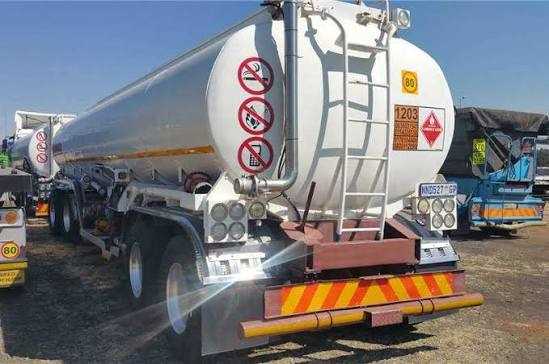




Every time you fill up your tank, the government takes nearly half of the money. Your income hasn't moved. Fuel prices have surged over 30% in weeks. And the people in power are calling it justified.
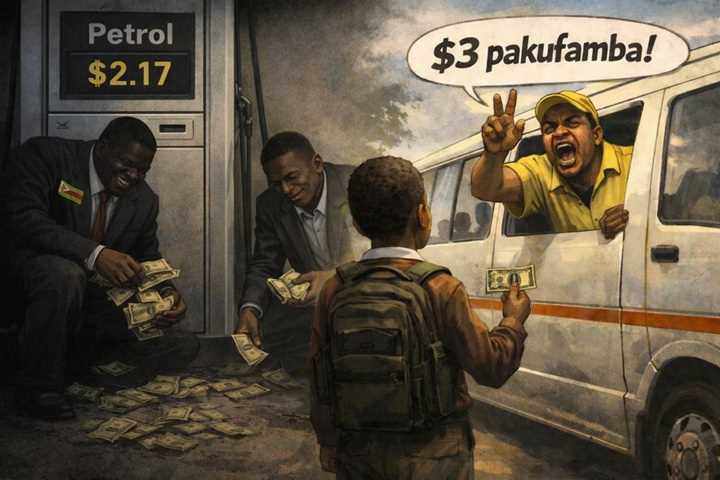
Contrary to what we are being told, US$2.17 for every litre of petrol at the fuel pump is not an unavoidable consequence of global oil markets. This is a policy choice, made deliberately, defended publicly, and renewed every time prices are reviewed.
Because of the $2.17 you pay, nearly 86 cents, that is almost 40%, goes to charges including taxes and levies. While Zambia, Tanzania and South Africa have recorded only marginal fuel price increases amid the same global pressures, Zimbabwe's prices have surged more than 30% in recent weeks. That gap between us and our neighbours is government.
The Numbers Don't Lie
Petrol sits at US$2.17 per litre. Diesel at US$2.05. The Consumer Council of Zimbabwe has confirmed that taxes and levies account for US$0.857 per litre on petrol and US$0.422 per litre on diesel. The Zimbabwe Taxpayers Platform has called on government to bring those levies down to 10%. The response from those in power? Justification.
Consumer Council CEO Rosemary Mpofu has said that while Zimbabwe cannot control the global oil shock, it absolutely can control what it piles on top. The government could choose to cushion its citizens. It is dithering.
“For every litre of petrol sold, nearly 86 cents vanish into taxes and levies. The government is using fuel as a captive market to fund its own excesses.”
Tendai Ruben Mbofana, Social Justice Advocate
Asked how we ended up at above $2 per litre yet other countries in the region seem to be maintaining minimal increases, Zimbabwe Regulatory Authority, ZERA, explained our pricing schedule.
“Where prices diverge across the region is at the level of domestic cost structures, frameworks, blending requirements, distribution infrastructure, currency arrangements. Each country in the region uses a different fiscal model to fund its energy and transport infrastructure, and therefore what aligns with its own national context. Zimbabwe's pump price reflects Zimbabwe's cost structure, as gazetted. As ZERA we calculate the price that results from them, verify it is accurate, and publish it,” said the regulator in response to ZNyaya questions.
The accountability for what is happening at Zimbabwe’s pumps sits squarely with those who design fiscal policy and who have chosen, again and again, to treat fuel as a lucrative revenue stream, rather than a lifeline.
Children At Risk, Earnings Eroded
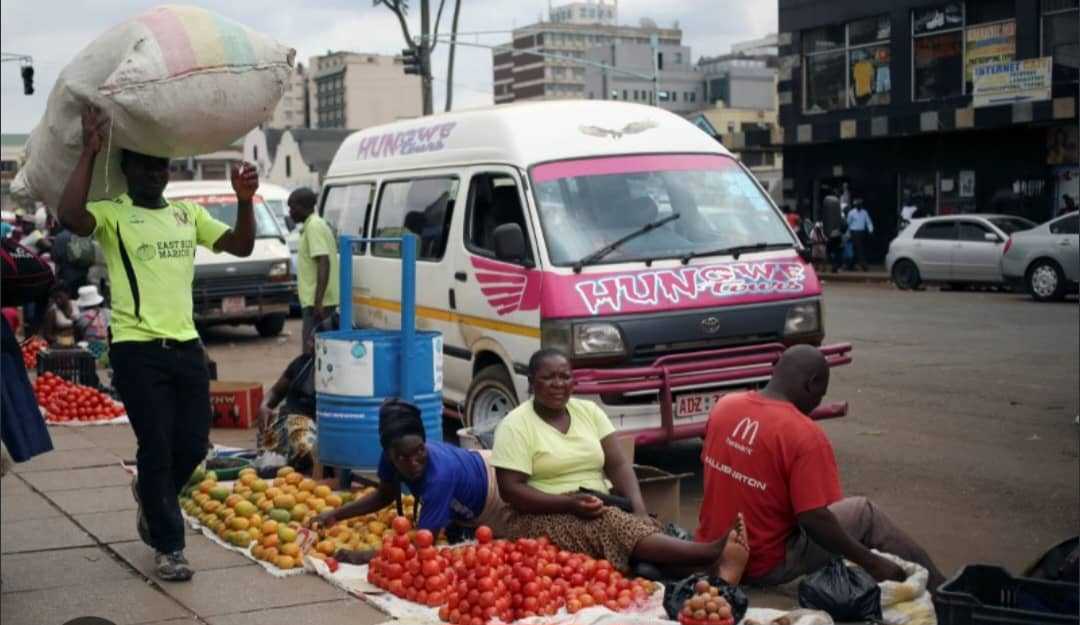
The fuel price at filling stations is painful to look at. The impact on citizens is worse. The latest increase saw transport fares spike so severely that commuting schoolchildren were caught out without enough fare to get back home. Social media carried many stories of stranded kids asking for lifts from private vehicle drivers, exposing themselves to sexual abuse and other risks.
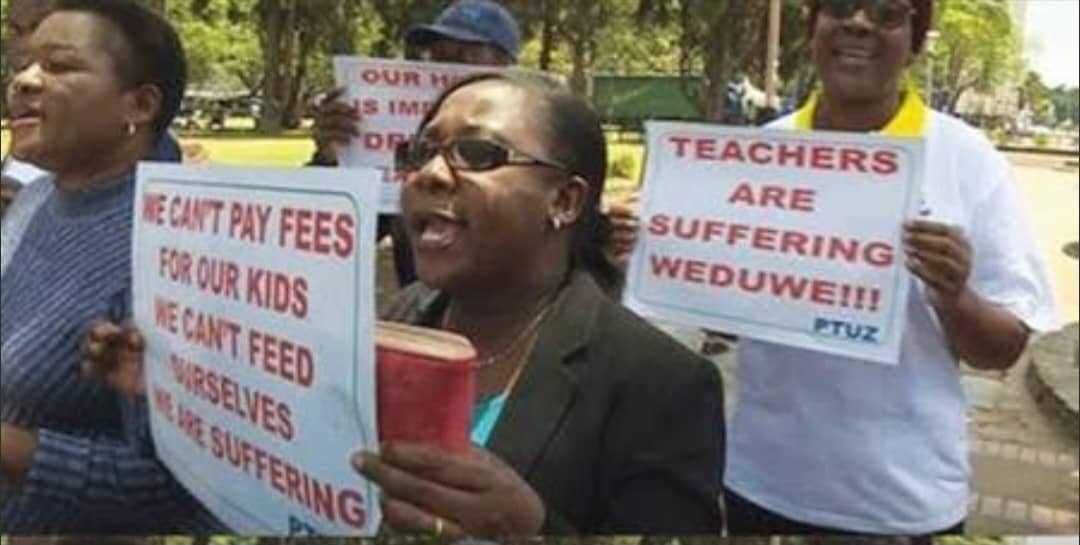
Workers on minimal salaries must still report for duty. Every fuel price rise ripples outward. Food becomes more expensive with bread already going up 10% to $1.10 in some outlets. What little remains in tight household budgets is being carved away day by day.
Related Stories
Tafadzwa Goliath of the Passengers Association of Zimbabwe put it plainly pointing out that people’s earnings are not increasing while fuel prices are. The gap between those two lines is where Zimbabweans are being crushed.
Senator Jerry Gotora has questioned why a country with ethanol blending capacity, pipeline infrastructure and large storage facilities is producing prices that outpace the region by this magnitude. The question has not been answered except for some vague prices of government looking into it.
A Captive Market. A Captured People.
Analysts use the phrase “captive market” for fuel because it describes the situation precisely: you cannot opt out. You cannot choose not to need transport. You cannot feed your family without supply chains that run on diesel.
Fuel is embedded in every stage of the value chain. That means this is not just a transport story. It is an inflation story, a poverty story and an inequality story all at once.
Because the State has zeroed in on fuel as the ideal extraction point, a commodity that every citizen must consume and through which revenue flows in regardless of whether people can afford it.
Economics student Perseverance Chifamba noted that Zimbabwe’s nearly 40% fuel price increase in such a short period far exceeds anything seen in comparable regional economies.
“It Could Have Been Worse” — The Arrogance of Power
When Finance Minister Mthuli Ncube addressed the crisis, he did not apologise. He did not acknowledge the suffering at bus stops and fuel queues. He implied that Zimbabweans should be grateful. The hike, he said in an interview on Thursday, could have been far higher, but the government had “effectively subsidised citizens through adjustments in levies and taxes.”
Read that again. The government that is taking 86 cents from every litre of petrol is calling itself a subsidiser. A minister presiding over 30%-plus price surges is presenting this as mercy. The condescension in that framing, the idea that citizens should be relieved it is not worse, tells you everything about how the Finance Minister views his responsibility towards the people of Zimbabwe.
President Emmerson Mnangagwa subsequently directed that the tariffs be reviewed. It was the kind of gesture that makes headlines, a presidential intervention, a signal of concern. But days later, Zimbabweans are still paying exactly what they were paying before. No downward adjustment has been announced. Commuters are still handing over notes. Schoolchildren are still anxiously hoping they will return home without getting stranded.
“If they reduce prices by a small margin, kombi fares will not come down.”
— A commuter in Chitungwiza
That dejected commuter in Chitungwiza speaks for millions. Many are deeply skeptical that any half-hearted review will translate into real relief. They know how this works. Even if the pump price nudges down by a few cents, the real impact on costs will be negligible. The damage done to fares, to inflation, to household budgets will not reverse automatically.
The Question We Must All Ask
The Zimbabwe Taxpayers Platform has warned that failure to act risks social upheaval in an already fragile, largely informal economy.
Right now, the people of this country must ask: Who is getting what from the 86 cents per litre of petrol?







Leave Comments