






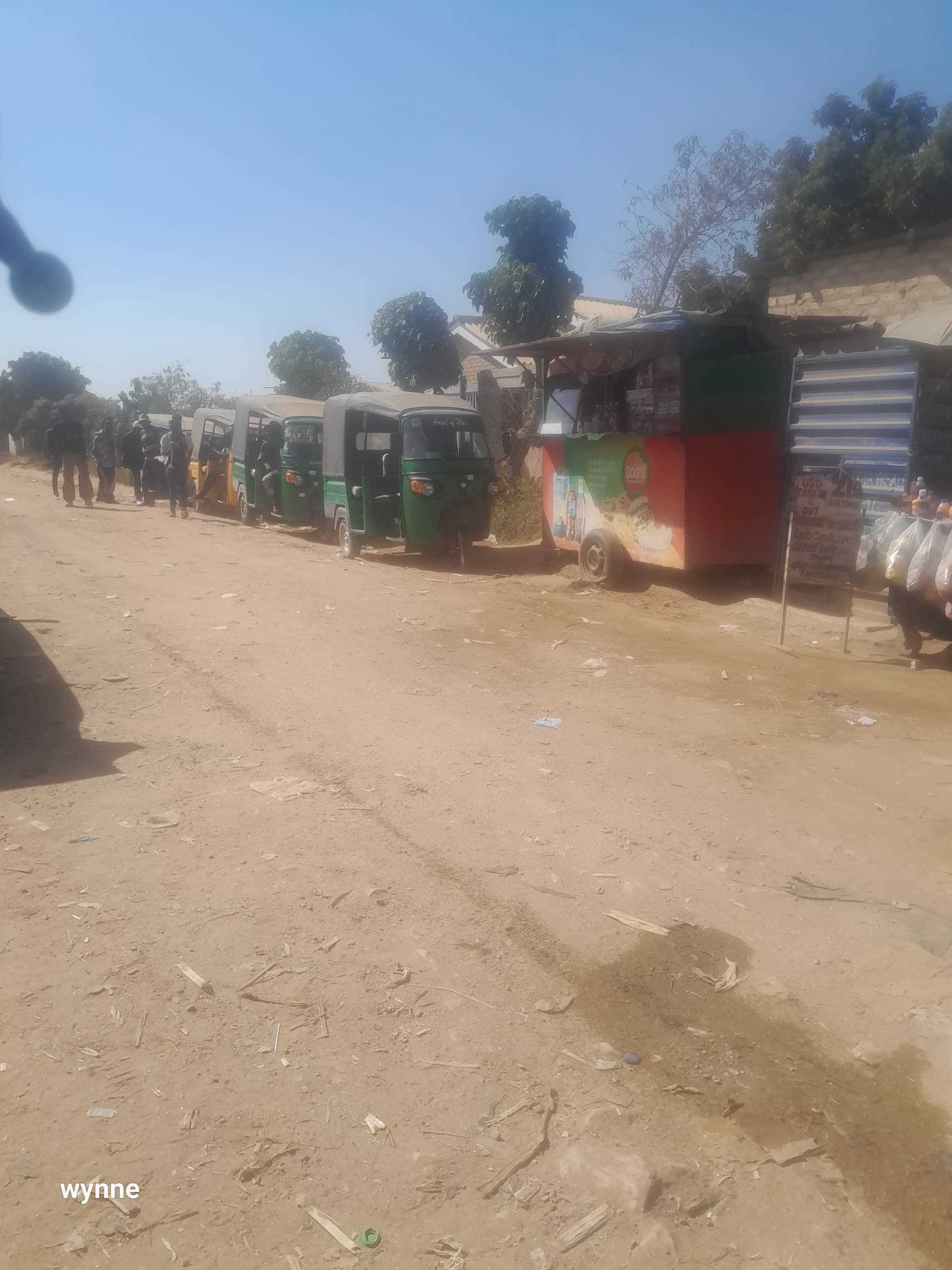
Eastview Park’s once-quiet roads are now buzzing with Keke motorised tricycles, an affordable transport alternative that is reshaping how residents move around.
While many commuters and business owners hail them as game changers, others warn that the largely unregulated service poses serious safety, traffic, and environmental risks.
Keke transport is not unique to Zimbabwe. In countries such as Nigeria, India, Mozambique, and parts of Southeast Asia, similar three-wheeled vehicles have long been part of everyday urban mobility.
In Nigeria, where they are popularly known as Keke Napep, they operate under local authority regulations that include licensing, designated routes, and passenger limits.
In India, auto rickshaws are formally recognised and regulated as part of the public transport system.
Residents in Eastview Park argue that instead of banning Kekes, authorities can draw lessons from these countries by formalising and regulating the sector.
A comparison can also be drawn between Keke transport and the rise of electric scooter-sharing services in developed countries. In cities across Europe and the United States, companies such as Bird and Lime introduced dockless electric scooters, allowing users to pick up a scooter, ride to their destination, and leave it for the next person.
Like Kekes, these scooters address first- and last-mile connectivity challenges by providing short-distance transport that complements buses and trains. Both modes offer on-demand convenience without reliance on fixed schedules.
However, key differences exist. Electric scooters are powered by electricity and produce zero emissions, making them more environmentally friendly than fuel-powered Kekes. Despite this, they have faced safety and regulatory challenges, including accidents, sidewalk congestion, and poor parking practices.
Related Stories
Cities such as Paris have since introduced stricter regulations, highlighting the importance of managing emerging transport systems.
Many passengers in Eastview Park appreciate the low fares. “Before Kekes came, during festive seasons kombi drivers would increase fares from Gazebo shops to our homes,” said a commuter. “Now the price remains 50 cents.” Residents say Kekes can easily access narrow streets and poorly serviced areas, making daily travel more affordable.
However, the benefits come with challenges. “Since these Kekes are not registered to carry passengers, police sometimes impound them,” another commuter explained. “When that happens, kombi drivers take advantage and raise fares, especially when it is raining.”
Gazebo Phase 4 resident Takudzwa Kamusiyeni called on authorities to improve infrastructure. “The government should help us by constructing better roads. Sometimes you are forced to take a kombi because it is safer. Kekes are not safe on muddy roads, especially during the rainy season,” he said.
Small-scale poultry farmer Ms Mavakise said Kekes have simplified her business operations. “If I want chicken feed from Gazebo shops, I pay using EcoCash and call a Keke driver to deliver it to my home. It saves time. Before, I used a jagger or a wheelbarrow,” she said.
Despite their usefulness, safety concerns remain high. Veronica Chiyaire expressed shock after witnessing schoolchildren overcrowded in a Keke. “They were packed like groceries. These vehicles are meant to carry goods, not people. Our roads are not fit for them to transport passengers. Authorities should stop this; it is not safe,” she said.
A Zim Now reporter who spoke to a police officer at a bus stop was told that Kekes are not registered to operate on public roads. The officer alleged that some operators pay bribes to avoid enforcement.
One Keke driver said the business is demanding but provides livelihoods. “On a normal day, we make about 60 dollars. We are expected to remit between 45 and 50 dollars to the owner, depending on the arrangement,” he said.
Zimbabwe’s transport laws require all public service vehicles to be registered and licensed. As Kekes continue to grow in Eastview Park, residents say authorities must decide whether to regulate, formalise, or restrict them.
For now, Kekes remain a symbol of both opportunity and risk in the evolving story of urban mobility.








Leave Comments