









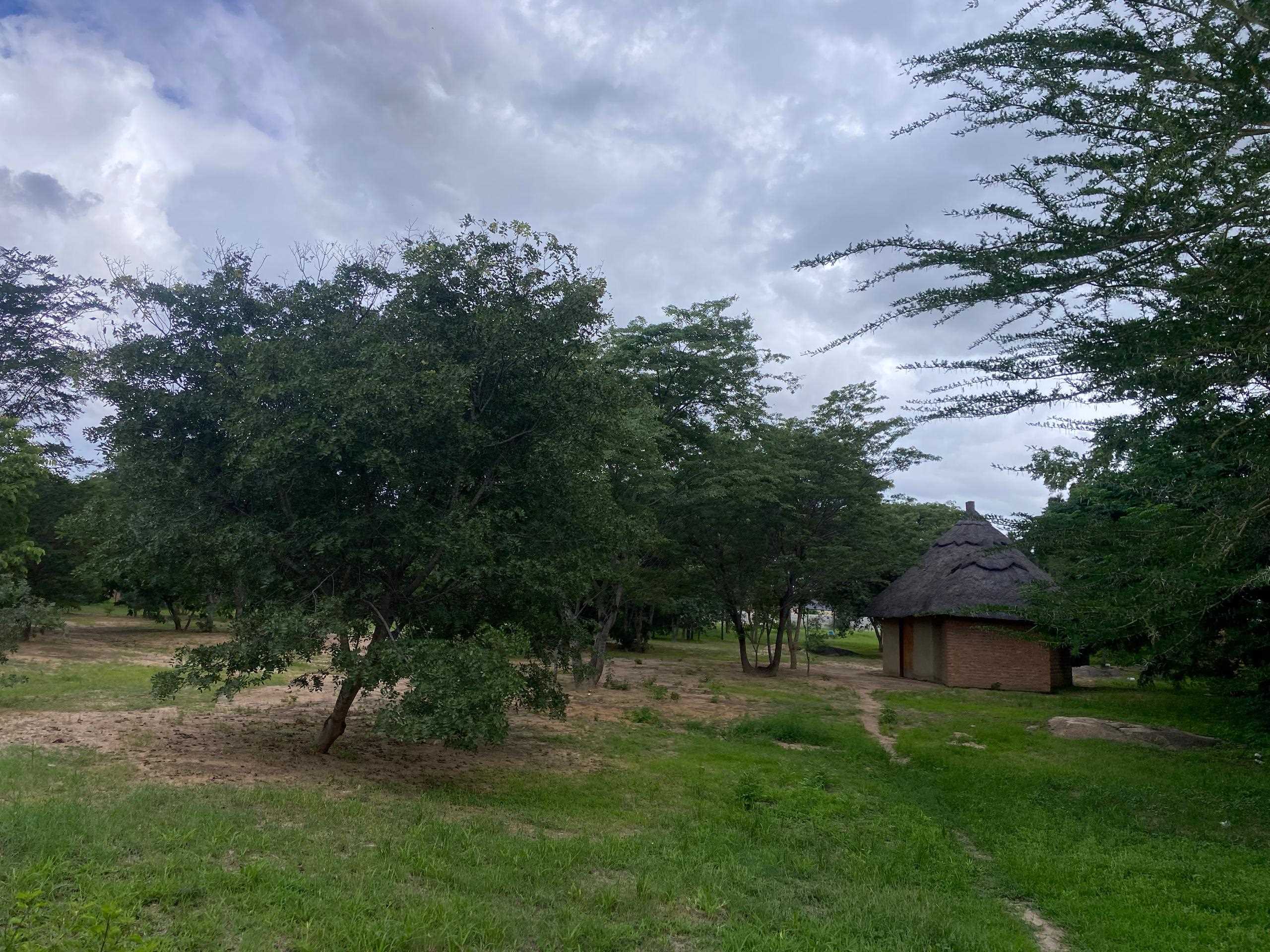
Nestled within Panyatsime Heritage and Cultural Centre's Rockview embrace, the shrubbery unfurls like a verdant tapestry woven from Zimbabwe's ancient earth.
Sun-dappled paths wind through clusters of mukute (Albizia antelopes), their feathery leaves whispering secrets as they tower protectively, bark rich in tannins once harvested for traditional dyes and ropes that bound villages together.
Intertwined are resilient mupfura (wild loquat) shrubs, bursting with golden fruits that lure birds and children alike, their seeds ground into flour for nourishing porridges while the bark soothes fevers as a time-honored remedy.
Delicate mutondo branches arch overhead, heavy with oval nuts prized for carving intricate beads and tools, their shade a cool sanctuary where visitors pause to learn how these sentinels once marked sacred homestead boundaries and fuelled communal feasts.
Deeper into the indigenous orchard, a symphony of scents and stories blooms under the African sun. Muringa trees stand sentinel with their umbrella crowns, leaves plucked for potent teas that boost vitality and combat ailments, their pods rattling like ancestral maracas in the breeze.
Nearby, musasa (Brachystegia) groves form cathedral-like canopies, roots delving deep to summon rain dances from the soil, timber once shaped into sturdy mortars for pounding sadza.
Visitors, guided by centre storytellers, trace gnarled trunks of mnondo (Harungana madagascariensis), admiring its milky sap used to heal wounds and craft arrows, each tree a living ledger of survival—fruit for famine, bark for medicine, branches for lore—inviting hands to touch, noses to inhale, and hearts to claim Zimbabwe's wild, whispering lineage.
The rich and diverse traditional orchard aside, the centre isn't a sterile museum—it's also a throbbing village of thatched huts, granaries, and gathering dares, where Zimbabwe's past pulses through song, craft, story, and play.
Founded in 2018 by cultural guardian Mrs. Rumbidzai Dihwa, Panyatsime invites the next generation to ditch dusty textbooks and step into their ancestors' footprints, rediscovering identity amid boulders and indigenous trees.
What began as a simple plot of land has bloomed into an immersive traditional homestead, meticulously curated to mirror Zimbabwe's heritage-based curriculum.
"Panyatsime is a place to learn, unlearn, relearn, share, and grow," Mrs. Dihwa says with quiet fire. "It's not mere preservation—it's participation, bridging yesterday's wisdom with tomorrow's leaders."
Related Stories
For schoolchildren flooding in from Chitungwiza and beyond, Panyatsime transforms abstract history into a three-dimensional adventure. Forget rote memorization; learners plunge into recreated homesteads—complete with imba yekubikira kitchens, child-rearing huts, and kraals—each corner whispering tales of social norms and daily rhythms.
Traditional games like tsoro, nhodo, and sarura wako sharpen strategy, logic, and teamwork, echoing childhoods of old.
Nature walks through indigenous groves foster reverence for Zimbabwe's biodiversity and ecology.
Storytelling circles and music sessions unleash ancestral proverbs, rhythms, and voices long silenced in urban sprawl.
These align seamlessly with the Ministry of Primary and Secondary Education's heritage push. At a vibrant Africa Day event, senior official Solomon Makokisi rallied educators: "Culture centres like this are living classrooms. They animate books, letting learners see, hear, touch, and perform the customs that forged their forebears."
Panyatsime's embrace extends to the stomach and spirit. Young visitors savour Zimbabwean staples—sadza paired with indigenous relishes—unraveling the cultural threads woven into every bite. These flavours don't just nourish; they root identity deep.
Come Culture Month and Africa Day, the centre erupts. Students converge for thunderous dances, craft workshops, and identity dialogues, turning heritage from relic to rocket fuel for the future. Social media buzzes with clips of these feasts, confirming Panyatsime's role as a culinary and festive beacon.
Mrs. Dihwa's dream pulses with purpose: "We spark love for Zimbabwean culture while forging sustainable livelihoods."
Heritage Officer Lilyosa Maganzo amplifies this for the youth: "If respecting elders, honouring values, and harmonizing with nature is backward, the world has marched forward the wrong way."
Her words land like a drumbeat—heritage isn't retreat; it's the bedrock for global engagement.
As the new school term dawns, Panyatsime beckons schools nationwide: Bring your learners. Let them play sharpening games, taste storytelling dishes, and dance into self-discovery—experiences no classroom wall can contain. In globalization's whirlwind, these roots grant perspective, turning students into proud custodians.
"We're not just preserving culture," Mrs. Dihwa affirms. "We're evolving it for today and tomorrow."







Leave Comments