



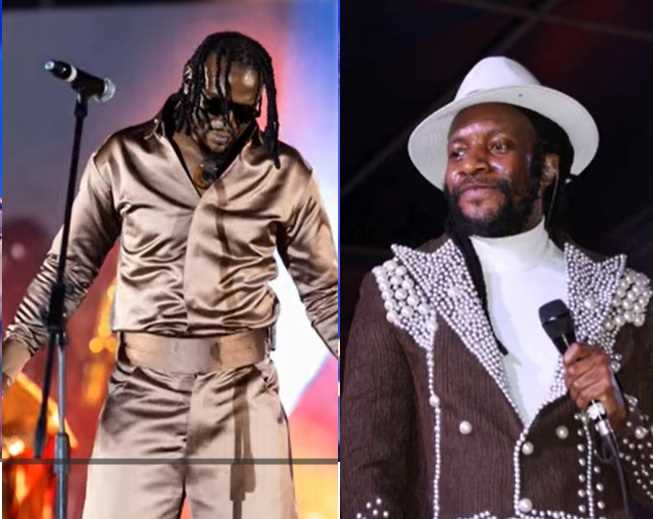
As 2025 morphed into 2026, Zimbabwe’s urban political imagination focused on who is the GOAT: Winky D or Jah Prayzah on a night they performed on the same stage.
For many fans of either musician, the discussion has been on who is better than the other. Even Information Permanent Secretary Nick Mangwana got in at that level with his declaration that Jah Prayzah is the bigger artist and some asinine inference that Winky D is the one who has generated the perceived beef between the two.
But for me, comparison of the two musicians is a futile exercise. They appeal to different tastes. What was outstanding about that show is the blissful blindness of the self-appointed hardline opposition fan base rallying around Winky D to the erasure of what was a key platform.
Winky D had come to represent something larger than music. His New Year’s Eve shows were one of the last crossover spaces where urban frustration could gather, with a sense of shared identity against persecution, suppression, and exclusion.
Jah Prayzah, by contrast, is widely read as the cultural face of the establishment, an artist whose success story is intertwined with power, access, and state proximity. Seeing the two occupy the same platform forces an uncomfortable reckoning.
Attending the show for Winky D fans was accepting symbolic coexistence and conceding a cultural territory long assumed to belong to the opposition’s emotional universe.
That aspect of the show is even more stark when read against what has been unfolding more across the year. Nelson Chamisa failed to start a credible new party.
Meanwhile, for ZANU-PF, high-profile car handovers to musicians, clergy, athletes, and other urban influencers have become routine.
Football players were lavishly resourced, with projects such as Scotland FC prominent and well-funded, and sponsorships linked to politically adjacent capital, including Sakunda Holdings, reasserting themselves in the national sporting imagination.
Related Stories
Football has become a safe delivery system for this shift. In urban Zimbabwe, it gathers the young, the apolitical, the angry, and the indifferent into the same physical space without asking them to agree on anything.
The political benefit accrues, flowing back to ZANU-PF through association rather than outright declaration.
A large share of Zimbabwe’s cultural and influencer class is now compromised, not always by what they have received, but by what they hope to receive. Cars, cash, proximity, and access have produced something more valuable than praise. They have produced caution.
The result is a vacuum. There is no longer a credible cultural figure willing or able to lead a sustained anti-ZANU narrative in the cities. The microphones are still there, but they are pointed away from politics. Notably, Winky D fans don’t seem to realize that they are running on fumes, with no new anti-ZANU-PF anthem from their musical deity.
While the car and cash soft power has been loudly at work, the opposition has largely been speaking to itself in a different register. Its dominant conversations have been legal, procedural, and forward-dated, focused on courts, constitutions, and the long shadow of 2030. These debates matter, but they do not organize daily life. They do not shape weekend rituals or cultural loyalties. They do not compete with music, football, or visible generosity.
The danger for the opposition is that the cities are drifting. Anger cools into acceptance. Symbolic spaces disappear as Winky D fans troop to a place where Jah Prayzah is the other star attraction.
For the next round of elections, whatever opposition there is, mobilization becomes harder because people have stopped caring enough to show up. Apathy is cheaper than persuasion and often more decisive.
This is why the New Year’s Eve stage sharing was about inevitability. The message, intentional or not, is that the opposition is dead. When urban voters move from defiant to indifferent, that alone is a strategic win.
For now, the strategy appears coherent and dangerously underestimated. Because it seems to escape many “wokes” that the New Year’s show reconfigured urban political psychology when an opposition icon literally joined the ranks of the establishment.






Leave Comments