






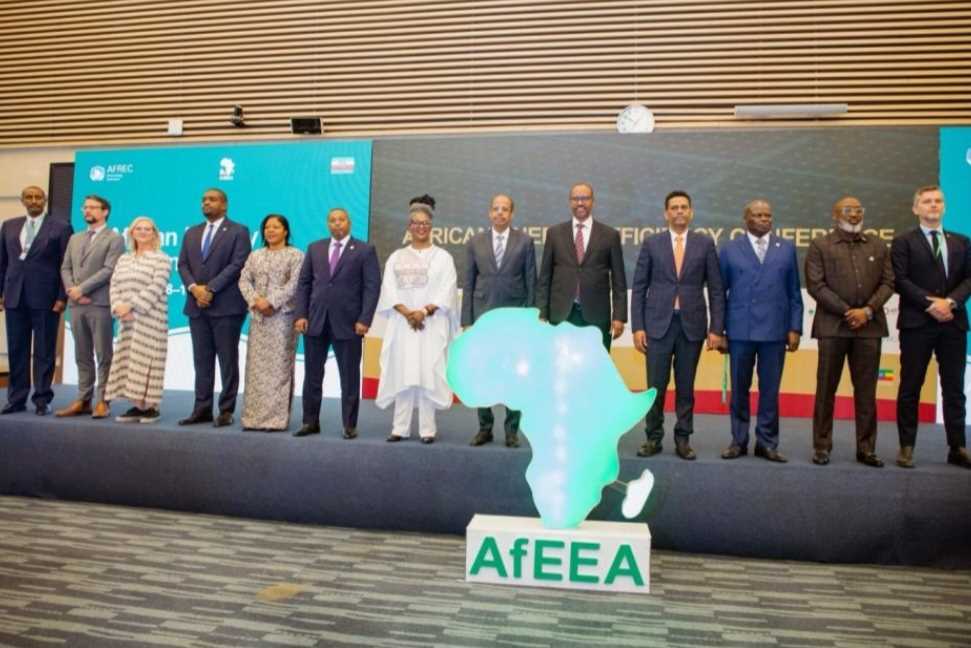
African leaders and energy policymakers have committed to placing energy efficiency at the centre of the continent’s development and industrialisation agenda following the inaugural African Energy Efficiency Conference held in Addis Ababa.
Hosted by the African Union through the African Energy Commission, in partnership with Ethiopia’s ministries responsible for energy and trade, the conference brought together more than 400 policymakers, regulators, private sector players and development partners from across the continent.
The meeting marked a major milestone in Africa’s energy transition, with delegates reaffirming continental targets to improve energy productivity by 12% by 2030, 50% by 2050, and 70% by 2063, as outlined in the African Energy Efficiency Strategy and Action Plan adopted earlier this year.
Speaking at the conference, African Union Commission Chairperson Mahmoud Ali Youssouf said energy efficiency had moved from being a technical consideration to a strategic development priority.
“Every kilowatt-hour wasted is a school not electrified, a vaccine not safely stored, a business not powered, or a job not created,” Youssouf said.
“Energy efficiency is an economic shield, an environmental safeguard, and a strategic pathway to securing Africa’s energy future.”
Energy efficiency as Africa’s “first fuel”
African Union Commissioner for Infrastructure and Energy Lerato Mataboge described energy efficiency as the continent’s “first fuel,” arguing it offers the fastest and most affordable route to expanding access to electricity while stabilising power systems.
She noted that more than 70% of Africans still live in energy poverty, while energy productivity on the continent remains below global averages.
“Energy efficiency represents the fastest and most affordable tool at our disposal to expand access, stabilise power systems, and unlock sustainable growth,” Mataboge said.
“Across industries, transport, buildings and households, efficiency measures can unlock billions in savings while cutting emissions.”
Related Stories
Mataboge also welcomed the operationalisation of the African Energy Efficiency Alliance, which was launched at COP29 to promote policy coordination, research, investment and knowledge-sharing across member states.
Ethiopia’s Deputy Prime Minister Adam Farah said Africa must rethink how it produces, distributes and consumes energy if it is to secure energy sovereignty and climate resilience.
“Africa must scale regional power interconnections to enhance grid stability, reduce costs and unlock cross-border electricity trade,” Farah said.
Ethiopia’s Trade and Regional Integration Minister Kassahun Gofe Balami highlighted the role of energy efficiency in supporting regional integration, citing the country’s major power projects and electricity exports to neighbouring states.
“Sustainable energy must be treated as a serious continental project to enable trade, investment and integration,” Balami said.
The conference featured a high-level ministerial panel with representatives from countries including Zimbabwe, South Africa, Malawi, Tanzania and Seychelles, who shared national experiences and challenges in scaling energy efficiency across sectors.
Delegates also discussed the African Energy Efficiency Facility, which is expected to play a key role in mobilising finance, strengthening capacity and supporting implementation of efficiency programmes.
The conference further saw the launch of the African Energy Transition Strategy and Action Plan, a continental roadmap focused on clean cooking, energy efficiency, cross-border power trade, innovation and skills development.
The meeting concluded with a communique reaffirming Africa’s collective commitment to improving energy efficiency across electricity, transport, industry, agriculture, buildings and household appliances as part of a just and inclusive energy transition.




Leave Comments