







Zimbabwe has identified 31 investment opportunities requiring about US$535 million in financing, but turning them into projects that banks and investors are willing to fund remains a major challenge.
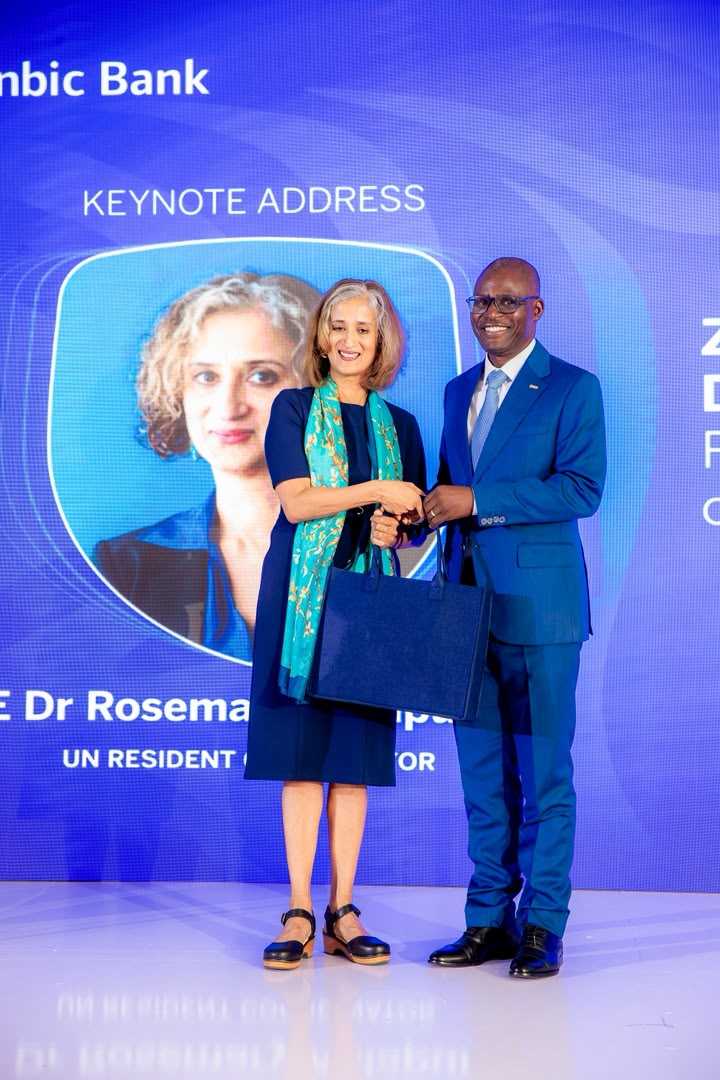
United Nations Resident Coordinator in Zimbabwe Dr Rosemary Kalapurakal said the country needed to focus on preparing viable projects, managing investment risks and creating conditions that allow capital to reach businesses.
Speaking at the second edition of the Stanbic Bank Zimbabwe Blue on Green Sustainability Conference on Friday, Kalapurakal said Zimbabwe had significant opportunities in renewable energy, agriculture, water, mineral value addition and digital services.
“The ambition is not simply to make countries fundable. It is to make economies, institutions and enterprises investable,” she said.
Held under the theme “Driving Zimbabwe’s Sustainable Growth”, the conference brought together government officials, financial institutions, investors, business leaders and development partners to discuss the role of sustainability in economic development.
The 31 opportunities identified through Zimbabwe’s SDG Impact Investment Map and the UNDP-Zimbabwe Investment and Development Agency pipeline offer a starting point for attracting investment.
However, Kalapurakal said identifying opportunities was not enough. Projects needed proper preparation, realistic revenue plans, clear responsibilities and safeguards to convince financiers that their money could generate returns.
“We need fewer opportunities stranded at concept stage, and more with an accountable sponsor, credible feasibility work, realistic revenues, safeguards, transparent procurement and sensible risk allocation,” she said.
For Zimbabwe, the challenge is not only finding money but also addressing the risks that prevent investors from committing funds.
Kalapurakal identified currency uncertainty, debt constraints, energy insecurity and weaknesses in implementation capacity among the risks that need attention.
She said financial support alone could not solve every problem. Where regulations were unpredictable, policy improvements were needed. Where projects were poorly prepared, more work had to be done before approaching commercial banks.
“If a project does not have a viable revenue model, a guarantee will not create one,” she said.
She added that grants could support project preparation, concessional financing could address genuine funding gaps, while guarantees could cover specific risks that discourage lenders.
Kalapurakal also highlighted reforms by the Zimbabwe Investment and Development Agency (ZIDA), including digital licensing, the eRegulations platform and the One Stop Investment Services Centre. These measures have reduced licensing turnaround times from 21 days to five, she said.
“These are practical reforms because, for an investor, time, cost, transparency and predictability matter,” she said.
However, she said the next step was to turn these improvements into a stronger pipeline of projects ready for investment.
Mobilising domestic capital
Related Stories
Kalapurakal called for greater use of domestic savings to finance development, rather than relying heavily on external funding.
She cited research showing that Africa holds more than US$4.4 trillion in investable domestic capital across pension funds, insurance and sovereign wealth funds.
By comparison, net bilateral official development assistance from OECD Development Assistance Committee countries to Africa was about US$42 billion in 2024.
The figures measure different things — accumulated investment capital and annual aid flows — but highlight the potential role of domestic finance in development.
“Zimbabwe’s development cannot ultimately be financed by aid alone,” she said.
Kalapurakal said financial structures were needed to help pension funds, insurers and other long-term investors support infrastructure and businesses while managing their risks.
Smaller renewable-energy and agricultural projects could be combined into larger investment portfolios to attract financiers that might not be interested in funding individual projects.
She also called for reliable financial information, transparent debt management, predictable regulations and consistent policies to improve investor confidence.
Banks urged to make sustainability part of business
Stanbic Bank Zimbabwe chief executive Solomon Nyanhongo said sustainable growth must strengthen the economy today without compromising the opportunities, resources and wellbeing of future generations.
“Your presence reflects a shared understanding that sustainability cannot be delivered by one institution, one sector or one set of experts. It requires the deliberate interweaving of people, ideas, partnerships, innovation and responsible action,” he said.
Nyanhongo said sustainability was increasingly being incorporated into the bank’s governance, strategy, risk management, credit assessment, product development and daily operations.
The bank has also created a Head of Sustainability position to coordinate its sustainability agenda and strengthen accountability.
Its approach is guided by three high-impact goals: infrastructure and economic development, financial inclusion, and entrepreneurship and job creation.
Nyanhongo said the bank was directing capital towards sectors that could strengthen Zimbabwe’s long-term productive capacity, including renewable energy, healthcare, agriculture, enterprise development and critical infrastructure.
He added that the bank remained committed to strengthening its sustainability practices and advancing towards certification under the Sustainability Standards Certification Initiative.
Kalapurakal said the United Nations would continue working with Government, financial institutions and development partners to improve investment readiness and help translate national development priorities into credible investment opportunities.
“Ultimately, Zimbabwe does not lack opportunity. The task now is to make more of that opportunity investable, and to make successful investment easier to repeat and scale,” she said.







Leave Comments