







Why Africa and the Global South must build symbiotic relationships with nations willing to share the secrets of their modernization
Saxon Zvina
I. Shifting Global Gravity and the Meaning of Symbiotic Partnership
On 10 September 2026, Kevin Rudd addressed Australia’s National Press Club, delivering what many observers regard as one of the frankest assessments of global‑order change from a Western political figure in a generation. The former Australian prime minister described a world where the economic‑technological centre of gravity has moved decisively eastward. He warned that China views artificial intelligence not merely as a catch‑up instrument, but as a “turbocharging device” to “leapfrog the West”. He listed seven priority investment areas for Australian sovereignty: defence, AI, critical minerals and, notably, automotive manufacturing — an industry Australia abandoned a decade ago and now imports overwhelmingly from China.
Many Western commentators frame China’s rise purely through a threat lens. Across Africa, Latin America and large parts of Asia, a different reading prevails: a nation that modernised through deliberate state‑oriented investment in infrastructure, education and technology, and is now prepared to share selected elements of its development playbook. The core question for the Global‑South is not whether to fear or welcome China’s rise. It is how to build symbiotic partnerships: relationships built on two‑way exchange, genuine knowledge transfer and local capacity‑building, rather than one‑side prescriptions imposed from outside.
No nation modernised in total isolation. Japan studied and adapted Western practices. South‑Korea drew lessons from Japan and adapted them locally. China learned from multiple external sources while forging its own distinctive development path. Such foreign‑derived insights serve only as reference material; no country’s modern‑playbook can be mechanically copied, given divergent historical conditions and domestic resource constraints. The Global‑South needs to follow a comparable pattern — but with partners who understand modern‑development outcomes cannot be dictated from abroad. Modern‑knowledge must be co‑created, locally adapted and domestically owned.
II. The Imperative of Meaningful Knowledge Transfer
At the 2026 Global‑South Modernisation Forum held in Cairo, scholars and policymakers from nearly 30 nations gathered under the theme “The Rise of Artificial Intelligence”. A striking consensus emerged: Global‑South priorities are shifting from “access to foreign technology” toward “transforming technology into endogenous national development capacity”.
This is the central crux. Mere access without domestic capacity creates dependency. Capacity without external access produces isolation. Genuine symbiosis requires both dimensions.
Former Egyptian Prime Minister Essam Sharaf warned that AI “could deepen the Global‑South’s external dependence on software, algorithms, computing power and knowledge, thereby creating a new North‑South divide”. His proposed solution was not disengagement, but purpose‑driven cooperation: strengthen joint research, build AI applications for local languages, and advance responsible global AI‑governance frameworks.
China has put forward concrete practical offers. It will make 5,000 AI‑training slots available for developing‑world participants over the coming five‑year period. It has released open‑source AI models, established the China‑Africa Innovation Cooperation Centre focused on technology transfer, and committed to developing localised AI tools adapted to African languages. Forum participants described China’s “commitment to open‑source, openness, cooperation and sharing” as a “practical pathway” for bridging the AI‑divide. These initiatives are not acts of one‑sided charity. They represent investments in shared futures built upon mutual benefit and non‑interference principles.
It should be emphasised that training programmes and open‑source resources constitute only external inputs. Converting these offerings into lasting domestic capability depends heavily on each country’s own education systems, research institutions and talent‑retention mechanisms.
Symbiosis is reciprocal: receiving knowledge transfer also presupposes local market access, industrial‑sector engagement and real‑world deployment opportunities on the Global‑South side.
III. Physical Infrastructure as the Bedrock of Sovereign Capacity
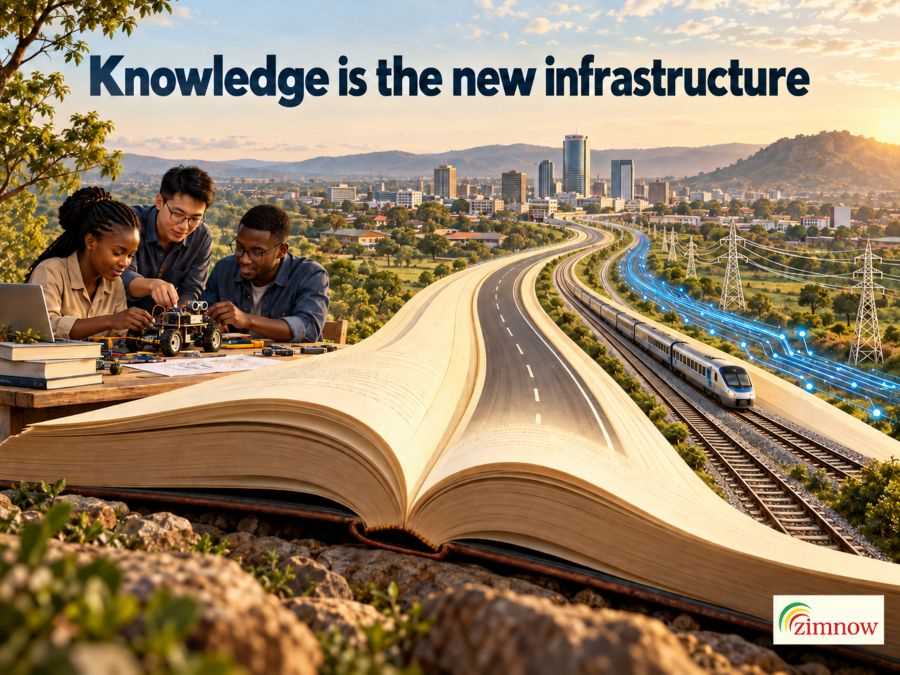
Rudd’s warning concerning Australia’s eroded automotive‑manufacturing capacity holds far‑reaching lessons for the wider world: national sovereignty ultimately rests upon robust, tangible productive capacity. For African nations, this translates into functional roads, railways, ports, power‑generation grids and broadband connectivity — the physical sinews that underpin genuine economic self‑determination.
Chinese‑supported infrastructure construction has delivered nearly 100,000 kilometres of roads, more than 10,000 kilometres of railways, close to 100 port facilities and 66,000 kilometres of power‑transmission lines across the African continent. These are not merely abstract statistical figures. They form critical economic arteries that facilitate cross‑border trade flows, the exchange of knowledge and ideas, and the emergence of fresh economic opportunities for communities across the region. The revitalised TAZARA Railway — a historic symbol of African liberation and post‑independence solidarity — is now being re‑envisaged as a “Prosperity Belt”, connecting Tanzania, Zambia and wider regional economies to global supply chains and international markets.
China’s zero‑tariff policy, which removes duties across all tariff lines for its 53 African diplomatic partner‑nations, has already generated tangible, on‑the‑ground outcomes. China‑Africa trade reached a record high of $348 billion in 2025. Only two months after the policy took effect on 1 May 2026, China’s imports from Africa increased by 23.5% year‑on‑year, opening up expanded market access for African goods to China’s enormous consumer base. In the first half of 2026, reported Chinese BRI‑related direct investment into Africa rose sharply by 254% to $33.5 billion. It should be noted that this reflects strong short‑term period‑on‑period growth and does not guarantee such elevated rates will be sustained over the long run. Taken together, these shifts signal meaningful structural opportunities for African economies to move past over‑reliance on raw‑commodity exports and make tangible progress towards value‑added manufacturing production and deeper regional industrial integration.
IV. STEM Education as a Core National‑Security Priority
Related Stories
Kevin Rudd’s well‑cited observation that 34% of Chinese university freshmen enrol in engineering‑related disciplines, compared with 5.6% in the United States, should be treated not as boastful rhetoric but as a practical development blueprint. Africa faces an estimated need for an additional 23 million STEM‑qualified graduates by 2030. Today less than 25% of African tertiary‑level students pursue STEM‑related fields; across 15 surveyed African nations, only 9% of young people possess basic digital‑literacy competencies.
Responses must be systematic. The African Union’s STISA‑2034 strategy calls for moving “beyond policy statements and pilot‑scale projects toward scaling research outputs into market‑ready practical solutions”. The China‑Africa STEM Educators Acceleration Program was launched in 2025 to strengthen local STEM teaching capacity in African countries. 17 Luban Workshop vocational‑training sites now operate across 15 African countries. The China-Africa Universities 100 Cooperation Plan, proposed by Chinese President Xi Jinping in 2023, a pivotal project in advancing Sino-African higher education collaboration, focuses on the 10 key areas of health and wellness, agricultural development, trade and investment, mineral resources, connectivity, environment and sustainable development, language, culture and mutual learning among civilizations, national and social governance, media communication and national image, and digital education. This plan has brought together 114 higher‑education institutions for joint exchange.
Every African nation ought to set realistic targets aiming for 20‑30% of university enrolments within STEM‑aligned disciplines, calibrated against domestic industrial‑development roadmaps. Education ministries should maintain structured linkage with industry ministries. Each university ought to build formal partnerships with domestic or international technology enterprises delivering hands‑on practical training and clear employment pathways.
V. Artificial Intelligence Built Around African Local Priorities
The AI‑driven technological revolution will not stand still and wait for Africa to catch up. The continent must engage with this transformative wave not merely as passive end‑user consumers, but as genuine co‑creators of context‑appropriate AI solutions. Adopted in July 2024, the African Continental AI Strategy prioritises long‑term investment in AI‑relevant human‑capital development, alongside locally‑tailored applications adapted to African realities across agriculture, healthcare and public‑service delivery. Practical cross‑border cooperation examples are already emerging across the continent. Egypt’s African Disaster‑Mitigation Research Centre has partnered with Fudan University to develop intelligent remote‑sensing tools to strengthen disaster early‑warning and emergency‑response capacities. Zimbabwe, for its part, is exploring artificial intelligence, coding and robotics as promising potential drivers of domestic industrialisation and economic diversification.
Against this fast‑evolving global technology landscape, Chinese AI research teams and investors have established themselves as global frontrunners in open‑source large‑language models and real‑world multi‑sector deployment. They have amassed rich practical experience in cost management and rolling out affordable and cost‑effective solutions tailored to resource‑limited settings. Against this backdrop, African nations, guided by their own national realities and core development priorities, are well‑positioned to actively identify and pursue prospective partnerships with China’s leading AI innovators. These collaborative avenues can furnish Africa with viable alternative pathways to advance locally‑rooted digital transformation, instead of being wholly dependent on technical architectures originally engineered for markets with vastly different socioeconomic circumstances.
Even as promising collaborative opportunities come into view, risks of new‑form technological dependency remain tangible for African nations. Robust counter‑measures therefore remain essential: upholding national data sovereignty, nurturing home‑grown local‑language foundational models, and putting in place robust regional‑level governance frameworks that seek to anchor value‑creation activities within the African continent itself.
VI. Mobilising Finance for Home‑Grown Futures
None of these ambitions can materialise without adequate capital resources. Africa cannot rely indefinitely upon external financing streams alone. Domestic resource‑mobilisation — via improved tax‑administration frameworks, sovereign‑wealth‑fund operations and pension‑fund allocations toward infrastructure — must become a central development pillar. Institutions such as the African Credit Rating Agency and other home‑grown financial bodies can help bring down prohibitively high capital costs. Average weighted capital costs across many African markets exceed 15%, compared with 2 to 5% observed within advanced economies. Initiatives such as the Home‑Grown Solutions Accelerator — which has supported more than 28 African health‑tech ventures — illustrate how locally‑rooted innovation can attract and deploy capital effectively. South‑South‑cooperation platforms offer additional avenues for knowledge‑sharing and joint‑financing activity.
VII. The Strategic Choice Facing the Global‑South
Rudd’s speech, fundamentally, delivers a warning directed toward Western powers: the era of uncontested Western global primacy is receding. For the Global‑South, it presents an invitation — not to pick sides within a new‑Cold‑War‑style stand‑off, but to identify suitable partners for pursuing shared‑prosperity agendas.
Countries best‑positioned for 21st‑century success are not those passively waiting for externally‑designed ready‑made‑solutions. They are societies building symbiotic partnerships with international collaborators prepared to share knowledge, transfer‑technology and treat modern‑development as a collective shared endeavour. China has demonstrated that such cooperative frameworks are achievable. It has delivered large‑scale infrastructure construction, trained engineering talent, opened its domestic‑market access and made technical‑training opportunities available for Global‑South partners — motivated not purely by altruism but also by enlightened mutual‑interest calculations.
The Global‑South must reciprocate with its own clear‑sighted domestic vision. Home‑grown development solutions are more than rhetorical slogans; they represent a genuine survival‑oriented strategic stance. African nations need to invest in roads, power grids, engineering‑talent pools and AI‑readiness with comparable resolve that China brought to its own modern‑building journey. The alternative — passively awaiting externally‑prescribed development‑models — condemns Africa to remain a spectator observing its own‑destiny unfold.
The era of over‑reliance on aid‑driven development is drawing to a close. The era of symbiotic modern‑co‑creation must now begin.
About the Author:
Saxon Zvina is Principal Consultant at Skyworld Consultancy Services. As an independent analyst and commentator, he contributes opinion pieces to multiple media platforms. His writing focuses on African strategic autonomy, global-south development, Africa-China-US geopolitics and decolonising international policy debates.
Email: saxon@skyworld.co.zw & X: saxonzvina2






Leave Comments