




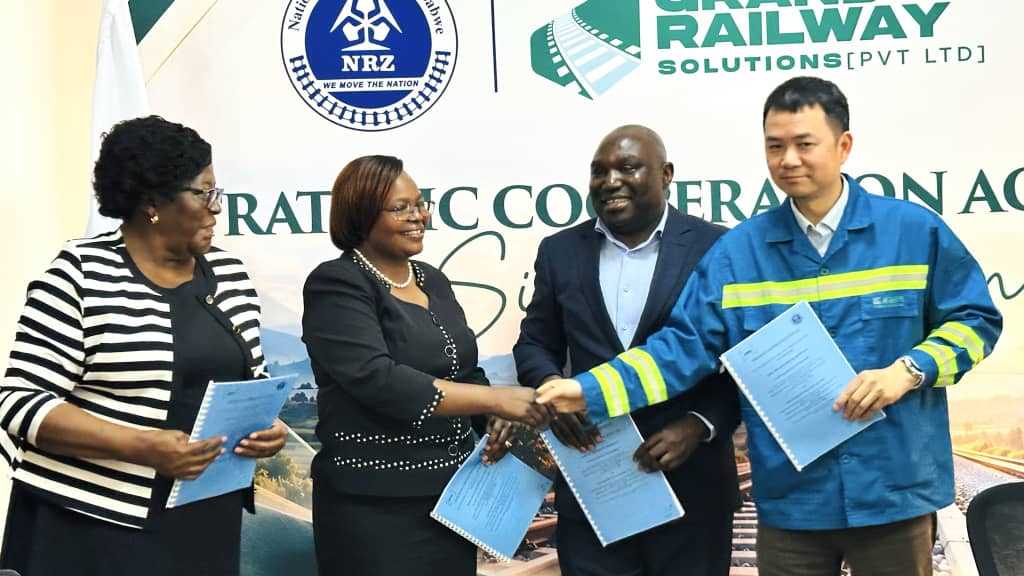
The National Railways of Zimbabwe is targeting an additional 1.7 million tonnes of annual freight from the Manhize steel project under a new strategic collaboration with local logistics company Grand Rail Solutions, in a deal that could shift a significant volume of coal traffic from road to rail.
The agreement between NRZ and GRS will initially cover the movement of 1.1 million tonnes of coal to Manhize and 600,000 tonnes of finished steel products to markets each year.
The steel products will include pig iron, steel billets and other products from the Manhize plant in Mvuma.
Under the arrangement, GRS will provide the locomotives, wagons and fuel required for the operation, while NRZ will provide its railway infrastructure and train crews.
The agreement gives NRZ a potentially significant new freight stream while addressing one of the logistical requirements of expanding steel production at Manhize.
The railway operator said the deal “is set to significantly increase annual tonnage for NRZ” while also moving bulk coal traffic from Hwange away from the country’s roads and onto the railway network.
The shift is significant because the Manhize steel operation requires large volumes of raw materials to be transported to the plant, while its finished products must subsequently reach domestic and export markets.
The first phase will establish the freight operation, but the agreement also provides for investment in the railway infrastructure needed to handle larger volumes.
The second phase will involve the two entities collaborating on the upgrade of the railway track between Gweru and Mvuma at an estimated cost of about US$27 million.
According to NRZ, the upgrade “will enable the movement of significantly increased traffic volumes on the line.”
The planned rehabilitation is important because securing locomotives and wagons alone will not solve capacity constraints if the underlying railway infrastructure cannot handle the additional traffic.
The most ambitious component of the agreement is the proposed construction of a 50-kilometre railway line from Mvuma to Manhize, which would directly connect the steel plant to the national railway network.
NRZ said this next phase will be implemented under a Build-Transfer-Operate model.
Related Stories
GRS will finance construction of the railway line and subsequently transfer it to NRZ, which will operate the route. The private investor will recover its construction costs through offsets.
The model provides a way of bringing private capital into a railway project without requiring NRZ to finance the entire construction cost upfront.
For Manhize, the proposed line would provide a dedicated rail connection to the national network, potentially reducing dependence on road haulage as production increases.
The NRZ statement specifically links the railway investment to the competitiveness of Zimbabwe’s steel industry, saying the arrangement “will also significantly reduce the cost of production and ensure that Zimbabwean products are competitive on the global market.”
That objective is central to the economic case for the project. The value of increasing steel production is weakened if high logistics costs make Zimbabwean steel more expensive to move to customers than competing products from other producing countries.
The coal component of the agreement is particularly important in this respect.
NRZ says 1.1 million tonnes of coal will be transported to Manhize annually, with the traffic expected to come mainly from Hwange. Moving that volume by rail could reduce the number of heavy trucks required on the country’s roads while creating a predictable freight base for NRZ.
The railway operator described the arrangement as a mechanism to “transfer the bulk of coal traffic from Hwange from road to rail.”
The 600,000 tonnes of annual outbound steel traffic would then provide the railway with a return freight stream, reducing the likelihood of trains travelling empty in one direction.
That creates the basis for a more integrated bulk logistics chain: coal moves into Manhize, while pig iron, billets and other steel products move out to markets.
The agreement also gives GRS a substantial role in the operation, with the company supplying the rolling stock and fuel while NRZ provides the infrastructure and crews.
This structure effectively combines private-sector capital and equipment with the state railway’s existing network, infrastructure and operating capacity.
The success of the arrangement, however, will depend on whether the proposed infrastructure phases are implemented alongside the initial freight operation.
The US$27 million Gweru-Mvuma upgrade is intended to increase the line’s capacity, while the 50km Mvuma-Manhize link would solve the more fundamental problem of directly connecting the steel plant to the railway network.






Leave Comments