







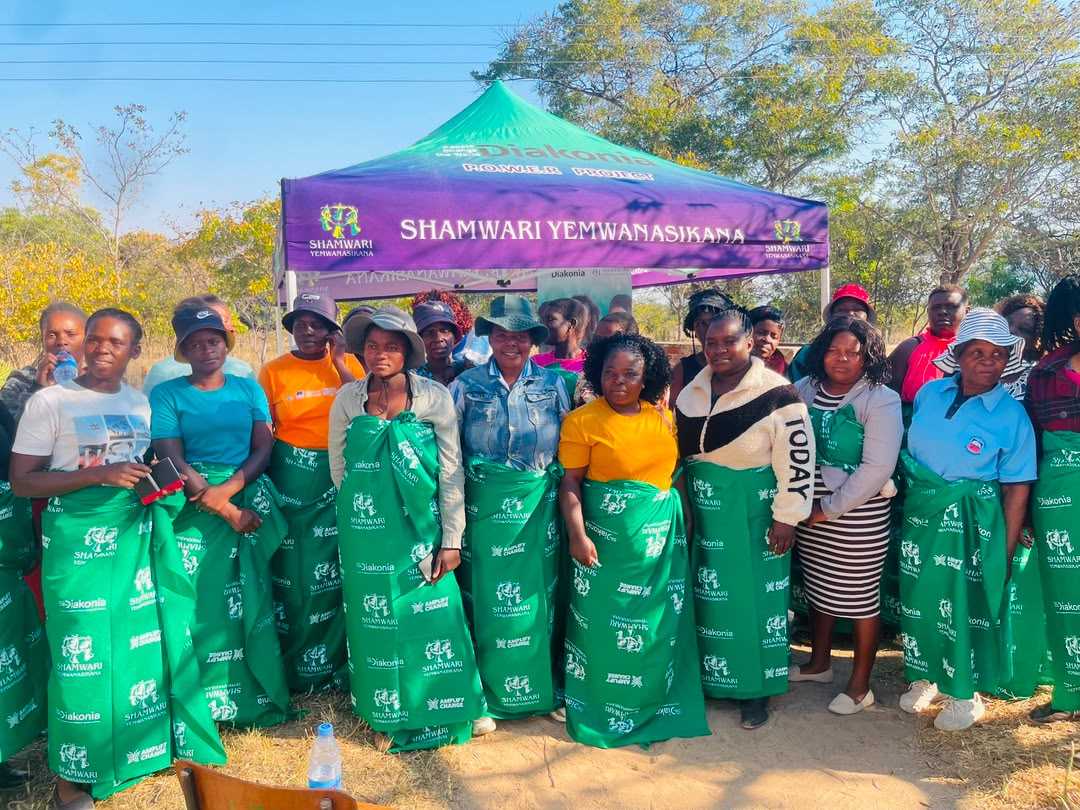
Shamwari Yemwanasikana has opened a new chapter in Zambia, expanding its work beyond Zimbabwe as it seeks to support girls and young women facing social and economic challenges across the region.
The organisation’s expansion into Zambia is centred on creating a regional sisterhood while addressing challenges affecting girls in both countries, including period poverty, child marriage, early pregnancies, limited access to sexual and reproductive health and rights (SRHR) information and services, and barriers to women’s participation in leadership and governance.
Shamwari Yemwanasikana director Ekenia Chifamba said the expansion was driven by similarities in the challenges facing girls and young women in the two countries.
“Shamwari Yemwanasikana’s expansion into Zambia represents a vital scaling of its regional footprint, transforming a successful community-based model from Zimbabwe into a broader cross-border sisterhood,” Chifamba said.
She said the organisation would focus on structural, economic and social barriers affecting girls and young women.
“The vulnerabilities experienced by girls and young women in Zambia closely mirror those in Zimbabwe,” she said.
“Chief among these are period poverty, which forces girls out of school and exposes them to exploitation, systemic barriers to women and girls’ participation in leadership and governance, and severe economic marginalisation.”
The organisation will also focus on girls facing multiple and overlapping vulnerabilities, including early child marriage, early pregnancies and limited access to SRHR information and services.
Chifamba said the expansion would also address protection gaps affecting girls and young women in informal environments.
“It also addresses structural protection gaps in informal environments, such as advocating for safe, gender-sensitive spaces within creative and artistic industries,” she said.
Economic hardship is another area of concern, particularly as communities continue to experience wider regional shocks such as drought and food insecurity.
According to Chifamba, these challenges can place additional pressure on young women and girls.
Related Stories
“The organisation targets the impacts of regional economic shocks, such as droughts affecting food security and health resources, which disproportionately push young women into unpaid care work or survivalist vulnerabilities,” she said.
As Shamwari Yemwanasikana establishes its presence in Zambia, the organisation plans to draw on approaches developed through its work in Zimbabwe.
Chifamba said safe spaces would form an important part of the organisation’s work, giving girls and women an opportunity to speak about their experiences, access support and organise without fear of judgement.
“A core pillar of this framework is the establishment of secure safe spaces where girls and women can voice their experiences, receive psychosocial support, and organise without fear of stigma or judgment,” she said.
The organisation will also seek to work alongside existing structures in Zambia rather than duplicate the work of local organisations.
Chifamba said the approach would involve multiple stakeholders, including government institutions, traditional leaders and community development structures.
“Recognising the vital work already performed by local civil society actors, the organisation utilises a collaborative multi-stakeholder strategy,” she said.
“This involves working alongside government entities, traditional leadership, and national disaster or community development units, such as leveraging frameworks like the Constituency Development Fund, to complement existing efforts rather than duplicate them.”
The organisation also plans to use research and monitoring systems to assess whether its interventions are producing meaningful changes in communities.
Chifamba said evidence would be central to the organisation’s work in Zambia, from measuring programme outputs to assessing behavioural and systemic changes.
“These tools track programmatic outputs, evaluate behavioural and systemic shifts, and ensure accountability, translating field research and community data into progressive, evidence-based policy advocacy and positive social change,” she said.
For Shamwari Yemwanasikana, the move into Zambia marks a step towards extending its community-based work beyond Zimbabwe while building partnerships around issues affecting girls and young women.
The organisation’s focus in Zambia will be on creating safe spaces, strengthening collaboration with local stakeholders and using evidence from communities to inform interventions and advocacy aimed at improving the lives of girls and young women.








Leave Comments