





By Gilbert Munetsi
The procession began away from the celebration.
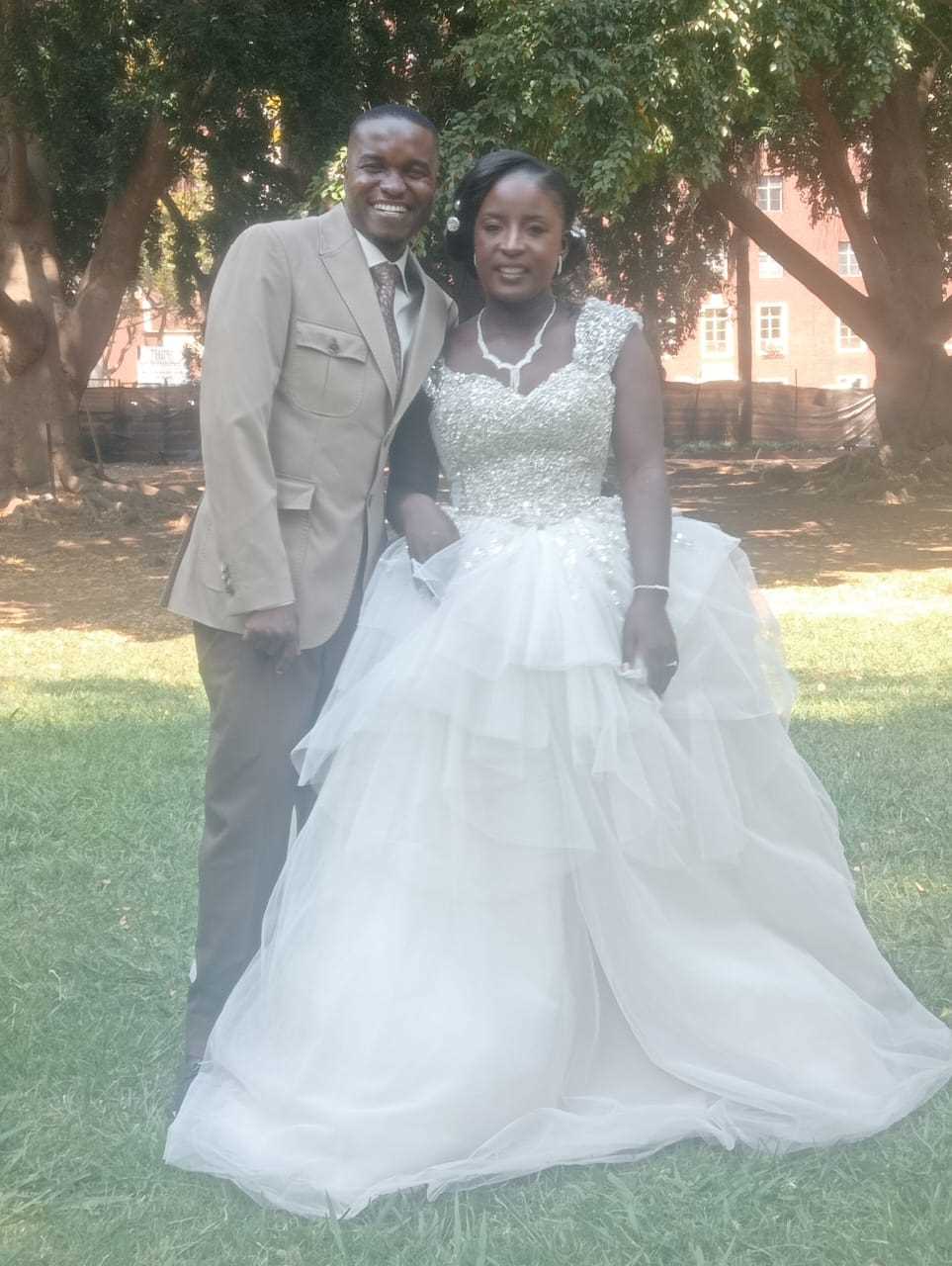
From a booked lodge in Harare, Simbarashe Chadiwa, his bride Christabel Kudziwe and members of the bridal party set out for Harare Gardens, where hundreds of Zimbabweans had gathered for a wedding unlike any other.
It was not merely a journey from one venue to another. It was a symbolic procession from a private beginning to a public declaration of love, survival and renewed hope.
Dressed for the occasion and surrounded by family, friends, organisers and supporters, the couple made their way towards the gardens as anticipation built along the route.
By the time they arrived, Harare Gardens had already been transformed into a colourful meeting place of music, culture, prayer and celebration.
The event, aptly named Muchato weNyika — the wedding of the nation — had drawn people from different walks of life.
Some came as invited guests. Others came because they had followed Chadiwa’s painful story and wanted to witness the moment when a man who had lost almost a decade of his life behind bars finally stood before the nation as a bridegroom.
The crowds grew so large that the gates eventually had to be closed. The venue could no longer accommodate everyone who had arrived to celebrate with the couple.
For many, the sight of people being turned away was evidence of the extraordinary emotional connection the wedding had created.
This was no longer a private family ceremony. It had become a national gathering sustained by compassion, faith and the belief that Chadiwa deserved to experience the dignity and joy that had been denied to him for so long.
Chadiwa spent nine years in prison after being convicted of raping a minor, a charge he has consistently denied.
The case later took a dramatic turn when the complainant, now an adult, reportedly changed her account and said Chadiwa had not raped her. She also reportedly said she had been pressured as a child to implicate him.
In April 2024, Chadiwa was released under the Presidential Amnesty after serving about nine years of an 18-year sentence.
However, his release did not automatically erase the conviction, leaving him free physically but still carrying the burden of a criminal record.
That unresolved legal position gave the wedding a deeper meaning. It was a celebration, but it was also a reminder that freedom and justice are not always the same thing.
Amnesty opened the prison gates, but only the courts can ultimately determine whether his conviction should be overturned.
Still, on Saturday, the focus was not on the legal battle. It was on life after prison, family and the love that had endured through years of uncertainty.
Chadiwa and Christabel have continued rebuilding their lives together and are raising their young son, Ayana.
Their wedding represented a new chapter — one in which the couple could stand before relatives, friends and strangers and publicly affirm their commitment to one another.
A wedding built by many hands
The scale of Muchato weNyika was made possible by an overwhelming wave of corporate, community and individual support.
Businesses, creative professionals, service providers and well-wishers contributed items and services ranging from wedding clothes and rings to catering, flowers, transport, décor, entertainment and sanitation.
It was a remarkable example of collective giving, with the celebration assembled piece by piece rather than funded by a single wealthy benefactor.
Dequain Catering supported the event, while Ana Vic Events provided chairs.
Millennium Gear supplied mobile toilets, helping organisers manage the demands of a large open-air gathering.
AVM provided flowers, D’s Beauty Bar worked on the bride’s hair, while The Wedding Centre dressed the bridal team.
The couple’s rings and wedding outfits were also secured through donations. Min Travel provided transport for the couple and their parents, while Eden Gardens donated 100 chickens. Carlos Meats contributed beef and pork for the bridal party and pre-wedding celebrations.
The support extended beyond material contributions.
Musicians, poets, dancers, choreographers, photographers and event professionals offered their talents to help create a memorable day.
The list of contributors reflected the spirit of the occasion. Each donation, whether large or small, carried a message: Chadiwa’s story had touched people, and they wanted to help him celebrate.
In that sense, the wedding belonged not only to Simbarashe and Christabel. It belonged to everyone who had offered a hand, a service, a prayer, a word of encouragement or simply their presence.
A celebration of a second chance
As the programme unfolded, speeches became some of the most emotional moments of the day.
Speaker after speaker reflected on Chadiwa’s journey, the years lost in prison and the resilience required to begin again after his release.
The tone was not one of bitterness, but neither was it one of forgetfulness. The speakers acknowledged the pain of the past while urging the couple to embrace the future.
Related Stories
The wedding planner, Kundai Murengwa of the Tilder Foundation, and other organisers were praised for turning what began as an ambitious idea into a national event.
Their efforts brought together businesses, entertainers, churches, families and ordinary Zimbabweans who might otherwise never have met.
The speeches also celebrated Christabel’s commitment. Her decision to remain beside Chadiwa through a difficult chapter of his life was presented as a testimony to patience, loyalty and love.
For Chadiwa, the words carried a particular weight. He had spent years in an environment where personal choices were restricted and family life was placed on hold.
At Harare Gardens, he was surrounded by people affirming his humanity and celebrating his right to love, marry and dream again.
Applause repeatedly swept through the venue. At times, the cheers sounded less like the response to ordinary wedding speeches and more like a public affirmation that Chadiwa had survived.
The vows
When the formal ceremony began, the atmosphere changed.
The noise of the crowd softened as attention turned to the couple. Guests watched closely as Chadiwa and Christabel exchanged vows and stood together before family, friends and the watching public.
There was a solemnity to the occasion.
The flowers, clothes, music and decorations created the familiar beauty of a wedding, but the couple’s history gave every moment additional significance.
The wedding vows were not simply promises about the future. They were also a declaration that the couple had come through hardship and were choosing to build a life together despite it.
Many in the audience were visibly moved. Some raised their phones to record the proceedings, while others watched in silence.
The ceremony held the crowd because it combined the intimacy of a marriage with the weight of a national story.
When the couple was formally pronounced married, cheers erupted across Harare Gardens.
People danced, ululated and applauded, while the bridal party joined in the celebration.
Entertainment helped carry the mood forward.
Divine Touch, an ensemble of prison inmates, brought a particularly powerful dimension to the programme. Their participation connected the celebration to the difficult world from which Chadiwa had emerged.
High Voltage Poets and a traditional dance group added music, rhythm and cultural colour. The bridal party, which had rehearsed under choreographer T-Bone, also had its moment to shine.
The performances ensured that the event did not become overwhelmed by sadness. Although Chadiwa’s story is painful, Muchato weNyika was ultimately designed as a celebration of life.
A new memory
By the end of the ceremony, the meaning of the day was clear.
Muchato weNyika was not an attempt to erase Chadiwa’s past. Nor could it replace a legal process that remains necessary if the conviction against him is to be formally challenged.
The complainant’s reported change of story may be significant, but a media interview alone cannot overturn a criminal conviction.
What the wedding did was offer something different: public dignity.
For nine years, Chadiwa’s identity was defined by a prison number, a conviction and an allegation he said was false.
At Harare Gardens, thousands of people saw him in another way — as a husband, father, son, friend and human being worthy of celebration.
The wedding also demonstrated the power of collective compassion.
People who had never met Chadiwa contributed food, clothing, transport, entertainment and professional services. They did not wait for a single institution to organise the occasion.
They came together and built it themselves.
That unity explained why the crowds became so large that the gates had to be closed. Those outside may not have entered the gardens, but their presence still formed part of the story.
They had come to stand with a couple whose journey had captured the country’s imagination.
As the afternoon drew to a close, music continued to fill the gardens and guests celebrated around the newlyweds.
For Chadiwa and Christabel, the day marked the beginning of married life.
For Zimbabwe, it became a public expression of hope.
The legal chapter remains unfinished. Chadiwa still needs the courts to examine the evidence and determine whether his conviction should stand. A wedding cannot provide a clean criminal record, restore the nine years he lost or settle every question surrounding the case.
But it can give a man something powerful: a new memory to stand beside the painful ones.







Leave Comments