





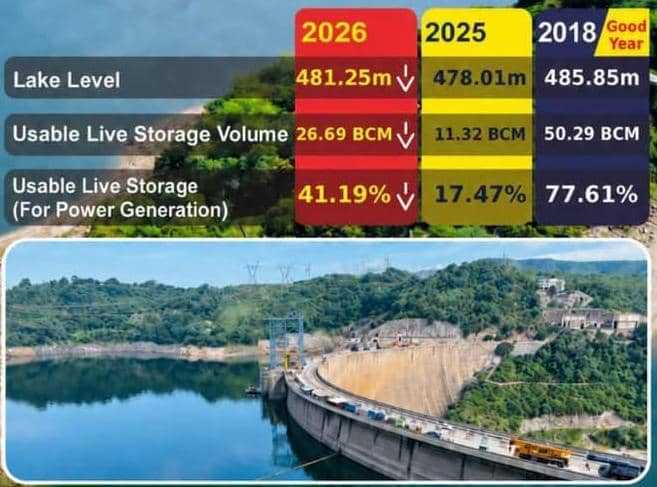
Water levels at Lake Kariba continue to recede in line with normal dry-season hydrological cycles, but overall reservoir reserves remain significantly higher than those recorded during the same period in 2025, according to official data released by the Zambezi River Authority (ZRA).
Confirming the latest measurements, Secretary for Information, Publicity and Broadcasting Services Nick Mangwana noted that “Kariba Lake levels continue to recede gradually but remain significantly higher than last year, according to the Zambezi River Authority.”
He said the reservoir’s water level currently stands at 481.25 metres, compared with 478.01 metres in mid-September 2025.
The latest ZRA update indicates that usable live storage volume currently stands at 26.69 billion cubic metres, marking a substantial recovery from the 11.32 billion cubic metres recorded during the peak of severe drought conditions a year ago.
Related Stories
Usable live storage capacity allocated for power generation stands at 41.19%, compared with just 17.47% in September 2025.
Despite the year-on-year gains, total storage remains below the levels recorded during historically high-rainfall periods. Mangwana highlighted that current figures “remain below 2018’s 485.85 metres and 50.29 BCM”, when usable power storage capacity reached 77.61%.
Technical operational specifications published by the ZRA state that “the Kariba Lake is designed to operate between levels 475.50m and 488.50m (with 0.70m freeboard) for hydropower generation.”
The authority noted that the ongoing decline in water levels “continues to recede gradually, in line with the seasonal hydrological trend expected at this time of the year” ahead of the 2026/2027 rainfall season.
The sustained reservoir volume provides a crucial buffer for domestic electricity generation. Energy authorities rely on Kariba South Power Station to supply a significant portion of Zimbabwe’s national grid, with water allocations managed jointly with Zambia to support continued generation capacity through the final quarter of the year.






Leave Comments