








The parliamentary inspection of Zhejiang Huayou Cobalt’s Arcadia lithium operation is unfolding at a critical point for Zimbabwe’s mineral policy, with the country seeking to turn its growing lithium industry from a concentrate-export business into a higher-value processing industry.
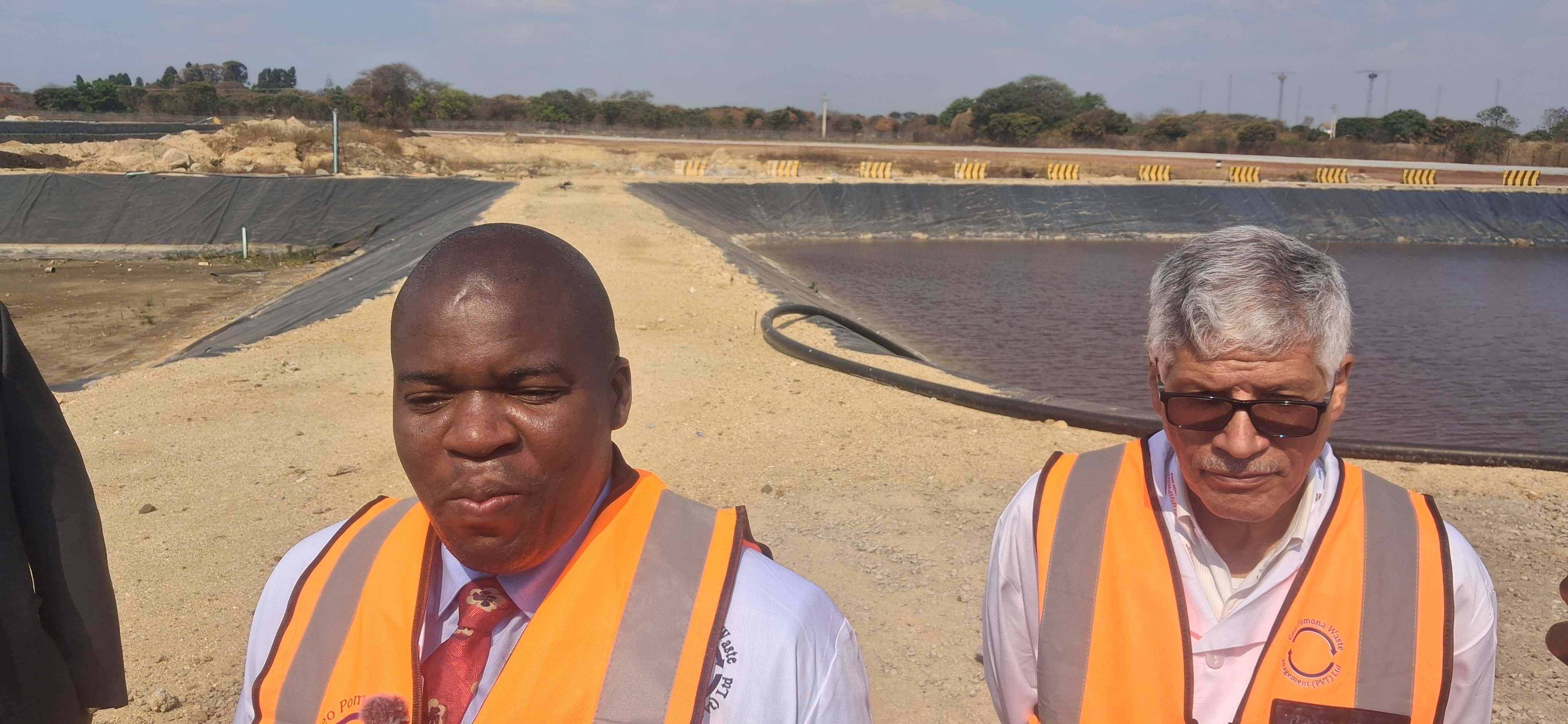
The Parliamentary Portfolio Committee on Mining and Mining Development, led by chairperson Remigious Matangira, visited the Arcadia operation in Goromonzi to examine production, processing and development activities, with Huayou Zimbabwe general manager Henry Zhu briefing MPs on the project.
The visit comes as Zimbabwe intensifies efforts to force greater local beneficiation of lithium, a policy aimed at ensuring the country captures more value from its mineral resources before they are exported.
The challenge, however, is that most of Zimbabwe’s lithium export earnings have continued to come from concentrate rather than processed products.
Zimbabwe exported 1.128 million tonnes of spodumene concentrate in 2025, up 11% from 1.014 million tonnes in 2024.
Despite the increase in volumes, export earnings barely moved, falling from US$514.5 million to US$513.8 million as weaker international lithium prices offset the higher shipments.
The figures highlight the vulnerability of a mineral economy that relies heavily on exporting relatively unprocessed commodities: Zimbabwe was exporting more lithium-bearing material without generating significantly more revenue.
Huayou’s Arcadia project represents one of the largest attempts to change that model.
The Chinese company acquired the mine for US$422 million in 2022, subsequently commissioned a US$300 million concentrator and invested a further US$400 million in a chemical-processing plant.
The latter investment is particularly significant from a policy perspective.
The lithium sulphate plant, with capacity of more than 50,000 tonnes annually, was built to move Arcadia beyond the production of spodumene concentrate and into chemical processing.
Huayou subsequently began producing lithium sulphate at the operation as Zimbabwe sought to accelerate domestic value addition.
Lithium sulphate is an intermediate product rather than the final battery-grade material. It can be processed further into lithium carbonate or lithium hydroxide, which are used in battery-material production.
That means Zimbabwe has begun moving from mining and concentrating lithium towards chemical processing, but remains several stages removed from battery manufacturing.
The scale of the challenge is reflected in export figures.
According to figures cited by Equity Axis, Zimbabwe earned about US$746 million from lithium exports in the first half of 2026, with US$672.8 million coming from spodumene concentrate and US$73.2 million from lithium sulphate.
On those figures, concentrate accounted for roughly 90% of lithium export revenue even after domestic chemical processing had begun.
That suggests Arcadia is an important start, but not yet evidence that Zimbabwe has fundamentally transformed the economics of its lithium industry.
Government’s decision to accelerate the transition was driven partly by concerns over value leakage and export practices.
On February 25, 2026, Zimbabwe suspended exports of raw minerals and lithium concentrates, citing malpractices and leakages. The Government subsequently moved towards a controlled resumption of concentrate exports under stricter conditions, including local-processing commitments.
The policy is designed to push mining companies towards establishing processing capacity inside Zimbabwe, with the country targeting a complete shift away from concentrate exports.
For Zimbabwe, however, beneficiation is about more than simply installing processing plants.
Processing spodumene into lithium sulphate requires electricity, sulphuric acid, water, specialised equipment, laboratories and technical expertise.
Bringing these activities into Zimbabwe creates demand for local industrial inputs, engineering services and skilled labour, but it also increases operating costs and infrastructure requirements.
This raises questions that Parliament will need to answer as it assesses whether the country’s beneficiation policy is delivering the economic transformation promised.
How much of the US$400 million processing investment is translating into local procurement?
How many Zimbabweans are being employed and trained in highly skilled positions?
How much tax revenue is being generated?
What technology and technical expertise are being transferred to local workers and institutions?
And how much additional value is Zimbabwe retaining compared with the traditional model of exporting concentrate?
Government has acknowledged that beneficiation goes beyond the construction of processing infrastructure.
During a technical visit to Arcadia in July, Mines and Mining Development Minister Polite Kambamura praised the US$400 million facility while urging Huayou to accelerate commitments relating to skills transfer, local staffing and laboratory development.
The plant was reported to be operating at about 60% of its 50,000-tonne annual capacity.
Related Stories
At that utilisation rate, annualised production would be about 30,000 tonnes if the level remained constant.
The gap between nameplate capacity and actual production demonstrates that having processing infrastructure does not automatically translate into maximum economic value.
There is also the question of who ultimately captures the value created at the higher stages of the supply chain.
Huayou’s first lithium sulphate shipments represented an important milestone, but without detailed information on shipment volumes, unit values, production costs and margins, it is difficult to establish precisely how much additional economic value Zimbabwe is retaining.
This is where parliamentary scrutiny becomes important.
Investment expenditure should not automatically be treated as evidence of domestic value capture.
The US$422 million acquisition, US$300 million concentrator and US$400 million processing plant demonstrate the scale of capital deployed at Arcadia, but the ultimate economic benefit to Zimbabwe will depend on how much of the value generated remains in the domestic economy.
Zimbabwe needs to know how much of every dollar generated by Arcadia is retained through wages, taxes, local suppliers, engineering services, infrastructure development and downstream processing.
For decades, Zimbabwe has exported minerals while higher-value processing has taken place elsewhere.
The lithium policy is intended to reverse that pattern.
But lithium sulphate itself remains an intermediate product that must undergo further processing before becoming battery-grade material.
If the bulk of Zimbabwe’s lithium eventually leaves the country as sulphate rather than carbonate, hydroxide or other advanced battery materials, the country will have moved up the value chain without controlling some of its most lucrative stages.
Prospect Lithium Zimbabwe is also pursuing further processing, with plans to produce lithium carbonate.
Such developments would represent another step towards greater domestic value addition, but crude lithium carbonate is also not the final stage of the battery supply chain.
A country that mines lithium, concentrates it and exports the concentrate captures less value than one that converts it into chemical compounds.
A country that produces battery-grade chemicals captures more.
A country that manufactures cathode materials, batteries and energy-storage systems captures more still.
Zimbabwe currently occupies only part of that chain.
This is why the parliamentary inspection of Arcadia should be viewed as an accountability exercise rather than simply an endorsement of Huayou’s investment.
Matangira described Arcadia approvingly, saying: “This is the best. This is exactly what we are saying, actually.”
The assessment reflects Government’s desire for visible beneficiation success stories.
But Parliament’s responsibility is to go beyond establishing whether a processing plant exists and determine whether it is delivering the broader economic transformation promised by the policy.
Among the key questions are how much lithium is being processed locally compared with the volumes exported as concentrate, how much additional export revenue processing generates, what proportion of procurement is sourced locally, how many skilled Zimbabwean engineers and chemists are being trained, what taxes and royalties accrue to the Treasury, and how much technology is being transferred.
Most importantly, the country will have to determine when Zimbabwe can produce battery-grade lithium chemicals at globally competitive scale.
Zimbabwe exported more than 1.1 million tonnes of lithium-bearing concentrate to China in 2025, accounting for roughly 15% of China’s lithium concentrate imports. Chinese companies have invested heavily in Zimbabwe’s lithium sector, with more than US$1.4 billion reportedly invested in lithium assets since 2021.
That scale of investment gives Zimbabwe an opportunity to establish itself as more than a source of raw materials.
But the country also faces a difficult global market.
Lithium prices have been volatile, with hard-rock spodumene prices falling sharply during the global oversupply that followed the 2022 boom before recovering in 2026 as demand from battery storage strengthened.
Zimbabwe’s experience in 2025 demonstrated the risk clearly: an 11% increase in spodumene export volumes produced virtually no increase in export revenue.
That is the economic case underpinning the beneficiation drive.
The question now is whether Arcadia and other processing projects can convert that policy ambition into sustainable industrial value.
For Zimbabwe, the success of the lithium strategy will ultimately not be measured by how many tonnes are mined or how many processing plants are built.
It will be measured by how much value, technology, employment, tax revenue and industrial capacity remain in the country after the lithium leaves the mine.






Leave Comments