






Zhong An Coking & Power Company’s proposed 640MW coal-fired power station in Hwange comes as Zimbabwe’s electricity deficit is once again translating into higher imports, exposing the gap between installed capacity and dependable supply.
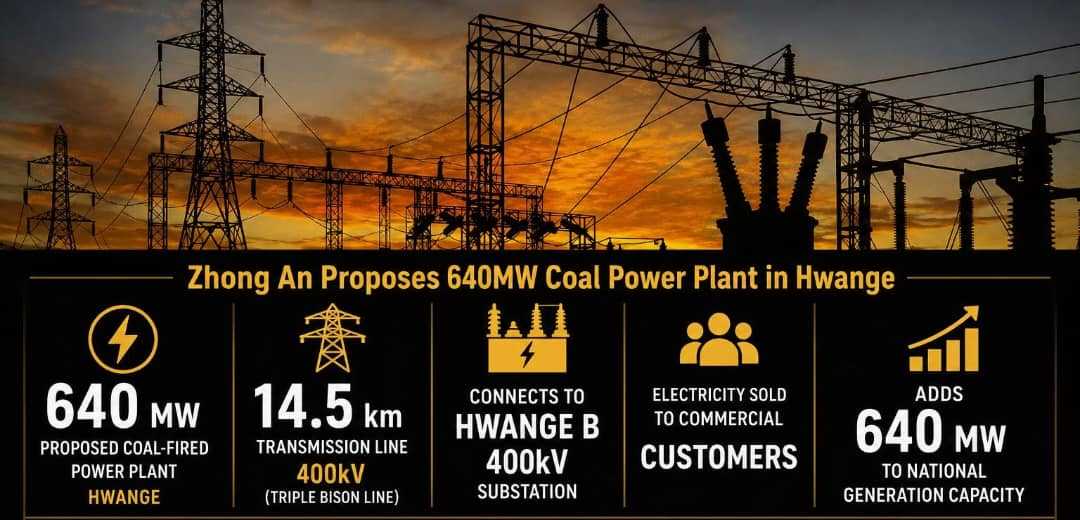
The company has applied to the Zimbabwe Energy Regulatory Authority for a generation licence for the plant in Ward 13 of 3-Main North, Hwange. The project would include a 14.5-kilometre, 400kV transmission line linking the station to Hwange B Substation, with electricity sold commercially to customers.
At 640MW, the proposed plant would be equivalent to roughly 43% of Zimbabwe’s current average domestic generation of about 1,500MW. Its significance is therefore considerable, particularly for Hwange’s growing mining and industrial base.
Zimbabwe has about 2,640MW of installed capacity at its main state power stations, but dependable capacity is estimated at between 1,200MW and 1,600MW against peak demand approaching 2,000MW. The World Bank has repeatedly highlighted this distinction: capacity on paper does not guarantee electricity when equipment, water availability, maintenance and other constraints limit dispatch.
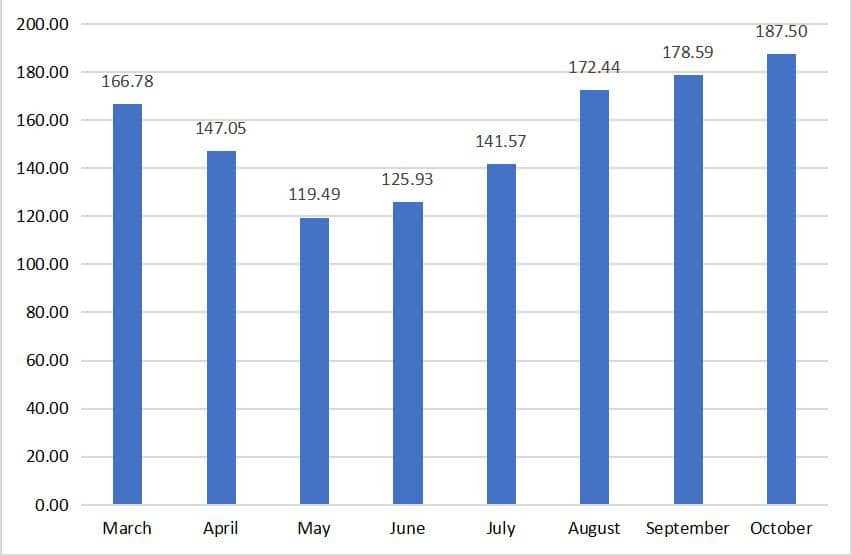
The renewed pressure is evident in import costs. Zimbabwe spent US$84.35 million on electricity imports in the first half of 2026, according to ZimStat data analysed by Equity Axis. That is already 72% of the US$117 million spent during the whole of 2025 and, if the pace continues, would put this year’s bill near US$169 million.
The reversal comes after a significant improvement last year. The electricity import bill fell 44%, from US$208.7 million in 2024 to US$117 million in 2025, following the commissioning of Hwange Units 7 and 8.
RBZ Governor John Mushayavanhu attributed the reduction to “a strong recovery and growth in local power generation”, citing the “successful integration of Hwange Thermal Power Station units 7 and 8.”
The two units added 600MW to the grid and generated an estimated US$91.7 million in savings on electricity imports in 2025. By May 30 this year, Hwange was producing about 990MW, Kariba 538MW and independent power producers 61MW, putting national generation at roughly 1,589MW.
But demand is expanding alongside mining, manufacturing and industrialisation ambitions, leaving Zimbabwe dependent on imports to close the gap. Since January 2021, the country has spent about US$931 million importing electricity.
This is the market Zhong An is targeting. Its commercial-generation model could provide energy directly to industrial customers, while the dedicated transmission line would connect the new capacity to the existing high-voltage network.
Hwange is already central to the national electricity system. RBZ data shows the Hwange complex, including Units 7 and 8, generated 1,689.97GWh in the fourth quarter of 2025, accounting for 57.33% of national electricity output during the period.
Related Stories
The economic case for additional dependable generation is therefore strong. For mines and processing plants, unreliable electricity can mean production losses, while increased domestic generation reduces reliance on scarce foreign currency for imports.
Yet the proposal also sharpens Zimbabwe’s environmental dilemma.
Research into the Hwange coal-mining and power-generation area has identified heavy-metal contamination concerns, while a 2026 study examining naturally occurring radioactive materials found elevated exposure indicators in some mining, residential and combustion environments, although reported radiological hazard indices remained below recommended safety limits. Researchers called for stronger environmental monitoring.
Communities have also raised concerns over air pollution following the commissioning of Hwange Units 7 and 8, adding a social dimension to the debate over further coal expansion.
The contradiction is particularly pronounced because Zimbabwe is simultaneously pursuing renewable-energy growth. Its renewable-energy policy targets 2,100MW of renewable capacity by 2030, including 1,575MW of grid-connected solar, alongside small hydro, wind and bagasse generation.
The Government’s climate strategy also anticipates energy-sector emissions peaking at about 24,900 GgCO₂-equivalent in 2026 before declining.
That makes the Zhong An proposal more than a question of whether Zimbabwe needs another 640MW. It raises questions about the composition, reliability and long-term cost of the country’s power mix.
There is also a wider shift under way. ZERA issued licences in late 2025 to independent producers with a combined 540MW of capacity in Matabeleland North and Midlands, including Zhong An’s 240MW heat-recovery project in Hwange and a 100MW solar project.
Private generation could help close Zimbabwe’s supply gap faster and reduce pressure on ZESA. But it will require strong regulation to ensure industrial customers benefit without creating a fragmented electricity market in which commercial users receive reliable power while households remain exposed to shortages.
The immediate economic argument for the proposed plant is compelling: Zimbabwe needs dependable electricity, and Hwange has already demonstrated how new thermal capacity can reduce imports.
The longer-term question is whether another large coal investment can be reconciled with Zimbabwe’s renewable-energy ambitions and environmental obligations.





Leave Comments