








Zimbabwe has moved closer to eliminating mother-to-child transmission of HIV after reducing transmission rates by nearly a quarter over the past three years, but health officials and development partners say the country must accelerate efforts to meet the global benchmark required for certification.
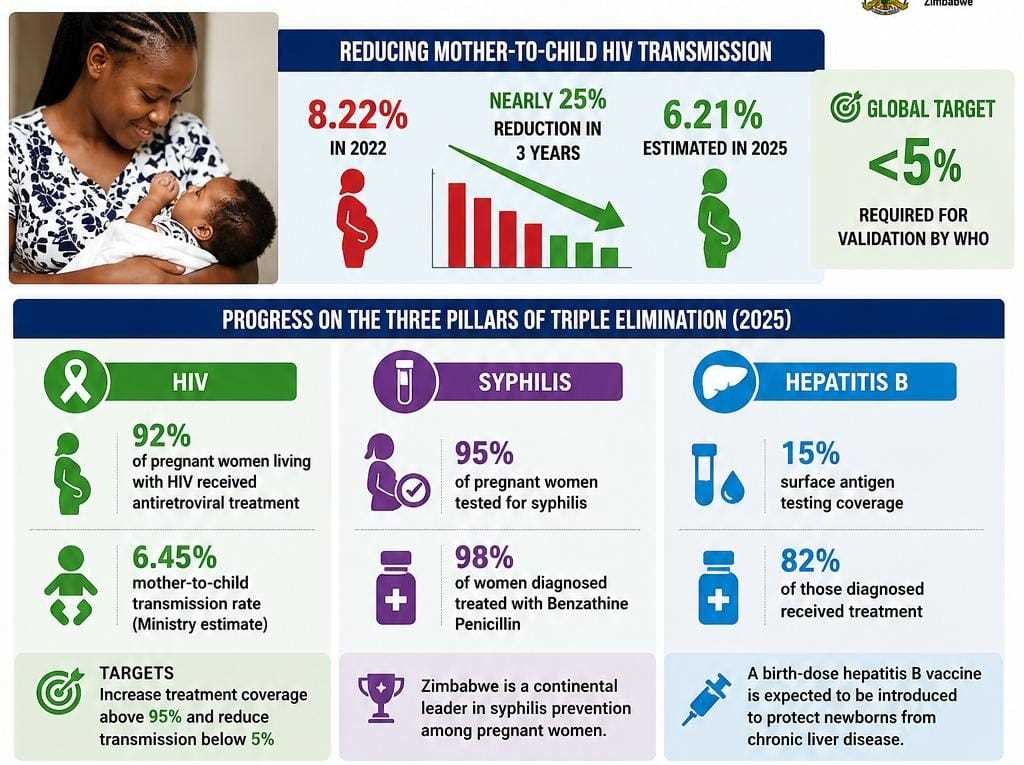
The latest figures presented at the National Validation Committee meeting for the Triple Elimination of Mother-to-Child Transmission show that HIV transmission declined from 8.22 percent in 2022 to an estimated 6.21 percent in 2025, reflecting continued improvements in maternal HIV services and treatment coverage.
However, the World Health Organization target for validating the elimination of mother-to-child HIV transmission is below five percent, leaving Zimbabwe with important gaps to close before it can achieve international recognition.
UNICEF Zimbabwe Deputy Representative Fiachra McAsey described the progress as significant but cautioned that the final stage would require sustained investment and stronger health systems.
"Zimbabwe is closer than ever to achieving Triple Elimination, but our work is not done."
He added:
"Reaching the global target of below 5 percent will require stronger prevention, treatment, follow-up and support for every mother and child."
McAsey also reaffirmed UNICEF's commitment to supporting the Ministry of Health and Child Care in strengthening maternal and child health services to eliminate mother-to-child transmission of HIV, syphilis and hepatitis B.
Officially opening the National Validation Committee meeting, Health and Child Care Minister Douglas Mombeshora described the programme as more than a health intervention, saying it represents Zimbabwe's commitment to ensuring every child is born free from preventable infections.
He said the Triple Elimination agenda is a "moral imperative" directly linked to achieving Universal Health Coverage and the Sustainable Development Goals.
Mombeshora said Zimbabwe has integrated elimination services into routine maternal and child healthcare, contributing to significant gains in HIV prevention.
Related Stories
According to the ministry, 92 percent of HIV-positive pregnant women received antiretroviral treatment in 2025, while national mother-to-child transmission stood at 6.45 percent.
Despite the progress, the minister said Zimbabwe must increase maternal antiretroviral therapy coverage to above 95 percent while reducing transmission to below five percent if it is to meet WHO validation standards.
Zimbabwe has recorded even stronger performance in tackling congenital syphilis.
The Ministry of Health said 95 percent of pregnant women were tested for syphilis in 2025, while 98 percent of those diagnosed with the infection received Benzathine Penicillin treatment, placing Zimbabwe among the continent's leading performers in syphilis prevention.
Health authorities, however, acknowledged that hepatitis B remains the weakest component of the Triple Elimination programme.
The ministry reported that hepatitis B surface antigen testing reached only 15 percent in 2025, although treatment coverage for those diagnosed stood at 82 percent.
Dr Mombeshora said the government expects the planned introduction of a birth-dose hepatitis B vaccine to significantly strengthen prevention efforts by protecting newborns from chronic liver disease and liver cancer later in life.
Zimbabwe's progress builds on broader gains against HIV over the past decade. According to UNAIDS and UNICEF, the country is among a handful of African nations that have substantially reduced new HIV infections among children through expanded prevention of mother-to-child transmission programmes, widespread antiretroviral therapy and stronger antenatal care services.
Health experts have long argued that achieving Triple Elimination requires more than high treatment coverage. It also depends on early antenatal booking, routine testing during pregnancy, retention of mothers in care after delivery, timely infant diagnosis and follow-up throughout breastfeeding, when HIV transmission can still occur.
While the decline in transmission demonstrates that Zimbabwe's prevention programme is working, the remaining gap highlights the difficulty of reaching mothers who initiate antenatal care late, interrupt treatment or face barriers to accessing health services.
The National Validation Committee is expected to assess whether Zimbabwe has met the clinical, laboratory and programme standards required before the country can seek international validation for eliminating mother-to-child transmission of HIV, syphilis and hepatitis B.








Leave Comments