









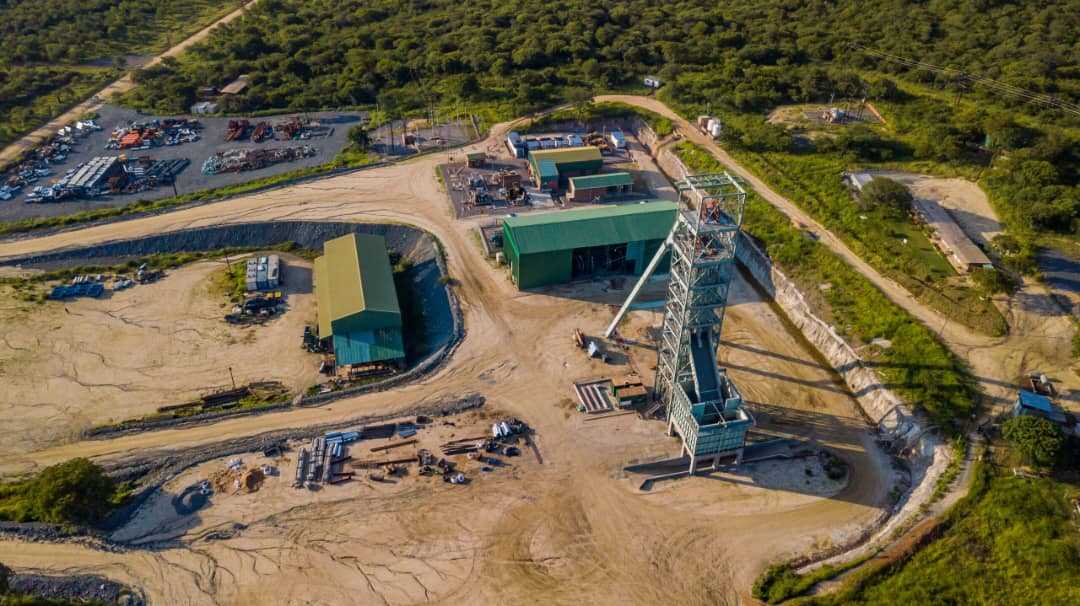
Caledonia Mining says access to higher-grade ore is beginning to reverse a subdued start to the year at its Blanket Mine, with second-quarter production rising 18% over the previous quarter, although output remains below last year's record levels.
The company's latest production update suggests that the biggest determinant of Blanket's performance this year is not processing capacity or gold prices, but the mine's ability to consistently access richer ore bodies.
Blanket produced 17,360 ounces of gold during the quarter ended June 30, 2026, up from 14,767 ounces in the first quarter.
However, production remained below the exceptionally strong second quarter of 2025, which benefited from unusually high ore grades.
Chief Executive Officer Mark Learmonth attributed the improvement to progress in restoring access to higher-grade mining areas.
"Production in Q2 2026 was 17,360 ounces, an improvement on the first quarter, reflecting continued improvement in access to higher-grade mining areas."
He said the weaker first-half performance had always been anticipated because of the mine plan.
"As expected, production was lower than in the corresponding period in 2025, which benefitted from record grades. This reflects the planned mining sequence and the temporary constraints on access to higher-grade areas earlier in the year."
The improvement is reflected in the quality of ore reaching the processing plant. Average ore grades rose to 2.88 grammes per tonne in the second quarter, while July grades have already climbed to about 3.05g/t, indicating that mining operations are increasingly reaching richer sections of the ore body.
Related Stories
For gold producers, ore grade is one of the most critical drivers of profitability. Higher-grade ore allows miners to produce more gold from every tonne processed, lowering production costs and improving margins even when overall throughput remains unchanged.
Learmonth said operational interventions were beginning to deliver results.
"Encouragingly, we are now seeing improved grades in deliveries of ore to the plant, indicating that the measures we have taken to restore access to higher-grade ore are gaining traction."
The company expects production to strengthen further during the second half of the year, supported by continued access to higher-grade mining zones, completion of an elution plant upgrade and the introduction of a seven-day operating schedule.
"With the introduction of a seven-day working week and the completion of the elution plant upgrade due in the third quarter of 2026, we expect production to further increase in the second half of the year, in line with our guidance."
Caledonia has therefore maintained its full-year production forecast of 72,000 to 76,500 ounces, signalling confidence that the weaker first half will be offset by stronger output in the remaining months.
According to the World Gold Council, sustained profitability increasingly depends on maintaining access to economically viable ore grades while improving operational efficiency, particularly as mines mature.
Blanket's performance illustrates that challenge. The mine's production recovery has been driven less by expanding capacity than by restoring access to richer ore, highlighting how geological factors continue to dictate mining performance despite operational improvements.
For Zimbabwe, where gold remains the country's largest foreign currency earner, Blanket's recovery is significant. Any sustained improvement in production from one of the country's largest gold mines supports national export earnings and complements broader efforts to maintain record gold deliveries, although the company cautioned that forward-looking projections remain subject to operational, geological and market risks.








Leave Comments