







Zimbabwe's property sector continues to face significant challenges, including limited long-term financing, high interest rates, infrastructure deficits and currency volatility, but emerging opportunities in housing, warehousing, student accommodation and sustainable developments could drive future growth, delegates heard at the Real Estate Institute of Zimbabwe (REIZ) Winter School Conference in Lusaka, Zambia.
Presenting at the conference, First Mutual Properties Managing Director Christopher Kudakwashe Manyowa said the country's property market is operating in a complex macroeconomic environment characterised by constrained funding and rapid urbanisation, requiring the industry to adapt to changing market conditions.
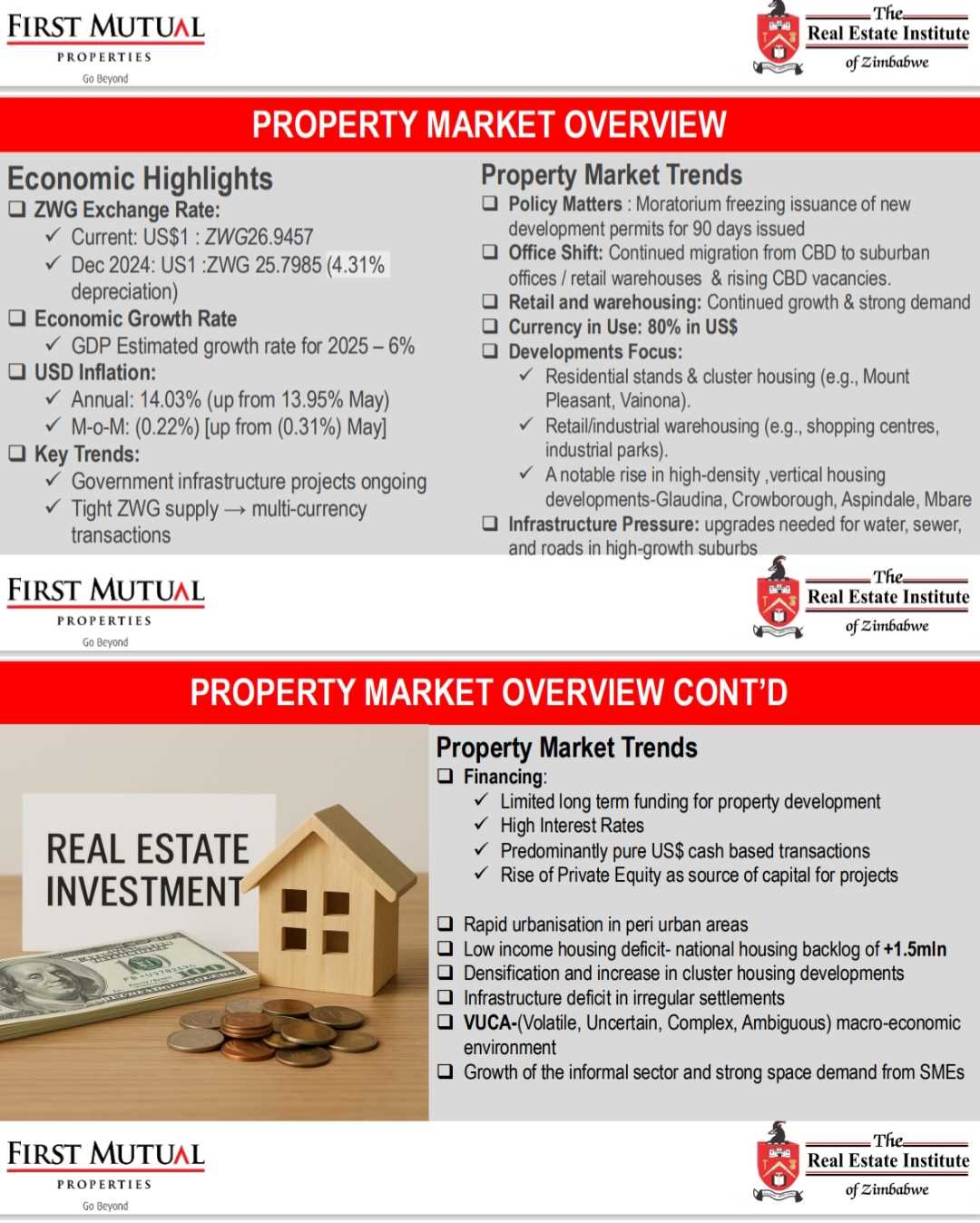
Manyowa said Zimbabwe's economy is expected to maintain strong growth in 2026 following the projected 6% expansion in 2025, supported by ongoing government infrastructure projects and increasing investment by property developers in residential stands, cluster housing, retail centres and industrial warehousing.
He noted that approximately 80% of property transactions are conducted in US dollars, while high-density housing developments continue to expand in suburbs such as Glaudina, Crowborough, Aspindale and Mbare.
He said financing remains one of the sector's biggest constraints, with limited access to long-term capital, high borrowing costs and a heavy reliance on cash transactions, although private equity is increasingly becoming an alternative source of funding. Zimbabwe also faces a housing backlog exceeding 1.5 million units, while demand for space from small and medium enterprises continues to rise.
Related Stories
According to the presentation, the sector is also affected by market liquidity constraints, weak mortgage financing, deteriorating infrastructure, informal settlements, complex regulatory processes and high construction costs. Interest rates ranging between 18% and 30% continue to limit access to affordable property finance.
Despite these challenges, Manyowa identified several growth areas, including retail and industrial warehousing, logistics parks linked to e-commerce, high-density housing developments, gated communities and student accommodation driven by increasing university enrolments. He said these segments continue to experience strong demand and attractive investment yields.
The presentation also highlighted sustainability as an emerging investment theme, encouraging developers to adopt renewable energy technologies such as solar power, water harvesting systems, biodigesters and net metering to improve operational efficiency and reduce environmental impacts.
Manyowa said real estate remains an important contributor to economic development by preserving asset values, supporting credit expansion, stimulating construction activity, attracting long-term institutional investment and helping address Zimbabwe's housing shortage.
He urged investors to apply structured investment appraisal methods, including assessing expected returns, occupancy levels, financing risks, regulatory compliance and environmental sustainability before committing capital to property developments.
For industry practitioners, the presentation called for stronger financial literacy, greater adoption of environmental, social and governance (ESG) standards, improved use of technology such as property technology (PropTech), data analytics and drones, as well as stronger regional collaboration and ethical business practices.









Leave Comments