







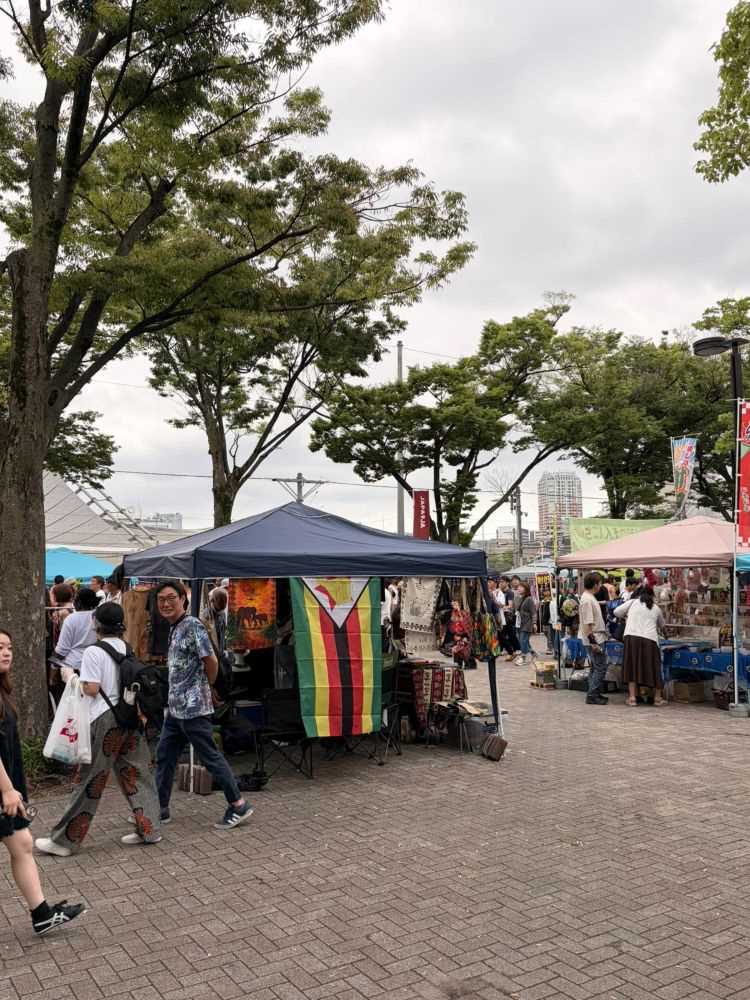
Zimbabwe’s flag was among the African colours on display at this year’s Africa Heritage Festival in Tokyo, where music, food, fashion and performance turned Yoyogi Park into a lively celebration of the continent’s cultures.
The festival brought together African cuisine, craft stalls, live performances, parade activity and cultural displays aimed at introducing African cultures to Japanese audiences in an accessible, family-friendly way.
Among the performers was Xivian, a Botswana-born artist who works in Japan. His set carried a deliberate message: African identity is not a costume, a single fabric pattern or one fixed way of appearing in the world.
“My performance was mostly aimed towards going against the grain,” he said. Xivian said even his stage outfit was chosen to challenge expectations. “I made a conscious decision not to dress in a stereotypical African fashion. There was already enough of that going on at the festival,” he said.
For him, that was not a rejection of African culture, but an insistence that Africans should not be boxed into one visual language. “I wanted to show that as Africans we can do it all. Fashion is our superpower because we invented swag,” he said. Performing as the first person from Botswana to headline the festival also carried weight.
“It felt like a responsibility being the first person from Botswana to headline the festival, so I felt like I needed to set the standard for performing,” he said. His theme was freedom.
“Freedom to dress how I wanted, to sing how I felt and to dance how I could,” Xivian said. “I think people watching felt that freedom because I saw a couple of people dancing too.” Zimbabwe’s presence was quieter, but visible. Photos from the festival showed Zimbabwean flags among the wider African displays, while at least one Zimbabwe-linked stall was noted at the venue.
Related Stories
Detailed comment from the Zimbabwean exhibitors was not available by the time of publication, and a fuller Zimbabwe story may follow if they respond. But even that small presence mattered in a space built around recognition.

Asked what he felt when he saw his own country’s flag in Japan, Xivian said: “Wow. Representation matters, feels nice to be acknowledged.”
The festival also revealed the small complications of carrying culture across borders. Xivian said the food did not always fully taste like home, even where it was prepared by Africans. “The food definitely miss something,” he said. “I think it all just comes down to the ingredients. Real raw African ingredients are hard to come by.”
He also found humour in how some Japanese visitors embraced African style. “They all wear dashikis which is a little surprising because none of the actual African people were dressed that way,” he said. Still, he appreciated the effort, especially the head wraps, Afro wigs and locs he saw among festival-goers.
Asked what he would most recommend to Japanese friends, Xivian pointed to the performances. “Music transcends language and it communicates authentic African culture well,” he said.
A Zimbabwean in Japan who attended the festival said even a modest presence at such a platform carries meaning. “It says Zimbabwe is part of the African story being told abroad. It is great to see the connection through people, symbols, culture and community,” they said.










Leave Comments