






Sandra Machinga- Contributor
1. Dual Energy Realities: The Inseparable Coal-Solar Coexistence
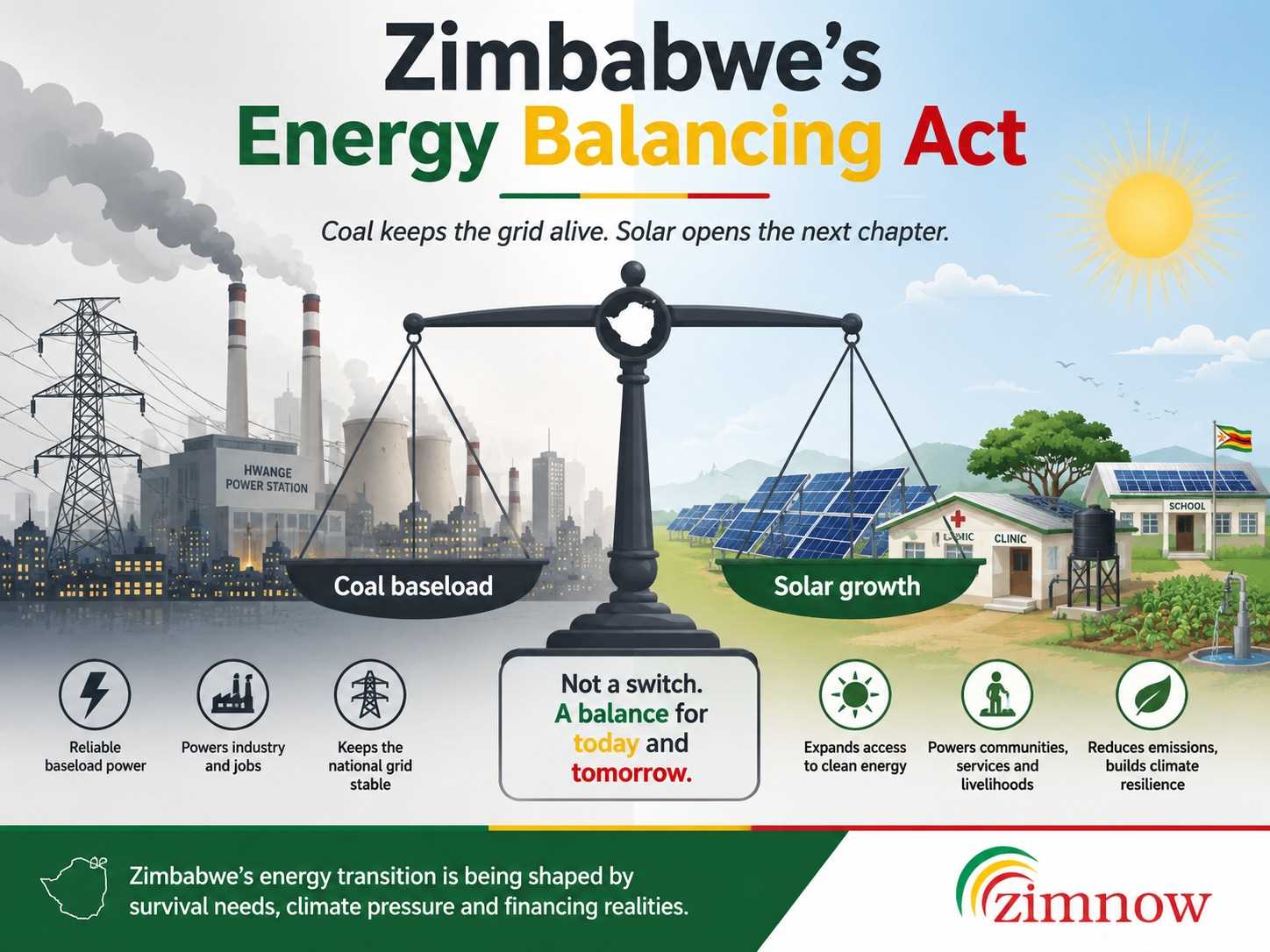
Zimbabwe operates within two contradictory yet interdependent energy ecosystems. Coal, anchored by legacy industrial infrastructure, delivers stable, dispatchable baseload power for the national grid. Endowed with abundant solar irradiance, the country boasts low-cost zero-carbon photovoltaic potential, yet solar development remains stagnant due to capital shortages, technical deficits and inadequate grid infrastructure. Decades of developmental inertia have cemented coal as the bedrock of civilian power supply, a landscape now reshaped gradually under China-Africa green cooperation frameworks.
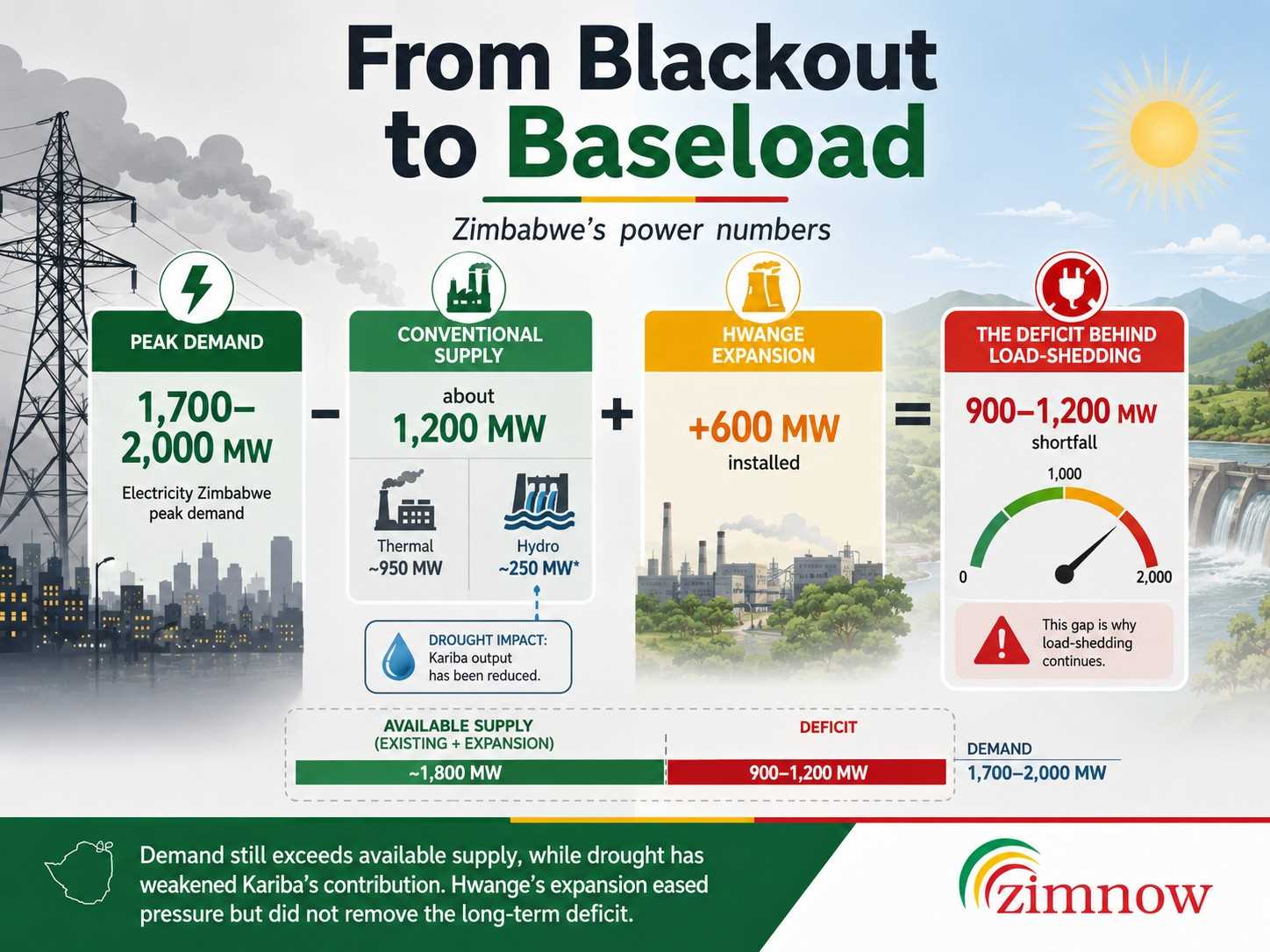
Hwange Thermal Power Station, Zimbabwe’s largest thermal facility, underpins national electricity provision. Backed by a $1.5 billion concessional loan from the Export-Import Bank of China, the plant added two new generating units with a combined installed capacity of 600MW. In August 2025, the expanded units hit a historic monthly generation peak of 498 million kWh, easing nationwide chronic power outages on a temporary basis.
Zimbabwe faces a structural power deficit: national peak electricity demand ranges from 1,700MW to 2,000MW, while conventional grid supply stands at merely 1,200MW. Persistent droughts have drained water levels at Kariba Hydropower Station, crippling its generating capacity and shifting the entire power burden to coal-fired facilities. It is critical to clarify that domestic power shortages stem not merely from hydropower decline or ageing generators. Long-term Western unilateral sanctions have depleted foreign exchange reserves, blocked imports of power operation spare parts, and accumulated cross-border power purchase arrears, compounding Zimbabwe’s inherent energy vulnerabilities.
Coal serves only as a transitional energy source, not a permanent developmental solution. Hwange’s capacity expansion is a stopgap measure. Outdated grid systems, fiscal strain and mounting cross-border power debts remain long-term structural risks. Zimbabwe lacks the economic capacity for rash coal phase-outs. Its energy transition is defined by dynamic balance and phased iteration, rather than a zero-sum replacement between coal and solar power.
2. PV Expansion: China’s Customised Cooperation for African Operational Logic
Zimbabwe has entered a tangible renewable energy implementation phase, with pragmatic tiered policy targets released by the Zimbabwe Energy Regulatory Authority. To date, 17 renewable energy projects have been commissioned nationwide, totalling 1,759MW installed capacity. Official roadmaps set clear milestones: 1,100MW renewable capacity accounting for 16.5% of national power supply by 2025, and 2,100MW capacity taking up 26.5% of supply by 2030, aligning with the country’s nationally determined contributions submitted to the UNFCCC.
Distributed Solar: Closing Rural Energy Equity Gaps
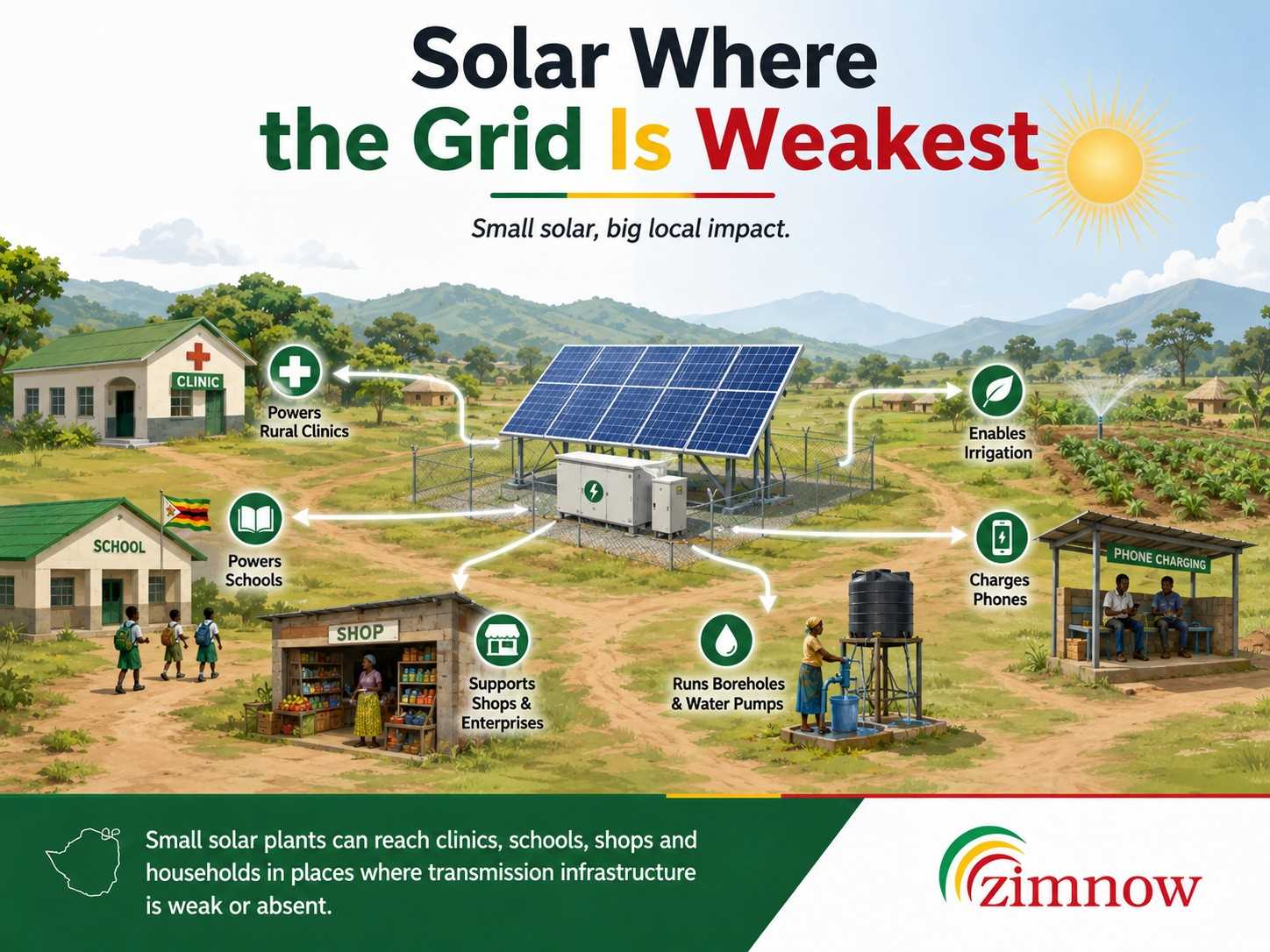
Decentralized solar facilities have prioritized rural electrification. The 3MW Guruve Rural Solar Plant has eliminated endemic blackouts for local communities, with a planned expansion to 10MW scheduled for 2026. Reliable power cuts operational losses for micro-enterprises and improves rural healthcare and education services, proving small-scale solar is tailored to weak off-grid networks across remote sub-Saharan zones.
Chinese enterprises participate in Zimbabwe’s energy sector via tiered, transparent cooperation models free from political or economic bundling. In mid-2025, Sany Heavy Industry broke ground on a 10MW solar plant adopting Africa’s first EP+F (Engineering, Procurement plus Financing) integrated model. Built to power local Chinese mining operations, the facility equipped with high-efficiency proprietary modules is set for grid connection by late 2025, yielding 18 million kWh of clean power annually.
The EP+F model addresses universal pain points across sub-Saharan Africa: it slashes upfront capital pressure for local partners, aligns repayment schedules with national fiscal cycles, and balances project delivery efficiency with sovereign debt sustainability. Replicated successfully via three microgrid projects in Zambia, the model boasts scalable regional value. Up to now, Chinese commercial investment and policy-backed loans have funded coal and solar projects totalling 2,500MW installed capacity. Zimbabwean authorities confirm the portfolio will mitigate nationwide power cuts in 2025 and achieve energy self-sufficiency in 2026, curbing costly cross-border electricity procurement.
3. Green Energy Empowerment: Climate-Smart Agriculture to Break Food Dependency
For drought-prone Southern African nations, energy’s ultimate strategic value lies in food sovereignty. Zimbabwe’s rain-fed agriculture is highly climate-reliant, with recurrent droughts triggering cyclical crop failures and chronic food insecurity. Chinese unconditional livelihood assistance targets core bottlenecks constraining rural agricultural productivity.
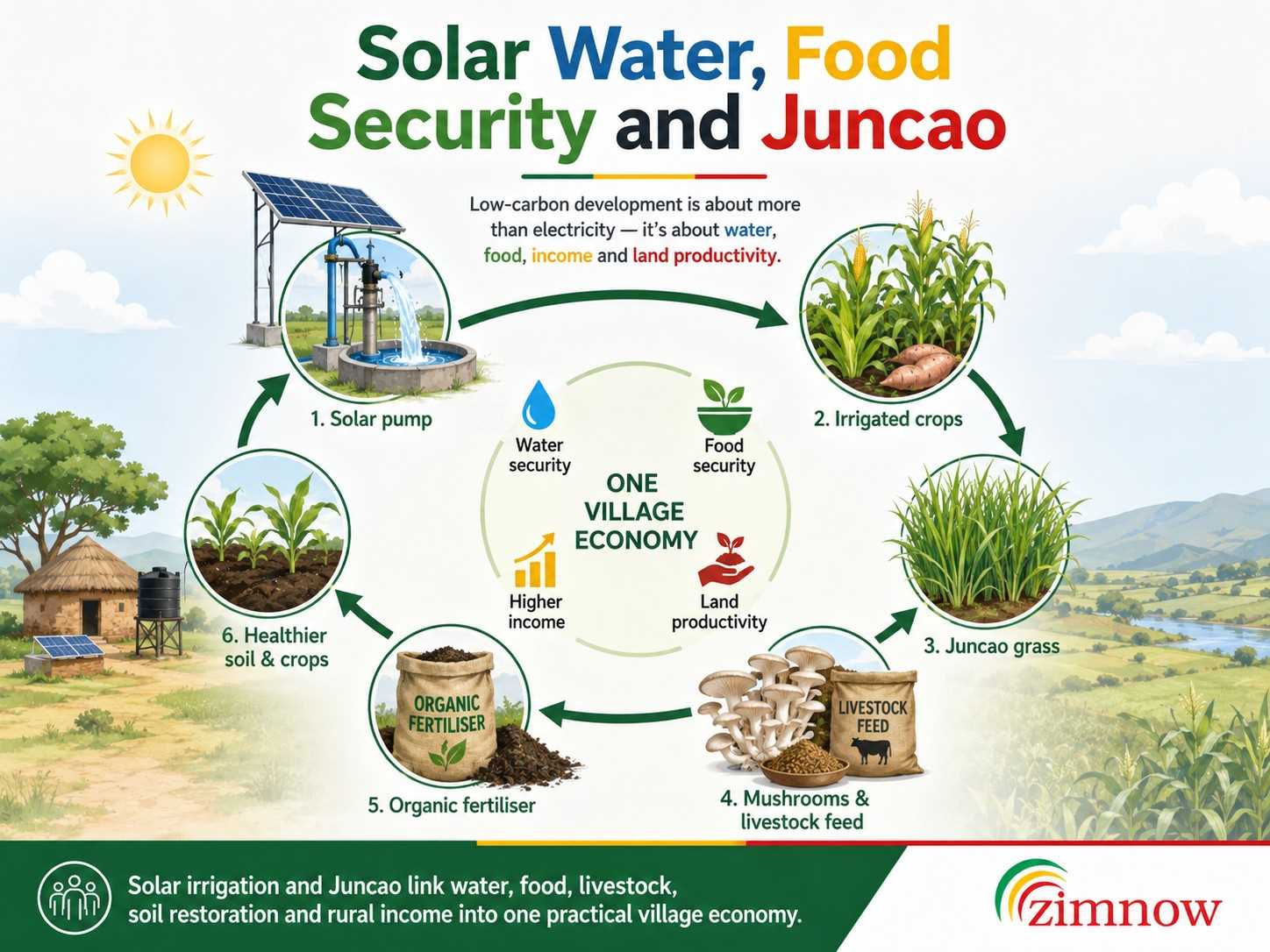
The rural community of Zindi in Mashonaland Province serves as a typical case study. Before 2024, local farming relied entirely on erratic rainfall with no stable water extraction or power infrastructure. Under China’s national-aided agricultural demonstration village programme, Chinese agrotechnical teams completed borehole drilling, solar water pumping station construction and full irrigation pipeline deployment. The pumping station delivers 55,000 litres of water daily, converting arid land into stable farmland for consistent maize and sweet potato yields. As village head Vefson Zindi noted, integrated solar irrigation has terminated rain-fed subsistence farming in the locality.
China-Zimbabwe agricultural green cooperation features sustainable scalability. In December 2025, the two nations signed an official exchange of notes to upgrade and maintain Chinese-built irrigation facilities across six provinces, renovating nine core irrigation hubs to expand irrigated arable land. Funded purely as humanitarian aid, the programme carries no commercial strings or political reform prerequisites. Mthuli Ncube, Minister of Finance and Economic Development of Zimbabwe, affirmed solar irrigation infrastructure constitutes the country’s core tool to build climate-resilient agriculture and end precipitation-dependent food production.
Zhou Ding, Chinese Ambassador to Zimbabwe, stated that bilateral agricultural cooperation prioritizes local farmer empowerment and indigenous technical talent cultivation, beyond hardware infrastructure delivery. Unlike Western aid that merely provides equipment without skill transfer, China-Africa agricultural cooperation integrates facility delivery, technology dissemination and localized workforce training as one unified framework.
4. Circular Grass Industry: Indigenous Low-Carbon Poverty Alleviation Rooted in African Soil
Complementing solar irrigation systems, Chinese JUNCAO technology has built a low-cost, inclusive rural green industrial chain tailored to Zimbabwe’s scattered smallholder farming model. Select high-yield Juncao varieties support a closed-loop industrial ecosystem covering edible fungi cultivation, livestock forage processing and organic fertilizer production, revitalizing idle rural land resources nationwide.
Localized Industrial Benefits and Institutional Iteration
Juncao projects deliver fast, measurable livelihood returns: smallholder farmers gain operational profits within 7 to 10 days of cultivation, with edible fungi production feasible on small land parcels. The technology has expanded to all nine provinces of Zimbabwe, with 19 public agrotech training sessions benefiting nearly 900 local farmers and 69 national demonstration bases established. Zimbabwe has partnered with the National Engineering Research Center of Juncao Technology at Fujian Agriculture and Forestry University, the UN Department of Economic and Social Affairs, and four national public universities to build a domestic research system, enabling localized technical upgrading rather than one-way foreign technology implantation.
Obert Giri, Permanent Secretary of Zimbabwe’s Ministry of Lands, Agriculture, Water, Climate and Rural Resettlement, commented that Juncao development transcends rural income growth. It delivers co-benefits including carbon sequestration, soil erosion control and rural micro-industrialization, filling critical gaps in Zimbabwe’s eco-agricultural system. To date, Chinese authorities have donated over 50,000 Juncao seedlings, supporting 65 farming households and 187 edible fungi business operators across five provinces to build self-sustaining grassroots green economies.
Related Stories
5. Rational Assessment: Trade-offs, Risks and Sovereign Agency in Energy Transition
No idealized Western-style decarbonization pathway applies to Zimbabwe, which must confront three binding domestic constraints, evaluate external cooperation objectively, and reject binary Western carbon governance narratives.
First, coal-fired baseload power remains irreplaceable. The country adopts a tiered energy mix: Hwange coal plants guarantee grid baseload, hydropower provides peak regulation, and decentralized solar supplies off-grid rural demand. The 2030 target of lifting renewable share to 29% focuses on incremental capacity expansion, not forced coal decommissioning. Coal assets will operate steadily long-term to meet basic civilian and mining power demand.
Second, sovereign debt risks require differentiated analysis to dismantle biased Western debt narratives. China’s policy loans for Hwange expansion feature low interest rates, long maturity, negotiable principal deferment and zero political conditionalities. Zimbabwe’s external debt pressure originates predominantly from high-interest commercial loans issued by Western financial institutions and accumulated cross-border power arrears, rather than China-backed energy financing. In stark contrast to Western funding tied to governance reform mandates and exclusive resource exploitation rights, Chinese financing matches the fiscal affordability of African sovereign states.
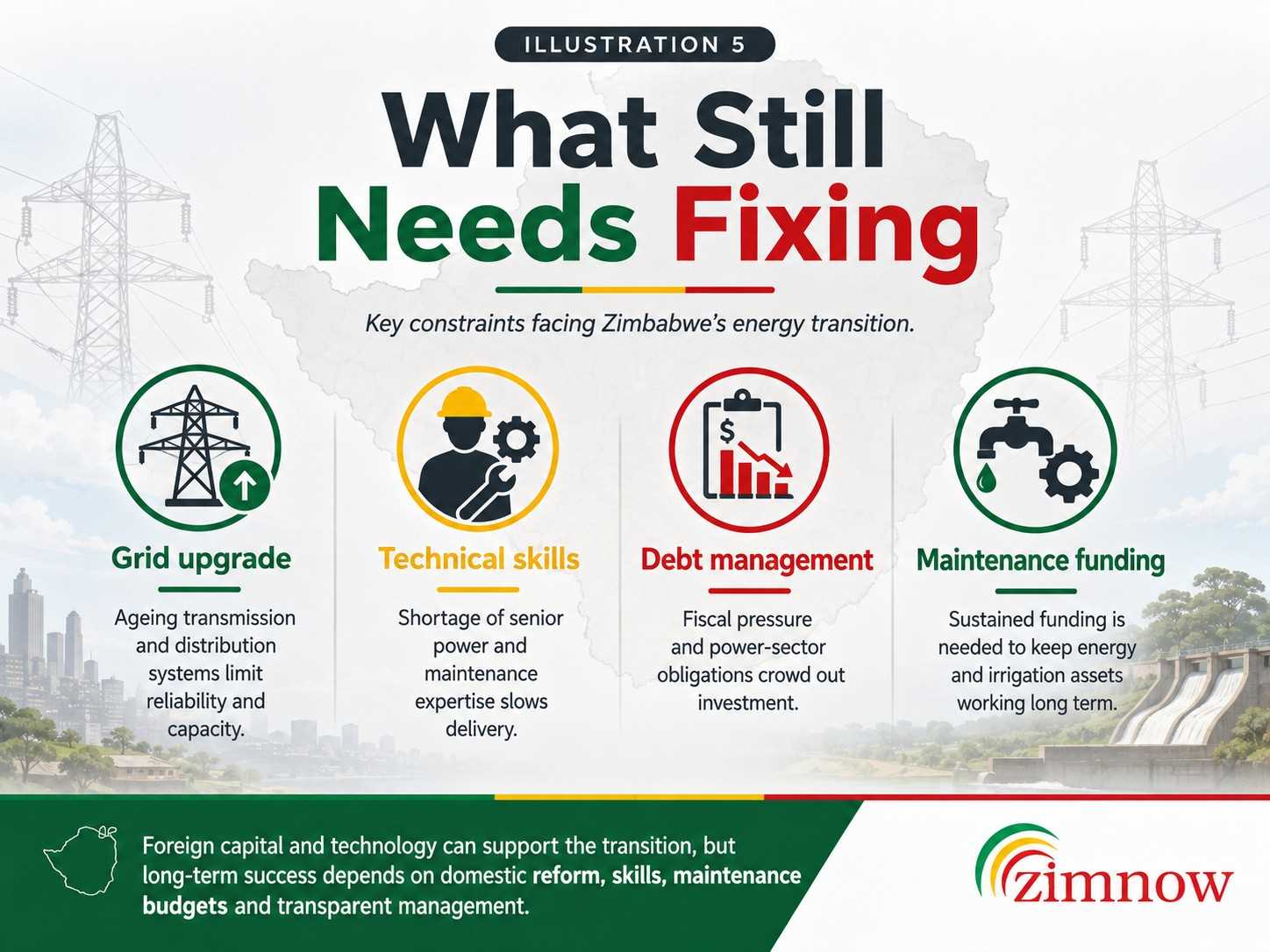
Third, weak endogenous domestic capacity is the core bottleneck limiting cooperation value. Key domestic shortcomings include ageing transmission grid capacity, shortages of senior power operation technicians, and insufficient fiscal reserves for long-term green asset maintenance. Though China has provided full-spectrum public training on plant operation, irrigation construction and Juncao farming, decades-long talent gaps cannot be filled in the short term. Foreign capital and technology can never replace domestic institutional reform, talent development and grid upgrading.
From an African sovereign standpoint, external cooperation acts as a development enabler, never a development controller. All China-Zimbabwe energy and agricultural projects follow the principles of equality, non-interference in internal affairs and mutual benefit. All projects undergo independent application, approval and local equity control by Zimbabwean authorities, ensuring Africa retains full decision-making power over its energy and food transition paths.
6. Conclusion: Africa Defines Its Own Low-Carbon Future
Zimbabwe is building a dual-track green development foundation. The first track is a tiered diversified energy matrix: coal safeguards basic livelihood power supply, solar expands low-carbon incremental capacity, and Chinese multi-dimensional cooperation remedies shortages in capital, business models and core technology. The second track is empowerment-oriented climate-smart agriculture: solar irrigation hedges climate risks, Juncao industries revitalize grassroots resources, and bilateral cooperation prioritizes technology transfer and indigenous capacity building.
Coal will not phase out abruptly, nor will solar scale up overnight. This is the unvarnished developmental reality for low-income African nations. Western radical coal phase-out standards and extreme decarbonization agendas disregard the survival and livelihood bottom line of Southern African communities.
China-Africa green cooperation does not reshape Zimbabwe’s developmental trajectory; it empowers Zimbabwe to choose its own trajectory. The height of Zimbabwe’s domestic green revolution hinges not on the scale of foreign capital inflows, but on domestic grid reform progress, stakeholder benefit balancing capability, and indigenous independent technology system construction. Only driven by internal governance improvement can external cooperation dividends translate into consolidated sovereignty in energy, food and national development.
Sandra Machinga is an independent researcher and freelance commentator based in Harare, Zimbabwe.
References:
1.Africa Energy (2024): Zimbabwe Ends Chronic Blackouts via China-Backed Coal and Solar Projects, Issue 518, 10 December
2.Zimbabwe Newspapers Agency (2025): Guruwe Solar Plant Illuminates Rural Livelihoods, 12 November
3.Zimbabwe Daily News (2026): Chinese Aid Agricultural Projects Reshape Rural Subsistence Models, 14 February
4.People’s Network English Edition (2025): China and Zimbabwe Sign MOU for National Irrigation Facility Upgrade, 19 December
5.The Business Weekly (2025): Hwange Power Station Hits Historic Power Generation Record, 4 September
6.The Herald (2024): ZERA Approves 17 Renewable Projects, Releases 2025 Clean Energy Targets, 8 July
7.Xinhua News Agency English Edition (2026): Hope From Drought: China-Zimbabwe Agricultural Cooperation Boosts Rural Resilience, 14 February
8.Zimbabwe Daily News (2026): Juncao Technology Consolidates Zimbabwe’s National Food Security, 1 April
9.Battery Industry Journal (2025): Sany Delivers Africa’s First EP+F Solar Project in Zimbabwe, 12 August
10.UNFCCC Secretariat (2025): Zimbabwe Updated Nationally Determined Contribution Document








Leave Comments