







Zimbabwe's rural economy is undergoing a gradual transformation as thousands of smallholder farmers and rural producers increasingly access international markets through export clusters that are helping overcome longstanding barriers to trade, according to ZimTrade.
The national trade development and promotion agency says the Export Cluster Development Programme is shifting rural production away from fragmented subsistence and informal marketing towards coordinated, export-oriented value chains built around quality standards, traceability and market compliance.
The programme comes as Zimbabwe seeks to diversify its export basket and increase the participation of rural communities in formal international trade.
For decades, small-scale producers have struggled to penetrate export markets because of limited production volumes, inconsistent quality, inadequate certification and poor access to logistics systems demanded by overseas buyers.
Instead of supporting individual farmers, ZimTrade has adopted a cluster approach that groups producers around common production schedules, shared technical support, quality management systems and coordinated marketing structures.
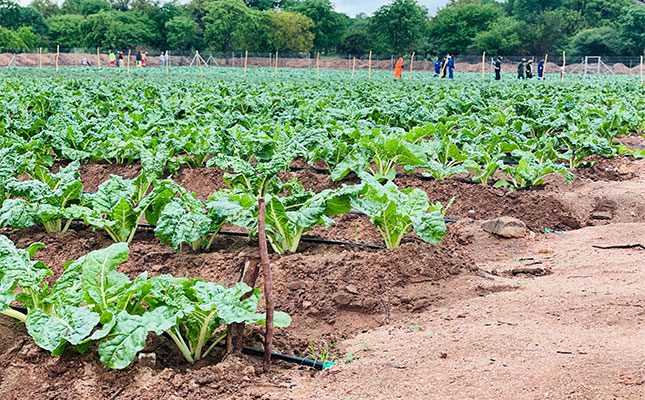
The impact of the model was recently demonstrated during a ZimTrade Board visit to the Midlands Peas Cluster, where farmers are producing sugar snap and mange tout peas for export to the United Kingdom.
The cluster is among several being established across Zimbabwe to improve the competitiveness of rural producers in international markets.
ZimTrade Chief Executive Officer Allan Majuru has previously said export clusters are designed to address one of Zimbabwe's biggest agricultural constraints, smallholder farmers' inability to meet international market requirements independently.
"Horticulture exporters in Zimbabwe are facing capacity challenges in accessing the European Union market thus limiting their ability to realise full export growth opportunities. To address this challenge, ZimTrade is developing export clusters across the country where the target is also to integrate smallholder farmers into export business."
Majuru said the programme is expected to increase the number of export-ready producers while strengthening production capacity.
"By doing this, the country will increase the number of producers, which in turn will boost production."
The initiative forms part of Zimbabwe's broader strategy to increase value-added exports and improve rural incomes through export-led growth.
According to ZimTrade, export clusters are now being developed across multiple value chains, including horticulture, honey, spices, bananas, avocados, citrus, flowers, strawberries and handicrafts.
Unlike traditional agricultural support programmes that focus primarily on production, the cluster model integrates farmers into complete export ecosystems.
Participating producers receive technical assistance on Good Agricultural Practices, grading, harvesting protocols, post-harvest handling, certification, aggregation, cold-chain management and export documentation.
Related Stories
These systems are increasingly important as international buyers demand consistency, traceability and compliance with food safety standards.
The strategy is also aligned with Government's Horticulture Recovery and Growth Plan, which targets US$300 million in horticultural exports by 2030.
Zimbabwe's horticulture industry is regarded as one of agriculture's fastest-growing export sectors, with products already reaching markets including the Netherlands, the United Kingdom, Germany, France, South Africa, China, Hong Kong, Portugal, Norway, Poland and Spain.
Majuru says Zimbabwe already enjoys a strong reputation for product quality in European markets.
"In fact, there is a general appreciation in countries like the Netherlands where buyers say Zimbabwean products such as blueberries taste better compared to other countries."
The export cluster model is also supporting certification programmes for rural producers.
In eastern Zimbabwe, smallholder pineapple farmers have obtained Ecocert Organic Standard certification, opening access to premium organic markets in Europe.
"This attainment of the organic certification is a critical milestone in reaching the lucrative organic fruit market, especially in the Netherlands, United Kingdom, Germany, and other emerging markets such as the United Arab Emirates."
The broader export strategy is beginning to produce measurable results.
According to ZimTrade, Zimbabwe's exports increased by 30 percent to US$9.71 billion in 2025, while value-added exports rose by 30.6 percent to US$571 million. During the same period, the country's trade deficit narrowed dramatically by 82 percent, reflecting stronger export competitiveness.
Majuru believes rural communities will play an increasingly important role in sustaining that momentum.
Speaking at the 2025 ZimTrade Exporters' Conference, he said inclusive export growth remains central to the organisation's strategy.
"Clusters consolidate producers, enabling them to achieve the scale, consistency, and quality needed to compete internationally."
However, agricultural economists note that sustaining export growth will require continued investment in irrigation infrastructure, cold-chain logistics, certification systems and rural transport networks.
Climate variability, financing constraints and high compliance costs also remain significant challenges for many smallholder producers seeking to access premium export markets.










Leave Comments