









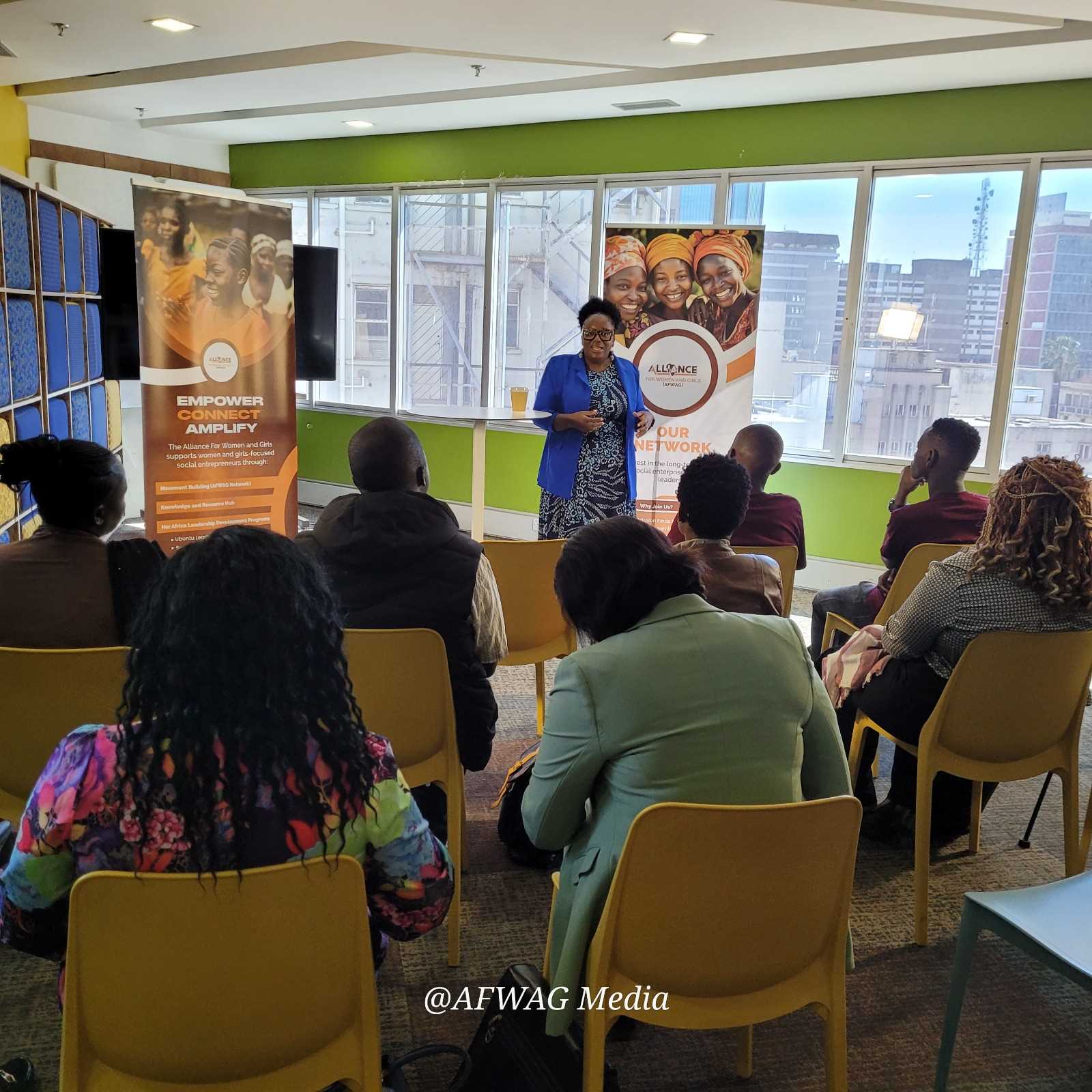
While millions of dollars are spent funding international consultants and academic institutions to study gender inequality in Africa, many of the most effective solutions may already exist within grassroots organisations working directly with communities.
That is the key finding emerging from the Equity Relay, a pan-African knowledge-sharing initiative coordinated by the Alliance for Women and Girls, which brought together 19 organisations from seven African countries, including Zimbabwe, to document successful approaches to advancing gender equity.
The initiative challenged a longstanding assumption within the development sector: that expertise must be generated externally before solutions can be implemented. Instead, participating organisations demonstrated that practical, tested solutions are already being developed on the ground, often without recognition or support to document and share them.
"The sector funds research on what works, but the money goes to external experts rather than to the organisations doing the work," said Abba Kidenda, Co-CEO of AFWAG.
"The expertise is already there. It's just not being treated as legitimate knowledge."
Over a 30-day period, participating organisations documented lessons, successes and failures from their programmes. The exercise uncovered striking patterns across countries and sectors.
Among the most notable findings was that organisations in Kenya, Zambia and Nigeria had independently developed nearly identical savings models to strengthen women's economic empowerment. Each model proved effective, yet none of the organisations knew the others existed.
According to AFWAG, similar examples emerged repeatedly throughout the exercise, revealing how organisations facing comparable challenges were often arriving at the same solutions in isolation.
The documentation also revealed that community ownership may be a stronger predictor of organisational sustainability than funding levels.
Organisations that survived for more than a decade were not necessarily those receiving the largest grants. Instead, they were organisations deeply rooted within their communities, with governance systems that gave local people meaningful decision-making power and financial models that encouraged community investment rather than passive participation.
The findings further highlighted the importance of context in development programming.
Participating organisations documented why interventions that succeeded in one community sometimes failed in another, providing practical insights that are often absent from traditional donor-focused evaluation reports.
AFWAG noted that the entire documentation process cost approximately US$5,000, a fraction of what is typically spent on large-scale external research projects.
A comparable multi-country study examining gender equity programming could cost more than US$150,000 and take up to 18 months to complete.
Related Stories
Zimbabwe was represented by four organisations: Super Size Me Zimbabwe (SSMAZ & SSMZ), The Greater Light Trust, Development Forum Unit in Zimbabwe and Chenjedzo Trust.
The Greater Light Trust shared lessons from its work promoting sustainable solar bottle lighting in vulnerable communities, while Chenjedzo Trust documented strategies around skills development and mentorship programmes designed to improve women's financial independence.
Their contributions focused on community engagement, sustainable technology adoption and women's economic empowerment.
The initiative has produced a practical playbook aimed at frontline practitioners rather than academic audiences. The resource includes community engagement frameworks, governance models designed to strengthen organisational resilience and guidance on adapting programmes to different economic and cultural contexts.
AFWAG argues that one of the development sector's greatest weaknesses is its failure to preserve and transfer institutional knowledge.
When organisations close due to funding shortages, years of experience, tested approaches and lessons learned are often lost. New organisations then enter the same spaces and repeat work that has already been done.
"This isn't about individual organisations failing to share," Kidenda said.
"It's that the funding architecture doesn't invest in infrastructure that would make practitioner knowledge portable. We fund programmes and evaluations of programmes. We don't systematically fund the documentation that would let organisations learn from each other."
The initiative has reignited debate around what qualifies as knowledge within the development sector.
While academic studies and consultant-led research are routinely funded and recognised, practical knowledge generated by organisations working directly with communities is often treated as secondary or informal.
"We're not replacing academic research," Kidenda said.
"We're recognising that practitioner knowledge does different work. These organisations know why an approach that succeeded in Nairobi failed in Lagos. They know what has to already be true in a community for a particular intervention to take hold. That's not the kind of intelligence you get from evaluating one programme in one location."
The Equity Relay playbook will be made available through AFWAG's website, with plans already underway to expand the initiative into additional countries and programme areas.
For AFWAG and participating organisations, the project raises a broader question for development funders: whether future investments should focus not only on creating new knowledge, but also on preserving, documenting and scaling solutions that communities have already proven effective.







Leave Comments