








Zimbabwe is intensifying preparations for its first-ever National Agricultural Census, as authorities move to address longstanding weaknesses in agricultural data systems that have increasingly complicated food security planning, climate adaptation and rural development policy.
The census initiative, being developed in partnership with the Food and Agriculture Organization of the United Nations, reflects growing concern within Government and development agencies that agricultural policy decisions are often being made using fragmented or outdated production data.
In a statement on the programme, FAO warned that “without reliable, complete and up-to-date National Agriculture Census framework, strengthening agrifood systems transformation risks being guided by partial signals rather than a full national picture.”
The census aims to establish a nationwide baseline of agricultural holdings across household and non-household sectors while also capturing community-level characteristics affecting rural livelihoods and agricultural production systems.
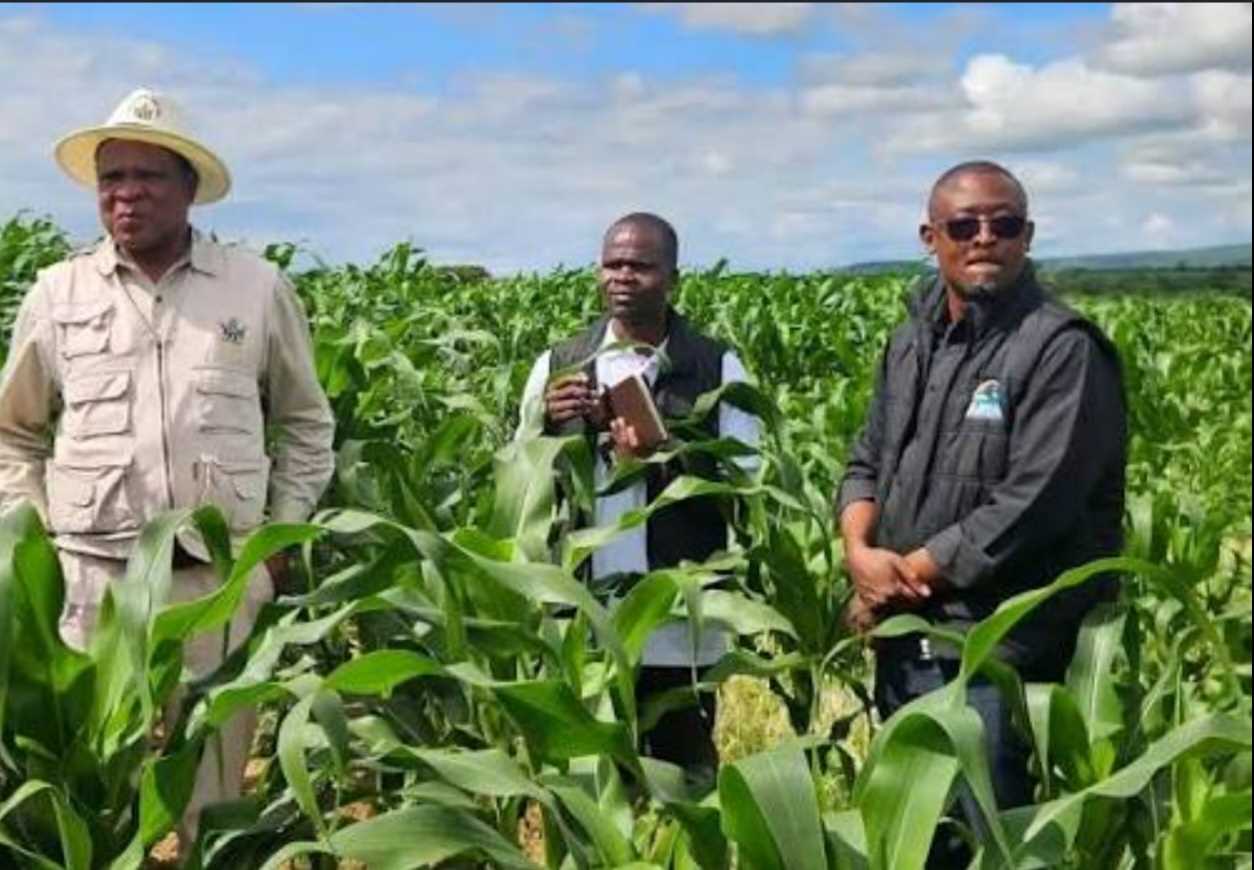
As part of the process, experts from Zimbabwe National Statistics Agency, the Ministry of Agriculture and other institutions recently completed a nine-day technical workshop focused on developing the core census framework, including questionnaires, field manuals and statistical tabulation plans aligned to FAO’s World Programme for the Census of Agriculture 2030 standards.
FAO Sub regional Coordinator for Southern Africa and Representative to Zimbabwe, Patrice Talla, said the initiative was critical for evidence-based agricultural planning.
“Transforming Zimbabwe’s agrifood systems requires decisions that are anchored in facts. A National Agricultural Census will provide the structural data Zimbabwe needs to plan smarter, invest better, and target support where it delivers the greatest impact, especially for smallholder farmers and rural communities,” said Talla.
The renewed focus on agricultural statistics comes at a time when Zimbabwe’s farming sector is under mounting pressure from climate volatility, shifting rainfall patterns, rising production costs and persistent food security vulnerabilities.
Although agriculture remains one of Zimbabwe’s largest economic sectors and a major source of livelihoods, policymakers and analysts have frequently raised concerns over the reliability and consistency of agricultural production data, particularly within smallholder farming systems that dominate rural output.
Related Stories
Weak data systems have also complicated national planning around grain reserves, livestock management, irrigation investment, drought preparedness and agricultural financing.
Zimbabwe has in recent years increasingly relied on seasonal crop assessments, sample surveys and administrative estimates, but experts argue these approaches often fail to provide a sufficiently comprehensive national agricultural picture.
“This workshop was not just training, it was productive. The workshop managed to strengthen the technical capacity while jointly building the instruments we need for a credible census,” said Esther Mashayamombe, Focal Point for Strategic Planning, Monitoring and Evaluation in the Agriculture Ministry.
“The process involved producing questionnaires, manuals and tabulation plans that will translate methodology into quality data,” she added.
The census preparations also reflect broader shifts toward data-driven governance across African agricultural systems, particularly as governments confront the growing economic and political consequences of food insecurity and climate shocks.
According to FAO, Zimbabwe’s current momentum builds on groundwork initiated in 2025, when the organisation supported the Government in developing a National Agricultural and Livestock Census Plan of Action, updating national food balance sheets and preparing a census project document to support resource mobilisation.
The next phase will focus on digitising data collection systems through Computer-Assisted Personal Interviewing tools and strengthening technical capacity in census data management and analysis.
Principal Statistical Officer at ZIMSTAT, Dominic Tafirenyika, said stronger agricultural statistics would directly improve national planning capacity.
“When data is strong, our planning is strong. The census will give us a national picture we can trust, one that improves survey design, strengthens sampling frames, and equips decision-makers with evidence to respond faster and more effectively to farmers’ realities,” said Tafirenyika.
However, the initiative also exposes deeper structural challenges within Zimbabwe’s agricultural governance system. Conducting a nationwide agricultural census is likely to require significant financial resources, technical coordination and institutional capacity at a time when public sector funding pressures remain acute.






Leave Comments