










Zimbabwe’s construction sector is expanding, but rising input costs are beginning to erode margins for contractors, according to the latest price indices released by ZimStat.
The data shows broad-based increases in building and civil engineering materials during the first quarter of 2026, driven in part by fuel-related cost pressures and currency dynamics.
The USD Civil Engineering Material Price Index rose to 102.79 in March 2026, up from 96.38 in February, reflecting a sharp 6.7 percent month-on-month increase after a marginal decline of 0.1 percent the previous month. In contrast, the Civil Engineering Plant Price Index remained unchanged at 91.94, indicating stability in construction machinery and equipment costs despite rising material inputs.
ZimStat reported that “the USD Civil Engineering Material Price Index was 102.79 in March 2026 and 96.38 in February 2026,” while “the month-on-month rate of change in March 2026 was 6.7 percent, gaining 6.8 percentage points on the February 2026 rate of -0.1 percent.” It further noted that “the USD Civil Engineering Plant Price Index remained unchanged at 91.94 between February 2026 and March 2026,” with “the month-on-month rate of change at 0.0 percent in March 2026, unchanged from the February 2026 rate.”
Related Stories
Other building material costs are also trending upward. The USD Building Materials Price Index stood at 116.22 in March 2026, compared to 112.07 in December 2025, reflecting a 3.7 percent quarterly increase. In ZiG terms, prices rose by 4.1 percent over the same period, underscoring persistent inflationary pressures in the domestic currency environment.
ZimStat recorded that “the USD Building Materials Price Index was 116.22 in March 2026 and 112.07 in December 2025,” with “the quarterly rate of change in March 2026 at 3.7 percent, gaining 2.6 percentage points on the December 2025 rate of 1.1 percent.”
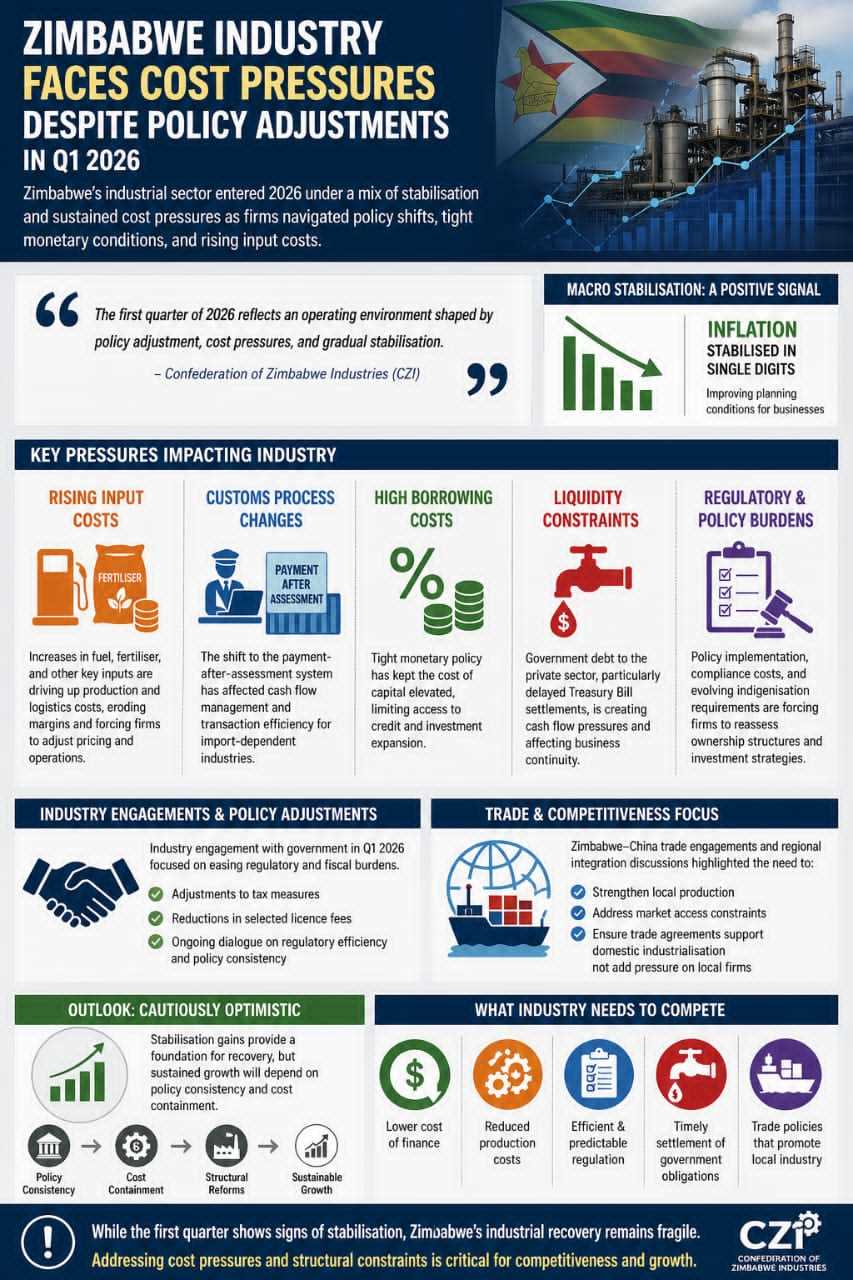
The divergence between material costs and plant prices is shaping industry dynamics, with contractors who locked in fixed-price contracts earlier in the year now facing tightening margins as input costs rise. Industry pressure is expected to intensify further, with fuel costs identified as a key transmission channel for future price increases across transport-intensive construction inputs.
While construction activity has remained relatively resilient, the rising cost base points to a sector operating under increasing strain. Civil engineering materials, which form the backbone of infrastructure development, are particularly sensitive to fuel, logistics, and import-linked pricing, making them vulnerable to both domestic and external shocks.




Leave Comments