







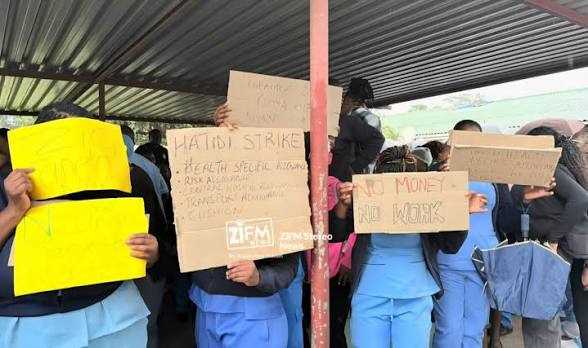
Zimbabwe’s healthcare sector faces potential disruption as nurses announce a nationwide strike from April 15 to April 17, 2026, citing deteriorating salaries and poor working conditions.
Zimbabwe Nurses Association president Enock Dongo said the industrial action will proceed if authorities fail to address long-standing grievances before April 14, which the union has set as the final deadline.
“We have been instructed by our members to advise that all nurses are going to embark on a nationwide strike, which shall commence from the 15th of April 2026 to the 17th of April 2026,” Dongo said.
He explained that the union allowed extra time beyond the legal requirement to facilitate meaningful engagement. “We have considered that we should give the employer a longer notice period so as to address the grievances of the nurses before the next pay cycle,” he added.
At the heart of the dispute is the issue of low salaries. Dongo highlighted the gap between nurses’ pay and the rising cost of living: “The basic salary for nurses remains unacceptably low and not commensurate with the cost of living or the demands of the profession.
"This basic salary forms the basis upon which retirement packages are calculated, effectively condemning nurses to retire into poverty after years of dedicated service.”
Related Stories
He called for urgent Cost of Living Adjustments to cushion nurses against prevailing economic pressures: “There has been no meaningful adjustment of salaries in line with the rising cost of living. Nurses demand the urgent introduction of a Cost of Living Adjustment to cushion them against prevailing economic conditions.”
Rising transport and accommodation costs are adding to the strain. “Nurses are now spending a disproportionate amount of their income on commuting, with some resorting to walking long distances to work,” Dongo said. “Institutional accommodation is not a luxury or convenience, but a necessity to ensure timeous response to emergencies and continuity of care.”
Payroll transparency and allowances are also major concerns. “Members continue to experience unexplained salary deductions, compounded by the prolonged unavailability of payslips, which denies nurses transparency and the ability to verify their earnings. Allowances specific to the health sector remain outdated and no longer meaningful in the current economic environment,” Dongo noted.
The union further raised issues around staffing, shift arrangements, and grievance handling. “Health institutions are experiencing critical staff shortages, which are placing excessive strain on the existing workforce and compromising service delivery,” he said. “Reports have emerged of intimidation directed at nurses raising legitimate concerns, and authorities must ensure respectful engagement and protection of labour rights.”
Dongo emphasized that critical care services will continue during the strike. “All staff stationed within the Intensive and Critical Care Units of hospitals shall be advised not to abandon their stations or duties,” he said.
The nurses’ planned action spans all provinces, affecting central, provincial, and district hospitals, as well as clinics. The strike could significantly disrupt public healthcare services unless the government responds positively before the April 14 deadline.
“Should there be a positive response to the demands, the nurses will consider canceling off the job action,” Dongo added.








Leave Comments