




Zimbabwe’s tobacco farmers are facing declining earnings this season despite a strong surge in output and exports, as prices continue to weaken across both contract and auction floors.
Minister of Lands, Agriculture, Fisheries, Water and Rural Development, Anxious Jongwe Masuka, said the sector remains central to economic growth, with Government targeting a US$7 billion tobacco industry by 2030.
“Tobacco production and marketing are guided by the Tobacco Value Chain Transformation Plan 2: 2026–2030, which seeks to build a US$7 billion tobacco industry by 2030,” he said.
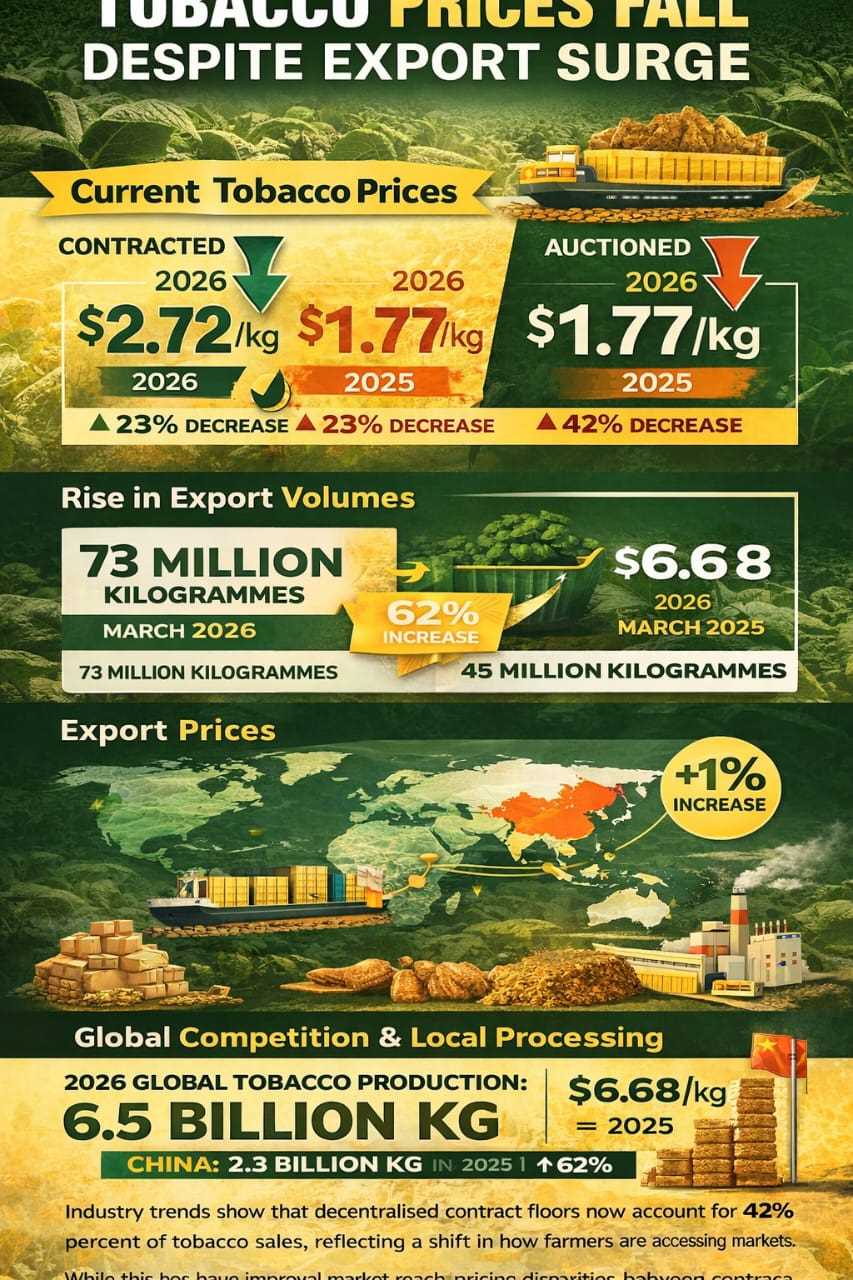
However, pricing trends are weighing heavily on farmers. Contract tobacco is currently averaging US$2.72 per kilogramme, down from US$3.53/kg recorded in 2025, representing a 23 percent decline.
At auction floors, prices have dropped more sharply to US$1.77/kg, compared to US$3.03/kg last year, reflecting a 42 percent decrease.
Minister Masuka said efforts are underway to improve productivity and farmer resilience.
“The plan seeks to enhance productivity, sustainability, and farmer resilience by increasing production from 355 million kilogrammes to 500 million kilogrammes by 2030 through climate-smart agriculture, irrigation development, and mechanisation,” he said.
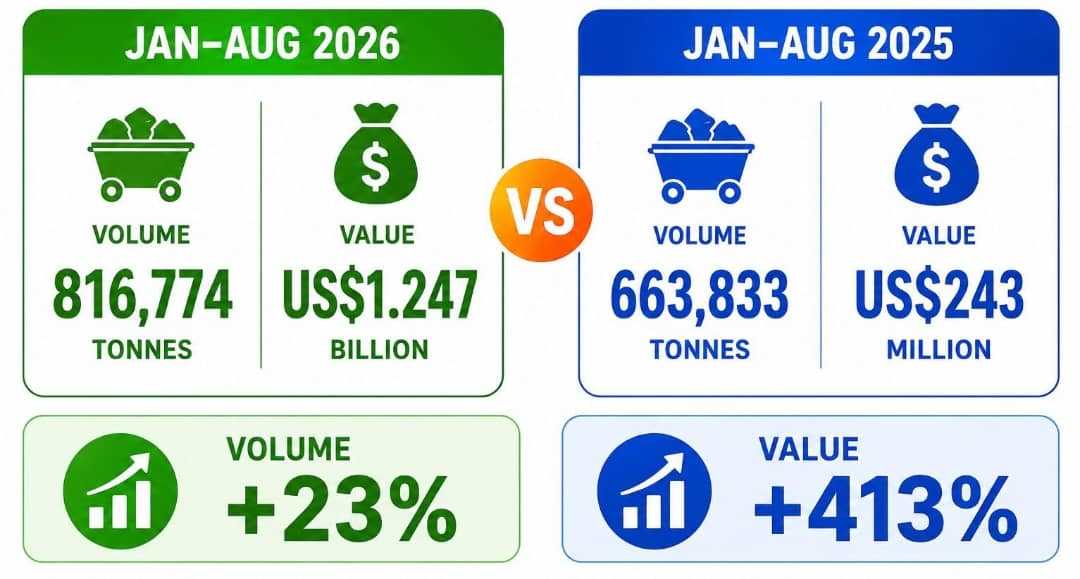
Despite falling prices, export volumes have increased significantly. By March 20, 2026, tobacco exports had reached 73,081,397 kilogrammes, up from 45,000,494 kilogrammes in 2025, representing a 62 percent increase.
Export prices have remained relatively firm at US$6.68/kg, a marginal one percent increase compared to last year.
Related Stories
Minister Masuka said Government is also working to improve financing structures within the sector.
“The plan also seeks to localise tobacco financing by accelerating the localisation of funding to cover 70 percent of production costs, reducing dependency on offshore financing and enhancing local value retention,” he said.
He added that efforts are being made to diversify export markets and strengthen the country’s position in global trade.
“We are also focusing on diversifying export markets under the African Continental Free Trade Area, strengthening trade surveillance, and developing a premium brand for Zimbabwean tobacco,” said Minister Masuka.
Decentralised contract floors now account for 42 percent of total tobacco sales, reflecting shifts in marketing systems, while global production is expected to reach 6.5 billion kilogrammes in 2026. China alone is projected to produce over 2.3 billion kilogrammes, increasing competition on the international market.
Locally, value addition is gaining momentum, with cigarette manufacturing rising by 67.2 percent since 2021, although farmers continue to feel the impact of falling prices.
Minister Masuka acknowledged the challenges facing growers.
“Government assures farmers that it is aware of the challenges being faced and is actively crafting the required solutions in consultation with all stakeholders,” he said.
The current trends highlight growing pressure within the tobacco value chain, as increased production and exports contrast with declining prices at the farm level.









Leave Comments