





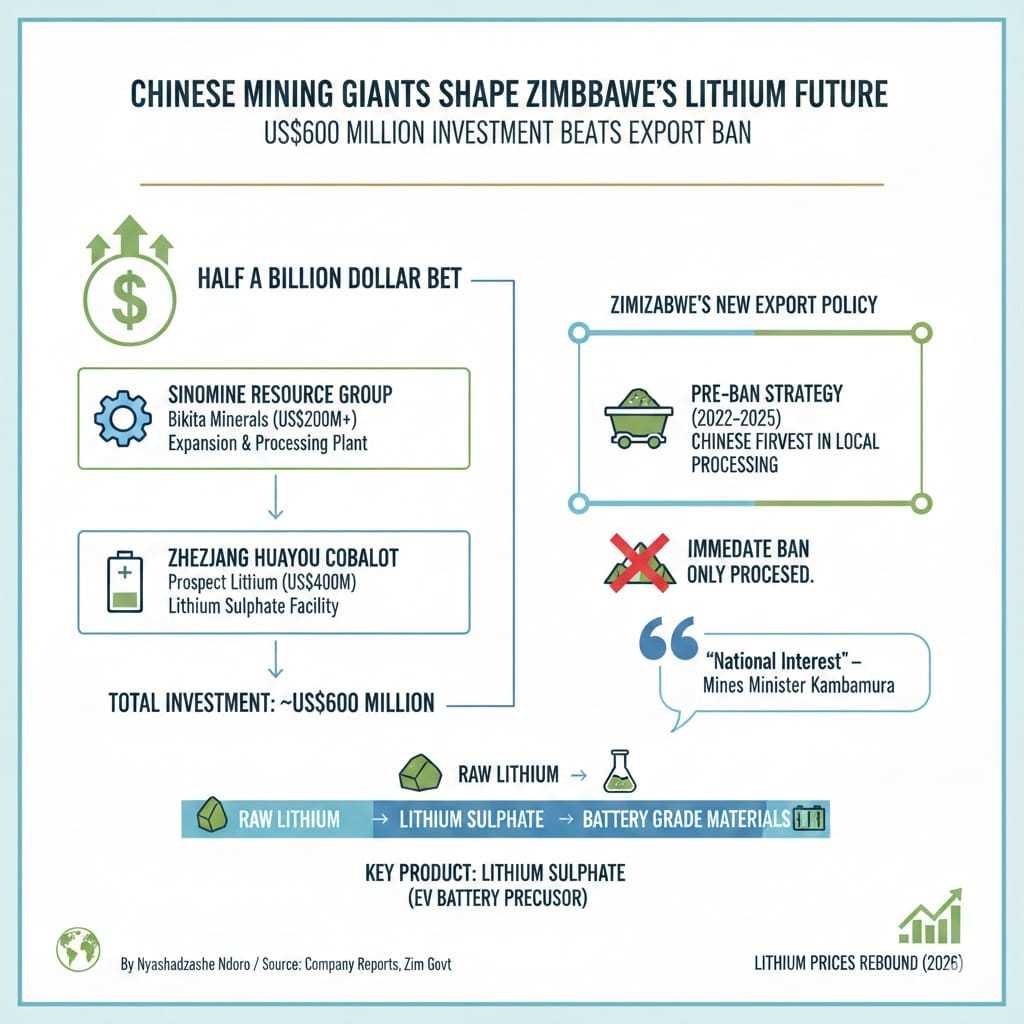
Two major Chinese mining companies, Sinomine Resource Group and Zhejiang Huayou Cobalt, have positioned themselves ahead of Zimbabwe’s latest mineral export restrictions by investing nearly US$600 million in local lithium processing projects.
The government this week imposed an immediate suspension on exports of all raw minerals and lithium concentrates, stipulating that only companies with approved beneficiation facilities will be permitted to export processed products.
Sinomine and Huayou had already taken this route, accelerating their investments in lithium value addition well before the policy came into effect.
Sinomine, which operates Bikita Minerals, launched a US$200 million expansion and processing plant project in 2022 aimed at increasing Zimbabwe’s share of value addition in lithium production. Separately, Huayou’s Prospect Lithium is developing a US$400 million lithium sulphate facility, with commissioning expected later this year.
Together, the two projects represent nearly US$600 million in capital commitments, underscoring the companies’ confidence in Zimbabwe’s strategy to capture greater economic value from its mineral resources.
Mines Minister Polite Kambamura has emphasised that under the new export conditions, only miners with verified beneficiation capacity will be allowed to export.
The directive, officially announced this week, applies to all raw materials and lithium concentrates, including consignments already in transit, and is intended to clamp down on illicit outflows while maximising in-country value addition.
Related Stories
“These measures are being implemented in the national interest, to enhance mineral accountability, promote beneficiation, and maximise value retention within Zimbabwe,” Kambamura said.
The policy shift reinforces a direction Sinomine and Huayou had already adopted—moving up the lithium value chain by investing in local processing rather than relying solely on concentrate exports.
Lithium sulphate, the product both companies are targeting, is a key intermediate that can be further refined into battery-grade lithium hydroxide or lithium carbonate, materials critical for electric vehicles and energy storage technologies.
By developing processing plants ahead of the official deadline, the two miners are expected to remain compliant with the new regulations and maintain export capacity, while other producers race to upgrade facilities.
Zimbabwe holds some of the world’s largest lithium deposits, and the government has been clear that future mineral exports must align with value-added production.
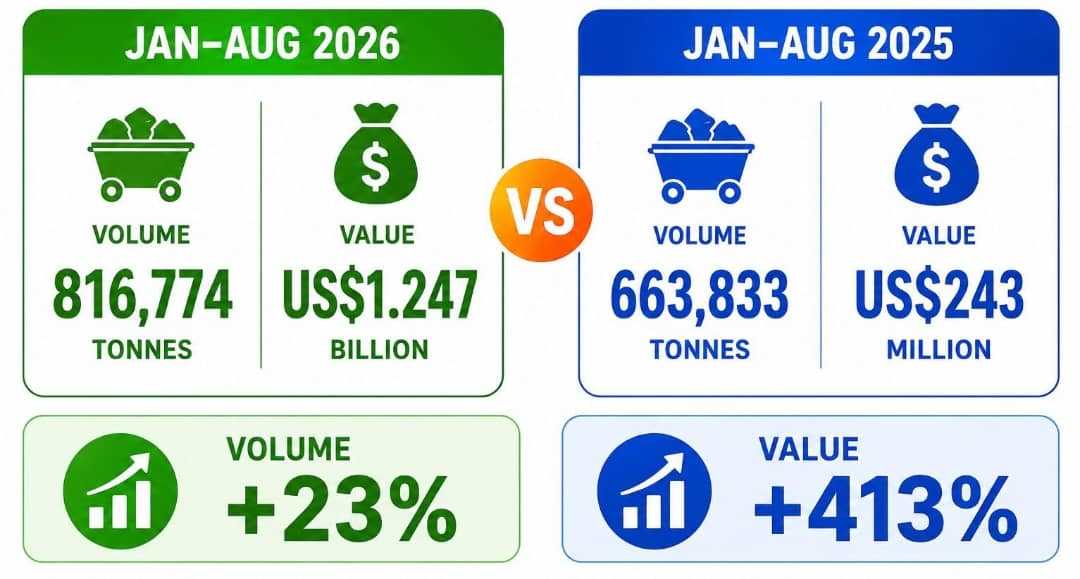
Last year, the country shipped about 1.128 million tonnes of lithium—an 11 percent increase from 2024—but export earnings remained largely flat at around US$513.8 million due to weak global prices. Prices have since rebounded in 2026, creating a more favourable market environment for refined lithium products.
Industry observers say the Chinese-backed projects not only demonstrate early alignment with state policy but also strengthen Zimbabwe’s position in the global battery minerals supply chain.









Leave Comments