




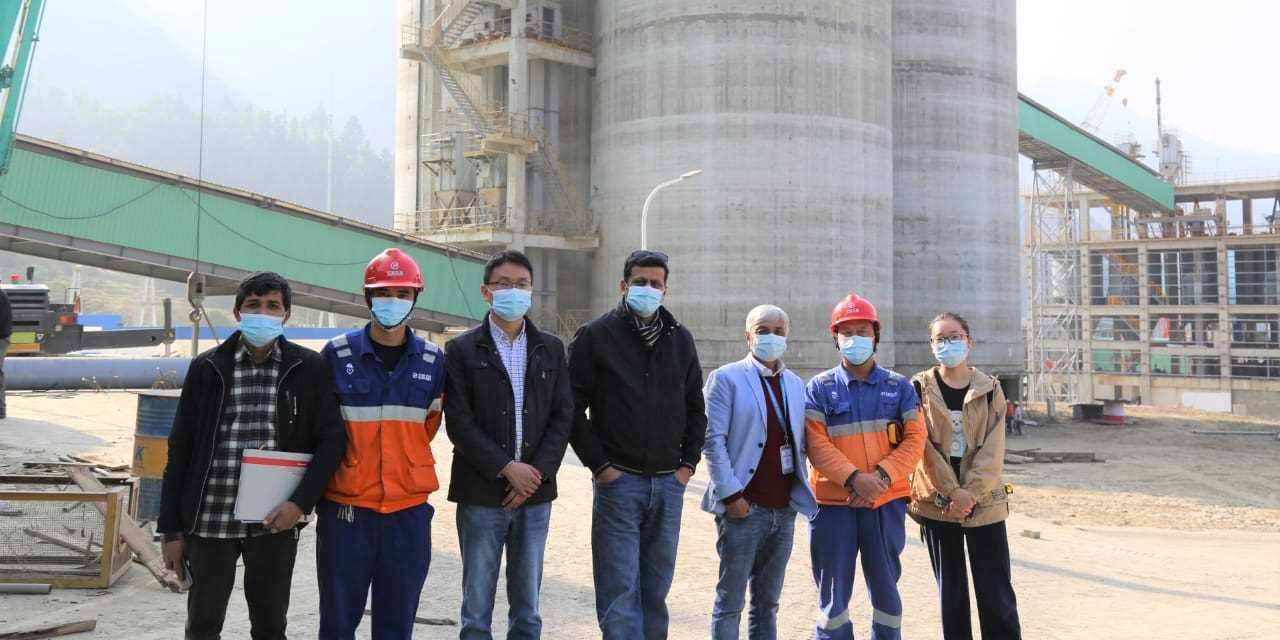
Chinese cement maker Huaxin Cement is moving ahead with a major capacity expansion at its Mt Hampden plant, responding to surging demand in Zimbabwe’s construction industry and persistent supply gaps that have fuelled imports and price increases.
Huaxin, which commissioned the plant in 2024 with an annual capacity of 200,000 tonnes of its DuraCrete brand and 20,000 tonnes of tile adhesive, plans to scale cement output to 500,000 tonnes by 2026 under its second phase of expansion.
“We are scaling capacity to 500,000 tonnes in 2026,” the company said, underlining its commitment to meeting local market needs.
The expansion comes against the backdrop of strong and sustained demand for cement across Zimbabwe. Local output has been insufficient to keep pace with rising consumption, driven by a construction boom that has seen demand nearly triple since 2017, according to government and industry data. Zimbabwe’s cement consumption is estimated at about 1.6–1.8 million tonnes annually, far outstripping domestic production capacity.
Domestic shortages have been so acute that the government relaxed cement import licensing requirements and issued about 145,000 tonnes of import licences since October 2025 to ease supply constraints.
Related Stories
Cement prices in the country have surged, climbing roughly 42 percent to about US$17 per 50kg bag, as both domestic and import supply struggled to keep up with demand.
Imported cement now accounts for a significant portion of market activity, with nearly 450,000 tonnes brought into Zimbabwe between November 2023 and October 2024, equivalent to about 25 percent of the total market in that period.
Industry warns that while imports provide short-term relief, they can undermine local manufacturers and squeeze investment in capacity — a challenge Huaxin’s latest expansion seeks to address.
Zimbabwe’s broader cement sector has an installed grinding capacity of about 2.6 million tonnes per year, but output remains inconsistent due to raw material shortages, equipment breakdowns and energy constraints.
Regional demand pressures also play a role, with neighbouring markets, including Zambia, historically supplying much of Zimbabwe’s imported cement.







Leave Comments