




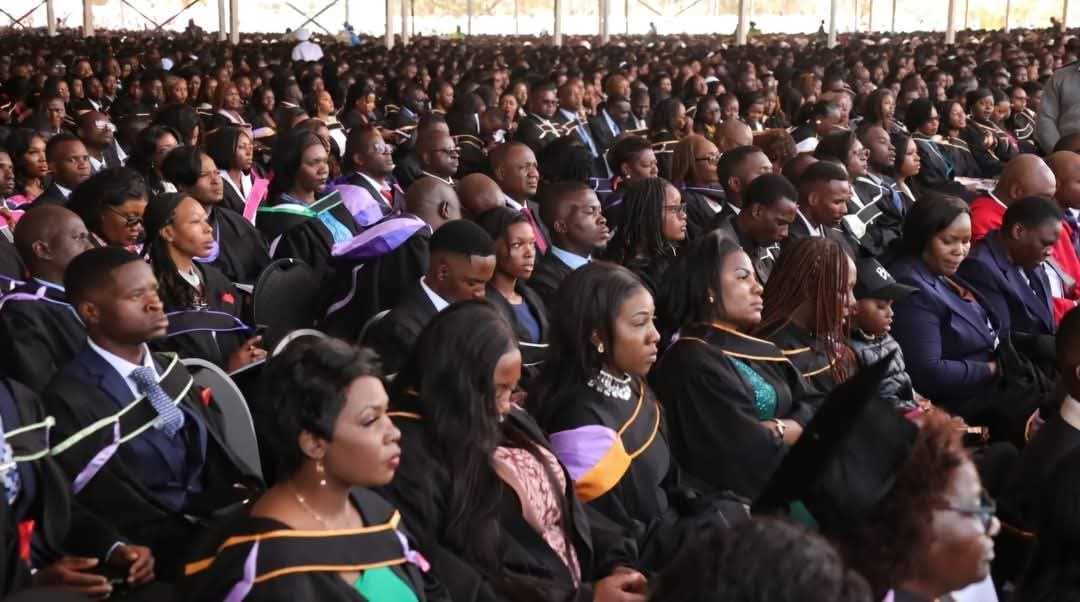
As 2025 draws to a close, Zimbabwe’s graduation season has delivered one of the country’s starkest year-end realities: tens of thousands of qualified young people have exited lecture rooms into an economy that has no place for them.
This year alone, public universities and polytechnics produced well over 27 000 graduates, with the national figure edging towards 30 000 once private institutions and teacher colleges are included. The University of Zimbabwe capped a record 6 918 graduates in August, Midlands State University followed with 6 849 in September, Great Zimbabwe University released 3 477, Harare Polytechnic set a new high at 4 588, NUST graduated more than 2 500, Zimbabwe Open University 2 385, and Harare Institute of Technology 641.
For many of those graduates, the ceremony marked the end of education and the beginning of prolonged unemployment, informal work or forced migration.
“Graduation changed nothing. I’m dubbed a toll enforcer now,” said Vimbiso Mandizha, 30, who remains at home with his parents and survives on occasional mobile money support from friends.
“At 30, bunking with family is humiliating; it’s pure grind, and they keep asking when are you getting married.”
Zimbabwe’s labour market data explains the frustration. ZimStat figures for 2025 show official unemployment at 20.7 percent, while the expanded unemployment rate which captures discouraged job seekers stands at 37.1 percent.
Youth are the hardest hit. World Bank data places youth unemployment at about 1314 percent in 2024, while
ZimStat’s third-quarter 2024 figures show youth joblessness at 21.8 percent for those aged 15 and above.
Afrobarometer surveys underline the disconnect, with only 11 percent of Zimbabweans aged 18–35 saying the government is performing well on job creation.
Behind the statistics are graduates whose qualifications no longer translate into work.
“I graduated for four years with a first-class degree in Psychology, but now I am working as a masseuse, which is far from what I studied,” said Macbein Machimba.
“I have been applying for a job in Zimbabwe but nothing comes. These days only connections work.”
Another graduate, Jonathan Mucheni, said the education-to-employment promise has collapsed.
“I remember Hopewell Chin’ono saying in Zimbabwe, learn a trade skill and you won’t lack work because there is demand for mechanics, welding, carpentry, HVAC,” he said.
“It doesn’t make sense to spend four years at varsity, losing thousands of dollars, then sit at home for ten years. I’ve realised most school dropouts are now doing better than us.”
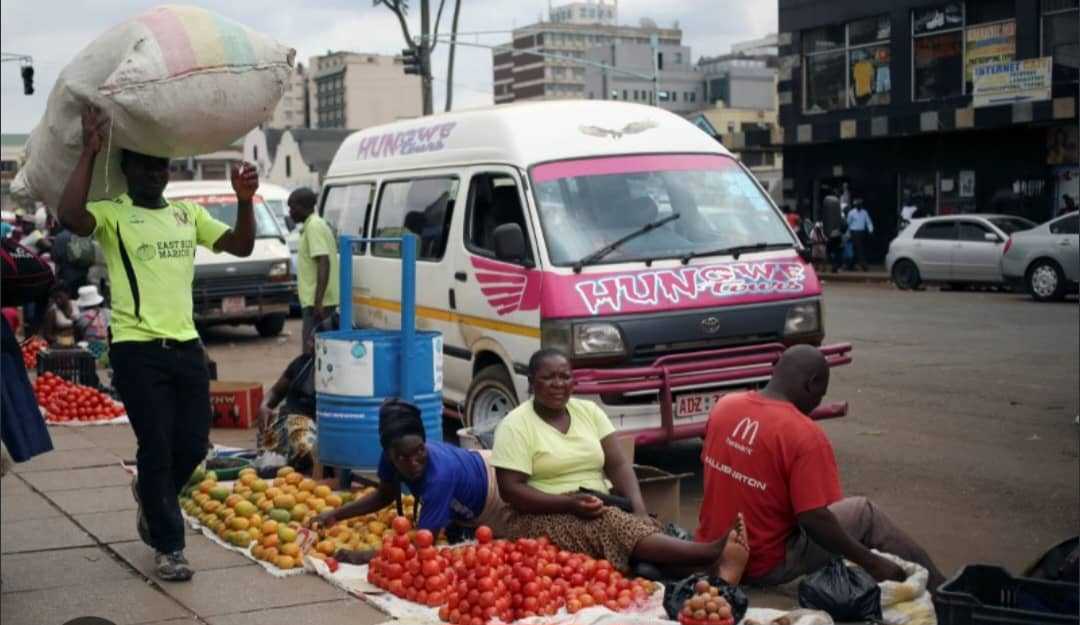
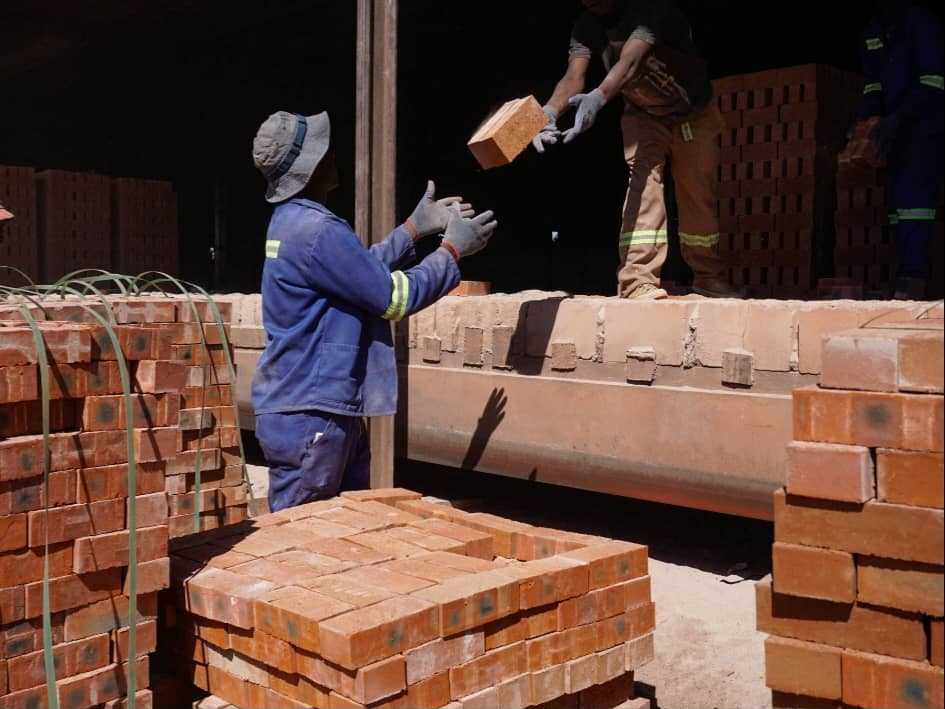
The result has been a mass drift of graduates into the gig economy and informal sector vending, online trading, transport hustles and casual services often far removed from their training.
Kelly Makiwa, a 2012 Political Science honours graduate from Bindura University, now sells herbal remedies online.
“I poured four solid years into a subject I excelled at, racking up fees and sacrifices, only to graduate into this void,” she said. “It’s soul-crushing to watch that investment evaporate while unemployment swallows dreams whole.”
“Politicians talk big on youth empowerment, yet here I am, 13 years post-graduation, trading tonics on WhatsApp groups,” Makiwa added.
Related Stories
“The real hurt is knowing my passion for Political Science could’ve shaped policy, but survival trumps everything now.”
For others, the descent into informality began immediately after graduation.
Kudzai Mhike, who graduated in Architecture from the University of Zimbabwe in 2020, now sells spare parts at Mambo Takue Car Sales.
“I graduated full of blueprints and big dreams, chased jobs all the way to South Africa, then came back empty-handed,” he said. “Post-grad, I hawked chips at Mbudzi roundabout to feed my little sister , me, a qualified architect, frying roadside snacks.”
“They drill into us that education unlocks success, but right now it’s a lock with no key,” Mhike said.
“Despite my degree, the system is rigged. Graduates like me end up hustling for survival, not thriving on talent.”
Economist Gift Mugano describes the situation as a structural dead end.
“Many young people have given up on jobs altogether, viewing degrees as pointless amid this lost generation,” he said, noting a split between graduates grinding in informal work and others sinking into despair.
International comparisons deepen the unease.
The World Economic Forum’s Future of Jobs Report 2025 estimates Zimbabwe’s unemployment at about 4.9 percent under narrow definitions, but flags significant disparities particularly rising youth joblessness and deepening vulnerability in low-income economies where informal work absorbs most new entrants.
Some graduates see emigration as inevitable.
“We will all be applying for passports so that we can work as domestic workers in other people’s countries,” said Machimba.
Others are trying to reframe failure as survival.
The Sweden Alumni Network of Zimbabwe, which runs the virtual “Succe-ailure Camp”, said the crisis is driven by a mismatch between university curricula and labour-market needs.
“Grads emerge skilled on paper, sidelined in practice,” the group said.
“We refuse to let degrees gather dust.”
The unemployment crisis is also spilling into politics
. The Zimbabwe Coalition for Unemployed Graduates has urged young people to vote, arguing that apathy has entrenched poor governance.
“‘Bad officials are elected by good citizens who do not vote,’” the group said, warning that disengagement has helped sustain policies that exclude youth from economic opportunity.
As the year ends, Zimbabwe’s campuses remain busy producing graduates, while streets, markets and online platforms fill with degree holders hustling to survive.
For a generation that was told education was the surest route to opportunity, 2025 has closed with a harder truth: the country is producing graduates faster than it is producing jobs, and the gap is reshaping lives, ambitions and the future of work itself.







Leave Comments