






Zimbabwe’s push to digitise tax administration is exposing a wider public-sector problem: while the Zimbabwe Revenue Authority is urging businesses to abandon manual tax processes, local authorities continue to struggle with incomplete records, accounting backlogs and late financial reporting.
The contrast raises a bigger question for Government: if digital systems are increasingly being presented as the answer to efficient revenue administration, why are some of the country’s councils still failing to produce basic financial statements on time?
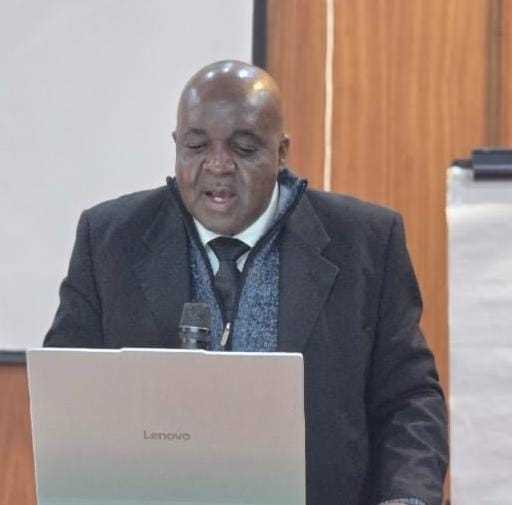
Speaking at a taxpayer breakfast meeting in Gweru on the sidelines of the Midlands Agricultural Show, ZIMRA Regional Manager for Domestic Taxes Region 3, Mkhululi Nkulumo, urged businesses to embrace the Authority’s digital platforms, particularly the Fiscalisation Data Management System.
“As ZIMRA continues to digitalise its operations, businesses must also move with the transformation by embracing the digital platforms available to them,” Nkulumo said.
“This will make tax compliance easier, more efficient and more convenient.”
The appeal comes as the Auditor-General continues to flag serious weaknesses in financial reporting by local authorities.
The Auditor-General’s 2024 report found that only 26 local authorities had submitted financial statements for the year ended December 31, 2024, while 66 had not submitted them by the time the report was finalised. The Auditor-General warned that late submissions created accountability gaps and left some councils unable to provide supporting documents or reconcile audit variances.
The problem is not simply about missed deadlines.
The audit report notes that some local authorities had accounting-system modules that were not activated, resulting in partial automation and financial-reporting backlogs. It specifically encouraged councils to embrace the Government’s information and communications technology thrust, including electronic government procurement and e-filing, and to bring their books up to date.
The scale of the reporting problem has been persistent. In the previous audit cycle, the Auditor-General reported that 75 financial statements for the 2022 financial year alone had not been submitted by May 2023, alongside outstanding accounts from earlier years.
More recently, the 2025 local authorities’ audit found that 34 councils had not submitted their 2025 financial statements, while six had failed to submit statements for both 2023 and 2024.
The comparison with ZIMRA’s digitalisation drive is significant because financial reporting and tax administration ultimately depend on the same basic principle: accurate information generated, recorded and transmitted on time.
Related Stories
ZIMRA is already moving taxpayers towards systems capable of transmitting fiscal information electronically. Its FDMS framework allows businesses to connect their accounting or point-of-sale systems directly to ZIMRA through software-based virtual fiscal devices and APIs.
For councils, the equivalent transformation would mean moving away from fragmented paperwork and dormant accounting-system modules towards integrated digital financial-management systems where transactions, procurement, revenue collection, expenditure and reporting can be tracked electronically.
That could make it considerably harder for records to disappear into filing cabinets, remain unreconciled for years or arrive at the Auditor-General’s Office long after statutory deadlines.
The Public Finance Management Act requires public entities to keep full financial records and submit financial statements within prescribed timelines.
Yet the recurring arrears suggest that the problem is no longer merely one of compliance. It is increasingly a question of institutional capacity and systems.
This matters because councils control resources that directly affect citizens — rates, levies, service charges, grants and other public funds. Poor financial reporting does not merely inconvenience auditors; it weakens the public’s ability to determine how money was collected, spent and accounted for.
The Auditor-General has previously linked late submissions to gaps in accountability and limitations on the audit process.
ZIMRA’s message to businesses therefore carries a lesson for the wider public sector.
Digitalisation should not be treated as a technology project confined to tax collection. It is fundamentally an accountability infrastructure.
If a business can be expected to electronically transmit sales information to the tax authority, there is a strong case for councils to have equally robust digital systems capable of producing reliable financial information for citizens, Treasury and auditors.
The irony is that Zimbabwe is demanding greater digital compliance from the private sector while parts of the public sector remain unable to consistently produce basic financial accounts.
The solution is not simply to tell councils to “go digital”.
Government must ensure that councils have functional accounting systems, trained personnel, interoperable platforms and enforcement mechanisms that make non-compliance increasingly difficult.









Leave Comments