





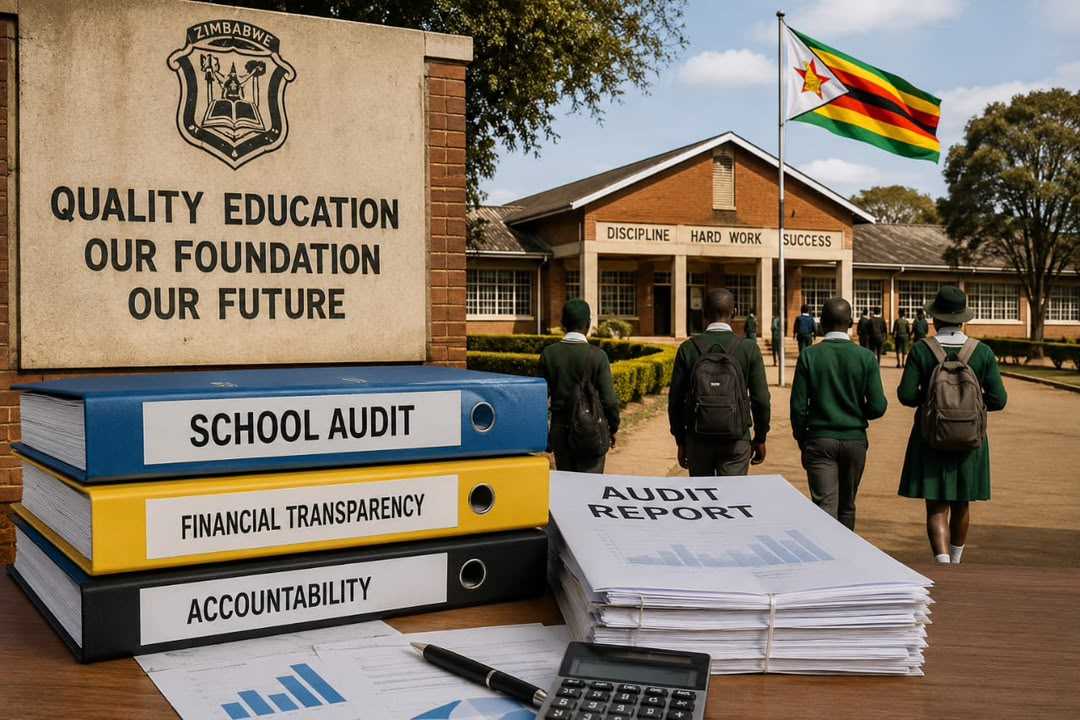
Schools will no longer be able to approach the Government for a fee increase without first opening their books to scrutiny, with the Ministry of Primary and Secondary Education making a clean audit report a compulsory requirement for any fee review.
The new requirement means schools seeking to increase or adjust fees must first prove that their finances are in order, placing financial accountability at the centre of the fee approval process.
The directive was issued through Secretary’s Circular Number 9 of 2026, signed by Secretary for Primary and Secondary Education Moses Mhike.
The Ministry said schools that fail to produce a current annual audit report will have their applications for a fee review, adjustment or maintenance of existing fees and levies rejected.
“With immediate effect, the Ministry will not consider, process, or approve any application for a school fees review, adjustment, or maintenance of existing fees/levies from any school that fails to produce a current annual audit report,” the Ministry said.
“Non-compliant schools will automatically have their applications disqualified,” it added.
The move puts pressure on school authorities to account for money collected from parents before seeking approval to collect more.
All School Development Association (SDA), School Development Committee (SDC) and School Services Fund (SSF) funds will now be subject to mandatory risk-based regular internal and annual external audits.
For Government schools, the Ministry said SDC and School Services Fund monies are statutory funds under the Public Finance Management Act.
The funds will be audited regularly by Ministry internal auditors and other Government internal auditors based on risk, while external audits must be conducted at least once every financial year.
Related Stories
Responsible Authorities will also be required to submit management action plans showing how audit recommendations will be implemented, followed by monthly updates on progress.
“Any exception to the above shall need the approval of the Ministry at the request of the School Head in liaison with the relevant Government Responsible Authority,” the Ministry said.
Non-Government schools have also been brought under tighter financial controls.
The Ministry said such schools must comply with their registration conditions and subject their accounts to regular risk-based internal audits and annual external audits by qualified independent auditors.
Their audit reports must be submitted to the Ministry together with management implementation plans.
The financial burden of conducting the audits will also largely fall on the schools.
“All established Government schools and registered Non-Government schools shall proactively budget for and fund their internal audit expenses and external audit fees, in close liaison with their respective Responsible Authorities,” the Ministry said.
Schools will, however, not be charged audit fees where the work is conducted by Ministry internal auditors.
Instead, they will only meet travel and subsistence costs, which must be based on prevailing Government rates.
The Ministry further directed that payments for internal audit expenses be channelled directly to Provincial Offices in liaison with the relevant Heads of Provincial Offices to protect the independence of its auditors.
The directive effectively changes the route schools must take before asking parents to pay more, with an audit now standing between a school and its application for a fee adjustment.
The Ministry said the new circular repeals and replaces Secretary’s Circular Number 9 of 2015, with the Ministry retaining the final authority over its interpretation and implementation.









Leave Comments