






Zimbabwe is producing more tobacco than ever before, but a growing debate within the industry is whether increasing output alone is enough to maximise earnings or whether the country should reposition itself as a regional tobacco blending and manufacturing hub.
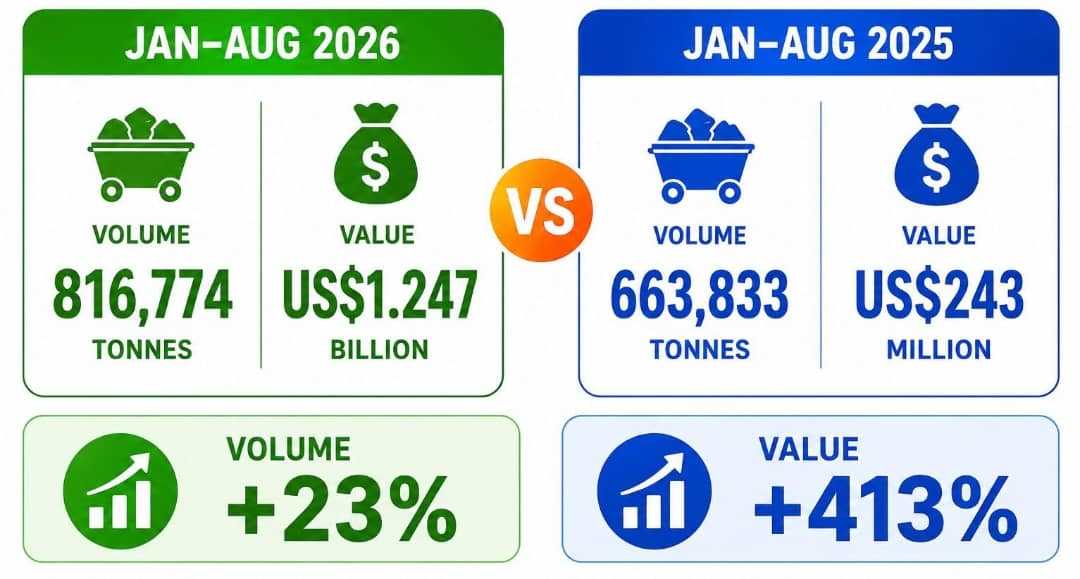
The question has become more pressing as higher production has coincided with weaker prices. During the 2026 marketing season, Zimbabwe sold 344.2 million kilogrammes of tobacco, up 7% from 321.4 million kg in 2025. However, total sales declined from US$1.07 billion to US$859.6 million because of softer global prices.
The figures illustrate a structural challenge confronting one of Zimbabwe's largest export industries: producing more tobacco does not necessarily translate into higher export earnings when international markets are oversupplied.
Addressing the African Economic Development Strategies Mid-Term Economic Review and High-Level Policy Dialogue, Chevron Tobacco Executive Director Tawanda Masedza argued that Zimbabwe's next competitive advantage should come from value addition rather than production alone.
"We need to create an environment that is conducive to value addition here. We need to bring manufacturing to Zimbabwe, but we are not copying only policy because we can't be competing with the UAE and other countries. We can have a hybrid system. Let's have the right policy and incentives, because Zimbabwe has favourable climatic conditions."
Rather than positioning Zimbabwe solely as a producer of premium flue-cured tobacco, Masedza proposed transforming the country into a tobacco blending and manufacturing hub capable of supplying global cigarette manufacturers.
"When we talk about becoming a manufacturing or blending hub for tobacco, we are talking about being able to bring different types of tobacco together, blend them and come up with a competitive product."
He argued that Zimbabwe's premium leaf, while internationally recognised, cannot by itself produce cigarettes that match the flavour profiles demanded by global consumers.
"It is not true that you can take only Zimbabwe tobacco and blend it; it won't be competitive. This is premium tobacco. If you look at the popular global brands like JTI, they only use almost 10% Zimbabwe tobacco, so you can't produce a 100% Zimbabwean cigarette here and expect it to be globally competitive."
Instead, he said, Zimbabwe should allow controlled imports of complementary tobacco varieties that can be blended locally before being exported as finished or semi-finished products.
Related Stories
"We need to allow the importation of other tobaccos, which can then become part of the blend to make Zimbabwe's manufacturing more competitive and lucrative."
His proposal challenges the long-standing assumption that local value addition depends exclusively on processing Zimbabwean tobacco. Instead, it suggests competitiveness could come from integrating imported leaf into domestic manufacturing, similar to blending hubs established in countries such as the United Arab Emirates and parts of Europe.
The economic case is significant.
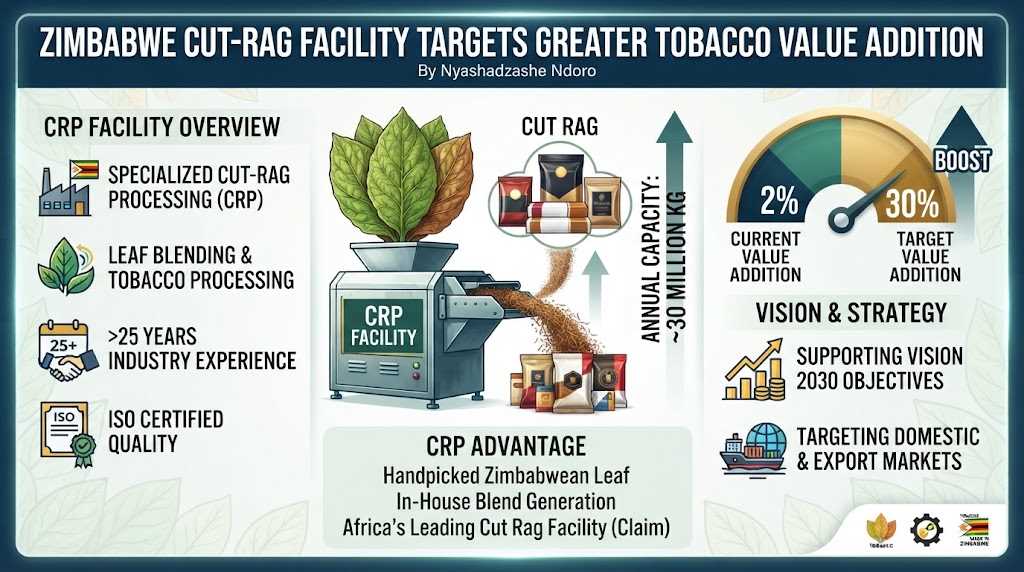
Although tobacco remains Zimbabwe's second-largest agricultural export after gold, much of the crop still leaves the country as raw or semi-processed leaf. Industry performance on value addition has lagged behind production growth, with only about 10.8% of tobacco undergoing value addition against a policy target of 30%.
The Government's Tobacco Value Chain Transformation Plan aims to build a US$7 billion tobacco industry by 2030 by increasing production to 500 million kilogrammes while retaining more value within Zimbabwe through processing and manufacturing.
However, expanding domestic manufacturing is not simply a policy question.
A cigarette manufacturing hub requires reliable electricity, efficient logistics, competitive taxation, access to international markets, stable regulations and integration into global supply chains. It also depends on attracting multinational manufacturers whose procurement systems rely on consistent blends sourced from multiple countries rather than a single origin.
Masedza's proposal therefore shifts the debate from exporting more tobacco to exporting more manufactured products.
The argument is supported by broader trends in this year's tobacco market. Cabinet recently noted that while tobacco sales volumes increased by 24%, average prices fell by 25% compared with the same period last year, highlighting how greater production alone cannot shield growers from global market cycles. Tobacco now contributes an estimated 10% to 15% of Zimbabwe's agricultural GDP, making price volatility a significant macroeconomic concern.
Recent farmer protests over low auction prices have also highlighted producers' vulnerability to fluctuations in international demand, particularly as global production has expanded and cigarette consumption has slowed in some traditional markets.
If Zimbabwe continues exporting predominantly raw leaf, earnings will remain closely tied to volatile international commodity prices. By contrast, expanding domestic blending and manufacturing could allow the country to capture a larger share of the tobacco value chain through processing, branding, logistics and industrial employment.










Leave Comments