



Guruve Rural District Council's ability to collect and account for millions in public revenue has come under scrutiny after the Auditor-General exposed serious weaknesses in revenue administration, missing lease documentation and the absence of an internal audit function, resulting in an adverse audit opinion on the council's 2023 financial statements.
The Auditor-General's report paints a picture of a local authority struggling to maintain basic financial controls, with weaknesses in revenue recognition, debt recovery and record management raising doubts about the completeness and reliability of council income.
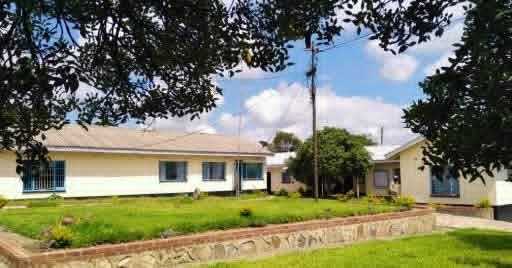
Among the findings was the council's failure to support lease revenue amounting to ZWL$202.74 million with lease agreements after records were reportedly destroyed in a fire that gutted the Planning Office. The absence of key documentation meant auditors were unable to verify the completeness and accuracy of lease revenue and related receivables disclosed in the financial statements.
While the council attributed the missing records to the fire, the Auditor-General said the incident exposed the lack of adequate systems to safeguard critical financial information, recommending that the local authority establish reliable backup systems for records and information.
Management acknowledged the weakness, saying plans were underway to computerise council systems to improve data storage, retrieval and integration across departments. However, implementation has been delayed by financial constraints, with funding now earmarked in the 2026 budget.
The audit also revealed weaknesses in the collection and recognition of beer levy revenue, with the council accounting for ZWL$96.4 million on a cash basis instead of using the accrual method required under International Public Sector Accounting Standards.
Related Stories
According to the report, the council relied on cash receipts because breweries failed to submit sales schedules needed to calculate the levy, resulting in revenue being recognised only when cash was received rather than when it was earned.
The Auditor-General warned that this practice materially affected the financial statements. Management said it has since engaged breweries to ensure the timely submission of returns and indicated that the issue had been addressed during the preparation of the 2024 financial statements.
The report further exposed weaknesses in debt recovery after the council failed to provide for expected credit losses on receivables amounting to ZWL$3.09 billion. By failing to recognise an allowance for doubtful debts as required by IPSAS 41, the council overstated the value of its receivables, presenting a more favourable financial position than may actually exist.
Management admitted that it had not implemented the requirements of the accounting standard and lacked a credit loss model to assess the recoverability of debts. It said a credit risk assessment policy would be developed and accounting staff trained to comply with the standard in future.
Beyond revenue collection, the Auditor-General raised concerns about the council's governance structures, particularly the prolonged absence of an internal audit function.
The report revealed that Guruve RDC operated without an internal auditor from May 2022 until May 2025 after delaying the implementation of a ministerial directive ordering the reinstatement of an auditor whose dismissal had been declared procedurally flawed.
The absence of internal audit oversight, contrary to the Public Finance Management Act, meant routine reviews of financial controls and operational risks were not conducted for nearly three years, increasing the likelihood that fraud, financial irregularities and control weaknesses could go undetected.








Leave Comments