









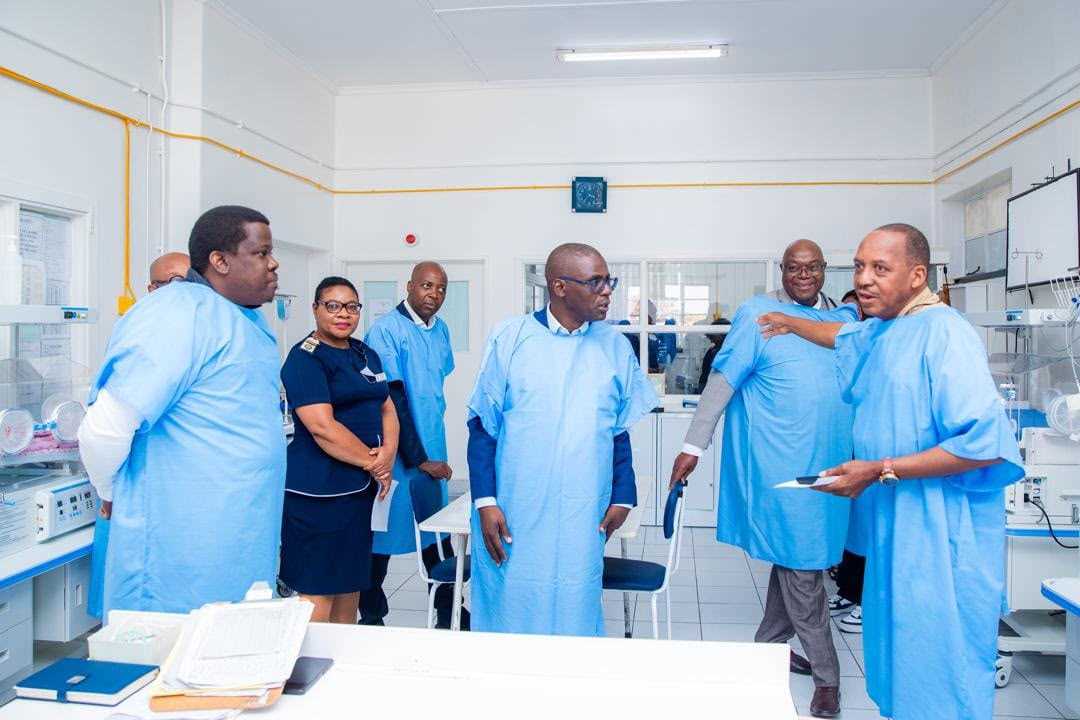
Zimbabwe's fight against newborn deaths has received a boost after Mater Dei Hospital received life-saving neonatal equipment expected to improve the survival chances of premature and critically ill babies, as health experts warn that the country continues to face one of the region's highest neonatal mortality rates.
Every year, hundreds of families face the uncertainty of caring for babies born too early or with life-threatening complications, placing enormous pressure on neonatal intensive care units that require specialised equipment to keep newborns alive during their first days of life.
Stanbic Bank Zimbabwe has donated neonatal care equipment worth US$60,000 to Mater Dei Hospital in Bulawayo, including eight incubators and four multi-parameter neonatal monitors used to monitor and treat premature and critically ill infants.
Mater Dei Hospital Director of Health, Dr Adolph Macheka, said the donation comes at a critical time for Zimbabwe's healthcare system.
"It is important to appreciate that the state of development of a nation is assessed by its socio-economic conditions and its ability to care for the weakest members of its community. Nothing exemplifies this more than the struggling premature neonate."
Macheka said the equipment would strengthen the hospital's neonatal intensive care unit at a time when Zimbabwe continues to battle high neonatal mortality.
He said that between 1999 and 2019, Zimbabwe's neonatal mortality indicators worsened by 10 percent, although the country has made significant progress over the past two decades in improving maternal and child health.
Related Stories
According to Macheka, Zimbabwe's neonatal mortality rate currently stands at 32 deaths per 1,000 live births, highlighting the continued need for specialised equipment and skilled healthcare workers.
"This is where the impact of this kind of critical care equipment truly becomes evident. We need paediatricians, but even if we have the manpower, we still need the critical equipment to care for these little ones. There is no shortcut to that."
Stanbic Bank Chief Executive Solomon Nyanhongo said the donation reflects the bank's commitment to strengthening Zimbabwe's healthcare system.
"Today's handover is more than the transfer of equipment. It is a demonstration of what can be achieved when institutions come together with the shared purpose of improving lives."
Nyanhongo said the bank deliberately chose to invest in neonatal care because newborn babies are among the country's most vulnerable citizens.
"Every infant given a healthier start represents hope for a family, confidence for a community, and an investment in Zimbabwe's future."
He said Stanbic Bank would continue investing in initiatives that strengthen healthcare delivery, improve patient outcomes, and support medical professionals through its Corporate Social Investment programme.









Leave Comments