







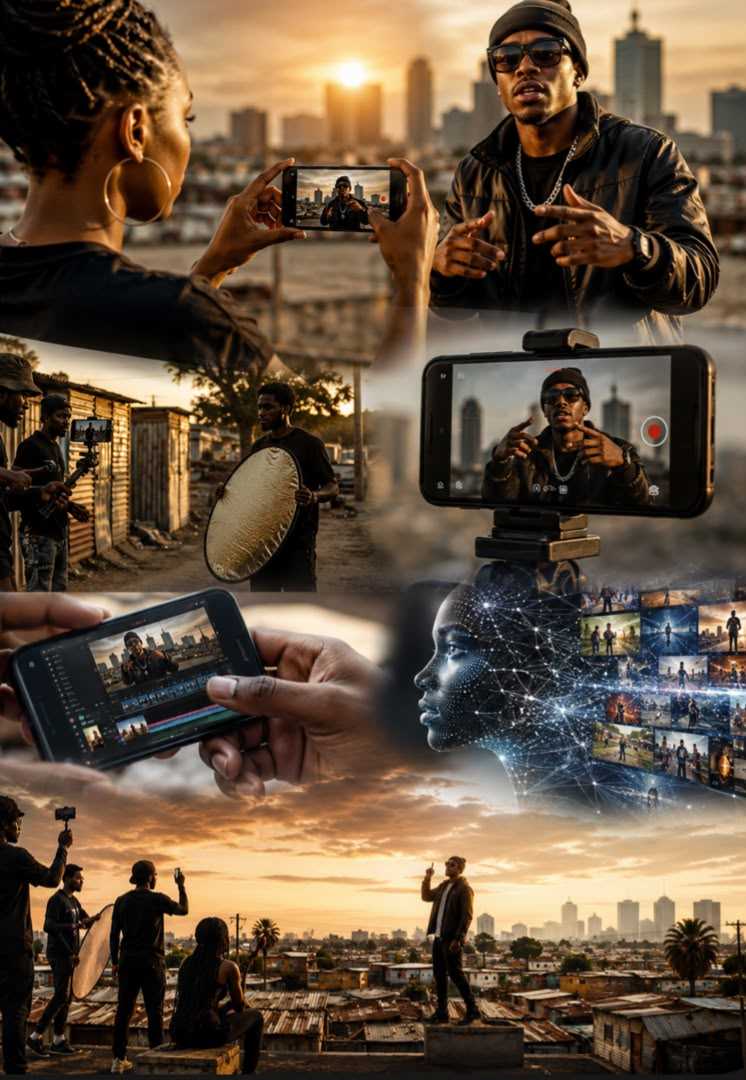
A new generation of Zimbabwean musicians and filmmakers is proving that cinematic music videos no longer require million-dollar budgets or expensive cameras. Instead, smartphones, artificial intelligence (AI) and mobile editing apps are becoming the tools behind some of the country's most creative productions.
The shift is changing how music videos are made, enabling artists to cut production costs while reaching audiences through platforms such as TikTok, Facebook, Instagram and YouTube.
One of the latest examples is Ndamadawo, directed by Malaika Mushandu and Joe Njagu, which was filmed entirely on a smartphone.
Mushandu said the decision was intentional.
"The goal was simple: to prove that great storytelling isn't defined by expensive equipment but by vision, creativity and execution. Technology is merely a tool; it's the story and the storyteller that make the difference."
She said the video tells the story of two friends—one at home and the other abroad—both praying for a breakthrough.
Filmmaker Ray Bamala praised the production, saying every frame felt intentional, with strong visual storytelling, thoughtful composition and seamless pacing.
The rise of mobile filmmaking comes as Africa's digital music industry continues to grow. According to Statista, the continent's digital music market is projected to generate US$533 million, with streaming expected to contribute US$410.7 million.
Young rapper Young Gemini said digital platforms have transformed opportunities for independent artists.
Related Stories
"You can market your music on platforms like TikTok for free instead of spending thousands of dollars. Artists can also earn through monetisation rather than relying solely on live performances."
Many musicians are now using smartphones and mobile editing software to produce professional-quality videos, with some combining mobile footage and AI to enhance production.
Winky D's Fake Love, recognised as one of Zimbabwe's first AI-directed music videos, demonstrated how AI and smartphones can be used to create high-quality visual content.
Arts commentator Plot Mhako said audiences care more about music that connects emotionally than the technology used to produce it.
"People want good music that resonates with them. Songs like Ndakanamatira and Kure Kure show that emotional connection matters more than the tools behind the production."
National Arts Council of Zimbabwe chief executive officer Napoleon Nyanhi said artists should embrace digital tools and AI to remain competitive, adding that smartphones have helped creatives reach audiences beyond Zimbabwe.
Veteran producer Clive "Mono" Mukundu welcomed the accessibility created by smartphones and AI but cautioned that technology should complement, not replace, human creativity.
Videographer Raymond Mundiya agreed, saying smartphones have lowered the barrier to entry without replacing professional skills.
"The phone is not killing the craft; it is changing the entry point. Quality still depends on the eye behind the lens, lighting knowledge and post-production discipline."
As smartphones become more powerful and AI continues to reshape content creation, Zimbabwe's music industry is showing that compelling visual storytelling depends less on budget and more on creativity, vision and skill.









Leave Comments