







Rising fertilizer prices, weakening prospects for global cereal production and the growing threat of another El Niño weather event are converging to create fresh risks for food security, according to the World Bank, with Zimbabwe's latest agricultural interventions reflecting a broader global shift towards protecting food systems from climate and market shocks.
The World Bank's June 2026 Food and Nutrition Security Update says global food supplies remain broadly adequate but warns that higher production costs, climate risks and supply chain disruptions are placing increasing pressure on agricultural systems and food affordability. Fertilizer prices rose by 35% during the first five months of 2026 compared to the same period last year, while production of major cereals is expected to decline from the record levels achieved in 2025 because of adverse weather, high input costs and weaker planting incentives.
The report highlights sharp volatility across fertilizer markets, with diammonium phosphate prices rising by about 257% between January and June this year, while urea and ammonia prices climbed sharply before easing. Despite recent moderation, the World Bank says fertilizer markets "have not fully stabilized" and warns that reduced fertilizer application could affect harvests later in the season.
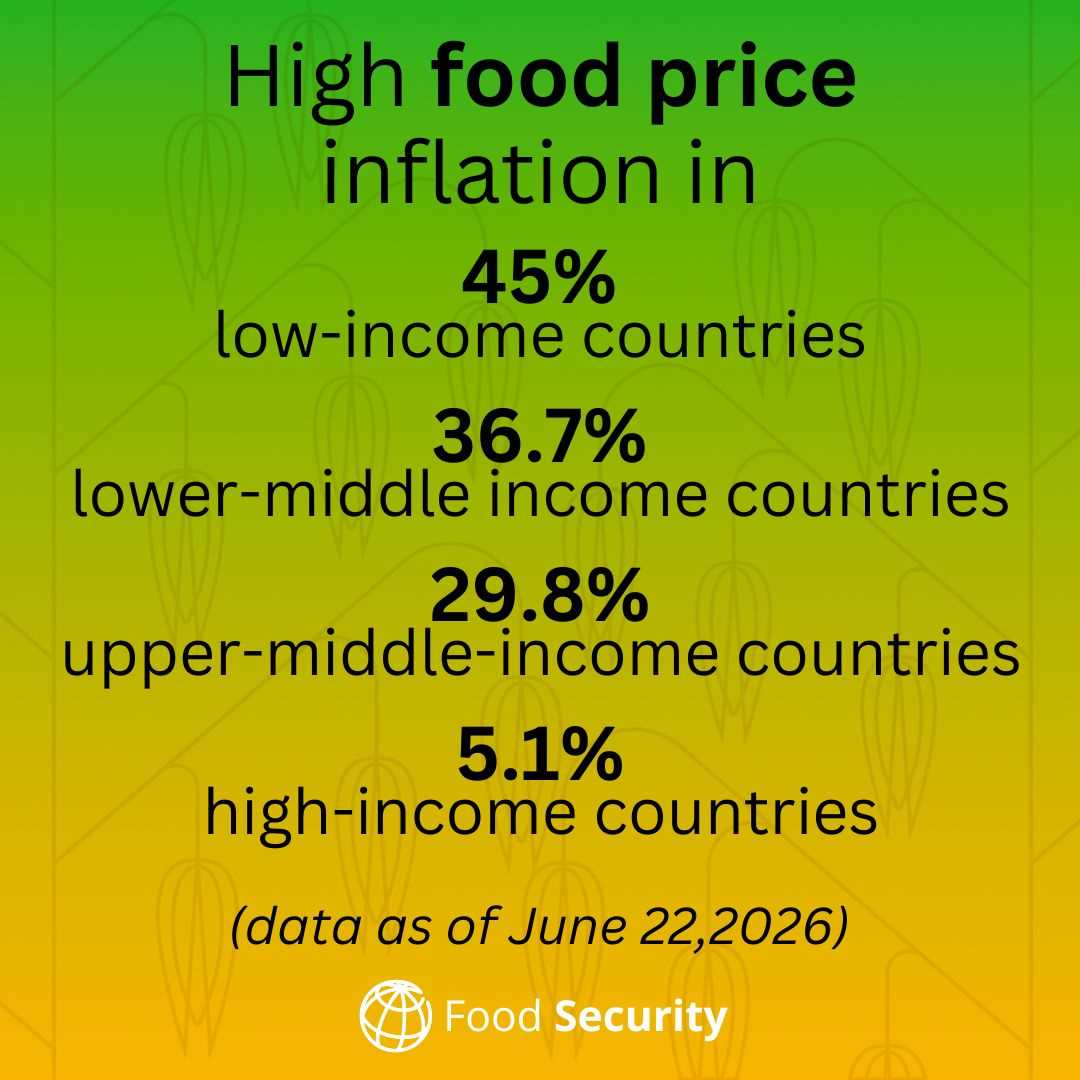
Pressure is also building across grain markets. The International Grains Council Grains and Oilseeds Index stood 7.4% above its level a year earlier at the end of May, while wheat, maize and rice production is forecast to ease from last year's record harvests. Rice prices have increased by 9% since the previous update, wheat prices are 8% higher than a year ago, and global food inflation remains above 5% in 45% of low-income countries, underscoring the growing affordability crisis facing vulnerable households.
World Bank economists John Baffes, Dawit Mekonnen and Kaltrina Temaj say the risks facing global food markets extend well beyond weather.
"El Niño conditions, rising energy and fertilizer costs, growing biofuel demand, and potential trade restrictions could all push food prices significantly above current projections."
Related Stories
They added that although baseline projections point to only modest food price increases this year, "risks are firmly tilted to the upside," warning that prolonged conflict, a stronger El Niño and renewed export restrictions could compound pressure on global food markets, with the heaviest burden falling on food-insecure countries.
The World Bank estimates there is a 61% to 87% probability of El Niño emerging by mid-2026 and lasting into 2027. It warns that the phenomenon could reduce rice output by between 20% and 50% in affected regions, with Southern Africa among the areas expected to experience below-normal rainfall and heightened food security risks.
Those global warnings provide context for measures adopted by Zimbabwe's Cabinet under the 2026/27 Summer Production Plan. Government said the programme is intended to safeguard national food security against an estimated 80% probability of a Super El Niño-induced drought and rising fuel and fertilizer costs.
Cabinet approved an enhanced Strategic Grain Reserve purchasing system, deployment of artificial intelligence-powered silos, accelerated irrigation development through climate-smart agriculture, strengthened early warning systems, expanded farmer extension services, activation of the Africa Risk Capacity sovereign drought insurance facility, duty-free fertilizer imports and the expedited commissioning of the Sable Chemicals ammonium nitrate plant.
The alignment between the World Bank's assessment and Zimbabwe's policy response is particularly evident in fertilizer markets. While the World Bank warns that sustained fertilizer inflation could encourage farmers to reduce application rates and lower yields, Zimbabwe is attempting to cushion producers through duty-free imports and increased domestic production capacity. Similarly, Cabinet's decision to expand grain reserves and irrigation mirrors international recommendations to strengthen strategic reserves and climate resilience as weather risks intensify.
Writing in a recent commentary, the Food and Agriculture Organization of the United Nations warned that "a powerful El Niño is developing amid escalating global food security concerns, driven by climate change and fertiliser supply disruptions," urging governments to use early warning systems to target interventions before drought conditions worsen. The organization said Southern Africa is among the regions most exposed and called for early distribution of drought-tolerant seed, improved water access and other resilience measures before the next planting season begins.
Although the World Bank expects Zimbabwe and Zambia to record above-average cereal harvests this year, it cautions that localized food deficits remain in parts of Zimbabwe because of erratic rainfall and prolonged dry spells. Looking ahead, it warns that a drier start to the 2026/27 agricultural season could reduce crop production, rural incomes and food access if El Niño conditions intensify.
In Zimbabwe, where agriculture underpins rural livelihoods, supplies raw materials to industry and remains central to economic growth, the World Bank's assessment suggests that the country's latest food security measures are not simply a response to domestic risks but part of an international shift towards insulating agriculture from increasingly interconnected climate, energy and commodity market shocks.









Leave Comments