





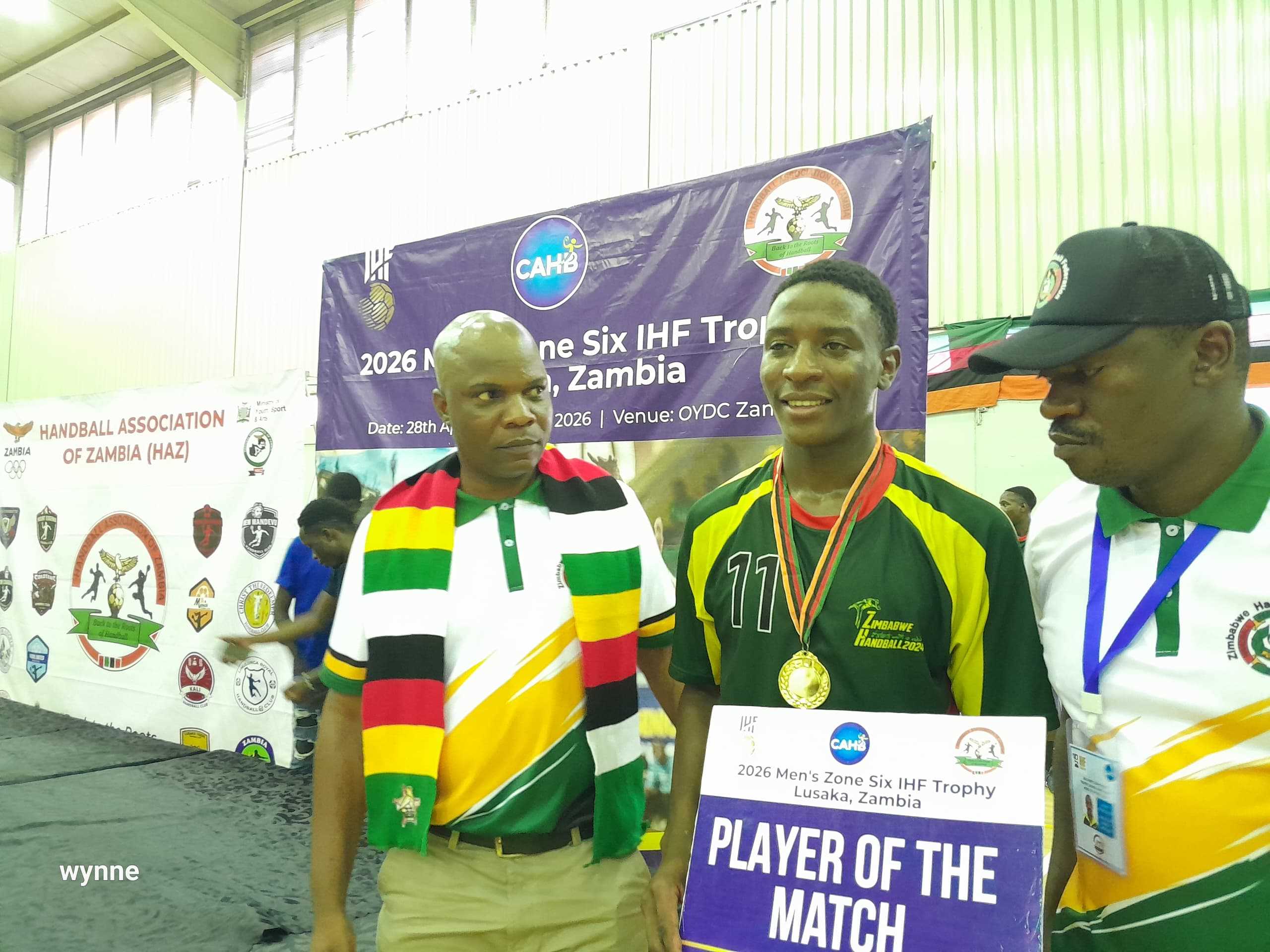
Zimbabwean handball is entering a new era, driven by individuals who have not only participated in the sport but have dedicated their lives to developing and transforming it.
At the centre of that transformation is Taurai Muberekwa, whose journey from player to administrator and federation president reflects a story of commitment, resilience and an unwavering belief in the power of sport.
Long before he assumed a leadership role in Zimbabwe handball, Muberekwa was simply a young athlete discovering his passion.
His introduction to the sport came in 2003 while he was in Form Two. At the time, football was his primary focus. As a naturally left-footed player, he was comfortable on the left side of the field and envisioned his future in the sport.
But a coach saw a different path.
"Commitment, resilience and perseverance define my journey. Handball is not new to me. It was introduced to me at an early age in 2003 when I was in Form Two," Muberekwa recalls.
"My coach was very passionate about my development. He gave me support and patience as a left-hander who was focused on football. He encouraged me and transformed my career."
That encouragement laid the foundation for a lifelong relationship with handball.
After completing high school, Muberekwa worked as a temporary teacher while remaining actively involved in the sport. His passion for development saw him take up refereeing, where he steadily rose through the ranks and eventually became head of referees.
His journey later shifted into coaching, a role that would test his resilience.
One of the most difficult moments came in 2010 during preparations for the National Youth Games.
"I spent two weeks in camp with Mashonaland East preparing for the youth games," he says.
"Then I was replaced and sent home. They didn't see me as a good coach, and that was a setback. But I fought through it."
Rather than allowing disappointment to define him, Muberekwa turned the setback into motivation.
He immersed himself in grassroots development, coaching at schools including Lusulu High School, Tongogara High School and Wedza High School, often without receiving any financial compensation.
Driven by a desire to create opportunities for young athletes, he later founded Binga Handball Club, providing aspiring players in Matabeleland North with a platform to develop their skills and compete.
His commitment to development eventually drew the attention of handball administrators, who invited him into federation structures.
At the time, provincial systems in Matabeleland North faced governance challenges, including weak organisational structures and inconsistent administrative processes.
Muberekwa was tasked with helping rebuild those systems.
Working on constitutional reforms, election processes and governance frameworks, he gradually restored structure and accountability within the province. His efforts ultimately earned him the position of provincial chairperson.
Innovation soon became another defining feature of his leadership.
Recognising an opportunity to diversify and grow the sport, Muberekwa introduced beach handball to Zimbabwe. He organised the country's first beach handball tournament, attracting teams from Hwange and Victoria Falls and generating significant national interest.
The initiative proved successful and later earned him appointment as Chairperson of the Zone VI Beach Handball Commission.
Related Stories
His rise to the presidency of the Zimbabwe Handball Federation was not part of a carefully crafted ambition.
Instead, he attributes it to consistency, vision and perseverance.
"I never expected to become president because there was strong competition," he says.
"But my resilience and faith pushed me through. My goals and vision spoke for me more than anything else."
As federation president, Muberekwa has prioritised governance reform, transparency and accountability.
He points to historical challenges within the sport, including weak financial controls, poor communication systems and unclear organisational responsibilities.
"We needed transparency in how we operate," he says.
"We needed proper procedures, clearly defined responsibilities and systems that everyone respects. Without that, the sport cannot grow."
The impact of those reforms is beginning to show.
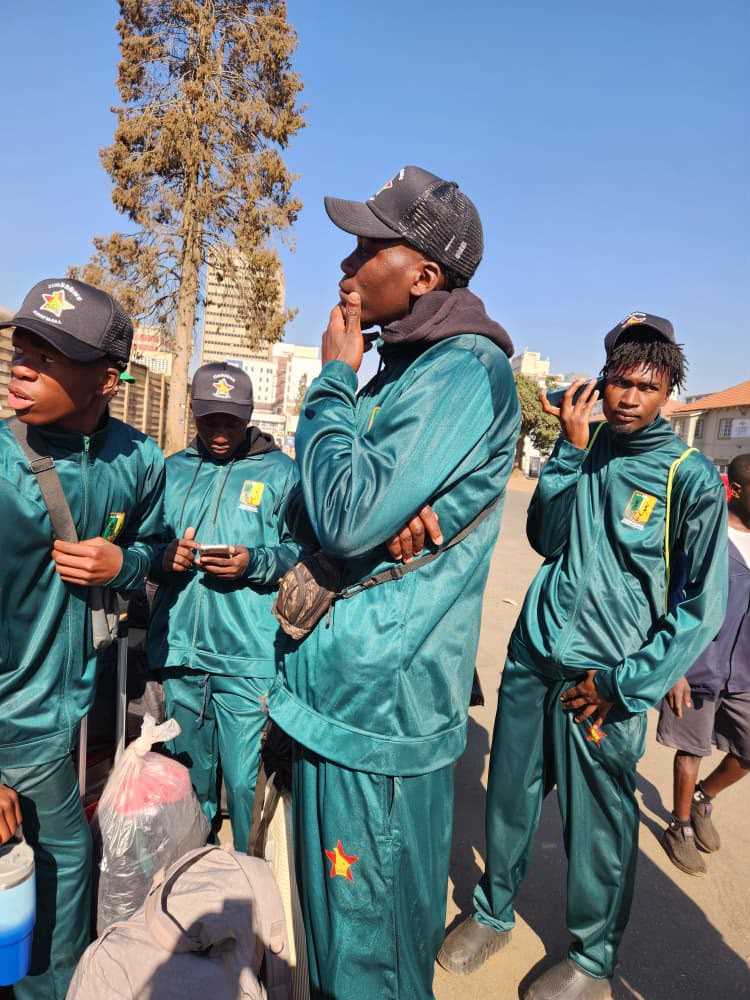
Zimbabwe's Under-18 and Under-20 handball teams recently secured silver and gold medals respectively at the IHF Zone VI Trophy tournament, achievements that have strengthened confidence in the country's handball programme.
"When you look at the Under-18 and Under-20 teams, you can see the difference," Muberekwa says.
"They are disciplined, competitive and selected on merit. That is what progress looks like."
The Under-20 side is now preparing for the next stage of competition in Côte d'Ivoire, supported by structured training camps and a focused development programme.
Expectations are growing, but so is belief.
"We are locked in and focused," he says.
"Zimbabwe is ready to show that we mean business."
Despite the encouraging progress, Muberekwa remains realistic about the challenges ahead.
Limited funding and inadequate sponsorship continue to constrain the growth of handball, making it difficult to fully support athletes and development programmes.
Nevertheless, he remains convinced that greater investment will unlock even more success for the sport.
His vision centres on creating a sustainable development pathway that begins in schools, supported by talent identification programmes and strengthened through regional training centres.
His mission is straightforward yet ambitious: to ensure that no talented young athlete is overlooked because of geography, resources or lack of opportunity.
For Muberekwa, the future of Zimbabwe handball is not simply about winning medals.
It is about building systems, creating opportunities and leaving a legacy that will serve future generations.
And judging by the progress already made, that vision is steadily becoming a reality.








Leave Comments