



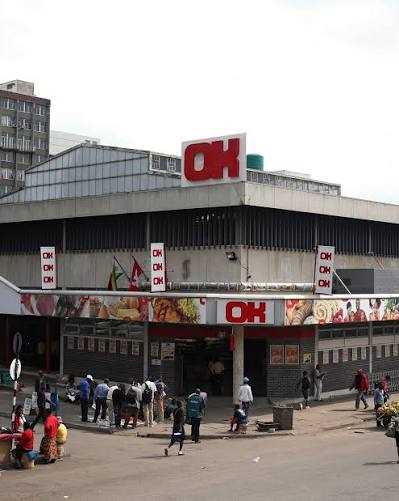
The deepening crisis at OK Zimbabwe is no longer being viewed merely as the decline of a supermarket chain, but as evidence of a broader structural transformation taking place within Zimbabwe’s economy, with analysts warning that the country’s formal retail model is rapidly losing ground to agile informal traders.
The debate intensified this week after the embattled Zimbabwe Stock Exchange-listed retailer suspended salaries and wages for employees with immediate effect as part of efforts to stabilise operations under corporate rescue proceedings.
Economic commentators say the development has exposed the growing fragility of Zimbabwe’s formal retail sector amid inflationary pressures, foreign currency shortages, weakening consumer spending power and the rapid expansion of informal commerce.
Enterprise systems architect Tatenda Musodza said the decision by OK Zimbabwe to suspend salaries reflected more than operational distress, arguing that it highlighted the widening disconnect between traditional retailers and changing consumer realities.
“Zimbabwe is not witnessing the collapse of retail, but the migration of retail,” Musodza said.
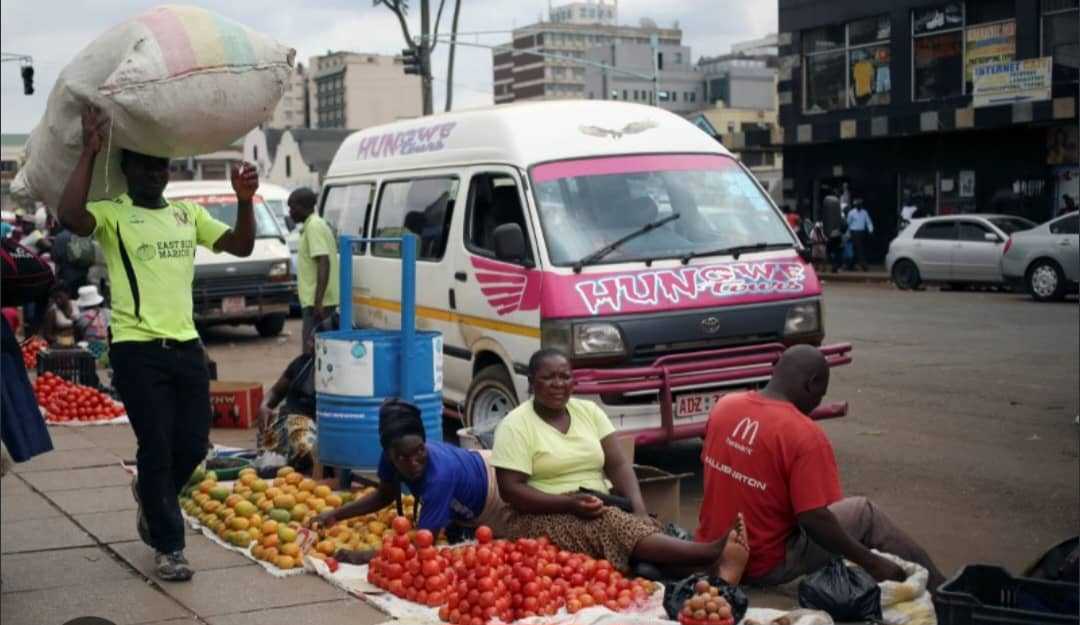
He said informal traders operating in areas such as Mbare Musika and Harare’s central business district had built business models centred on speed, adaptability and proximity to consumers’ daily realities.
“These traders restock quickly, adjust prices instantly and understand customer behaviour on a daily basis,” he said.
Musodza argued that consumers were increasingly prioritising convenience, smaller purchasing options and product availability over long-established brand loyalty.
“A tuckshop that allows smaller purchases, negotiates prices or consistently has stock available becomes more valuable than a large retailer promising long-term recovery while shelves remain uncertain,” he said.
He contrasted OK Zimbabwe’s struggles with the performance of TM Pick n Pay, which he said had adapted more effectively to prevailing economic conditions through stronger regional supply chains, better access to United States dollar liquidity and a hybrid retail model targeting both premium and value-conscious consumers.
Another economic commentator, Archiford Matarino, described OK Zimbabwe’s entry into corporate rescue as a “watershed moment” for Zimbabwe’s formal economy and a warning to businesses relying on outdated operating models.
Related Stories
“For an institution with 83 years of history, the transition into voluntary administration was not merely a failure of balance sheets; it was a failure of the traditional retail model in the face of structural macroeconomic shifts,” Matarino said.
He said the retailer’s difficulties demonstrated that capital injections alone were insufficient without operational restructuring.
“In Zimbabwe’s current environment, liquidity is not just about cash; it is about confidence,” he said.
Matarino noted that when suppliers tightened or withdrew credit terms, OK Zimbabwe’s inventory-driven business model effectively stalled.
“You cannot fix an operating-model crisis with a capital injection alone,” he said.
He added that formal retailers were increasingly facing what he termed “asymmetric warfare” from informal businesses operating with greater pricing flexibility and fewer regulatory burdens.
“Informality has become the new benchmark for efficiency,” he said.
According to a resolution adopted by the company’s Joint Works Council on 22 May 2026, OK Zimbabwe agreed with employees to suspend all salaries and wages beginning this month until further notice as part of efforts to restore profitability.
The company’s board had earlier resolved on 23 February 2026 to voluntarily commence corporate rescue proceedings in terms of Section 122 of Zimbabwe’s Insolvency Act after assessing worsening financial difficulties.
OK Zimbabwe was officially placed under corporate rescue on 24 February 2026, with Bulisa Mbano of Grant Thornton Zimbabwe appointed as the corporate rescue practitioner.
The Joint Works Council described the salary suspension as a “difficult and uncomfortable” measure but said it was necessary to support efforts to stabilise the retailer’s operations.
Analysts say the crisis facing OK Zimbabwe reflects wider changes taking place across Zimbabwe’s economy, where informal traders are increasingly dominating daily commerce while many formal businesses struggle to adapt to volatile operating conditions.



Leave Comments